In a sign of growing international labor solidarity around broad social issues, the global union federation UNI has joined forces with the International Trade Union Confederation; RENGO, the Japanese national trade union center; and GENSUIKIN, the Japan Congress against Atomic and Hydrogen bombs, in an international petition drive.
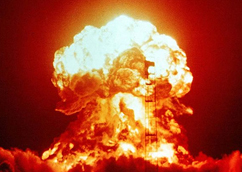
The petition calls on the nations of the world to take urgent action to stop the spread of nuclear weapons, and is to be presented to UN General Secretary Ban Ki-moon in May 2010, when the UN meets to review the nuclear non-proliferation treaty.
The petition’s main points call for the total abolition of nuclear weapons by 2020. In this the petitioners support the actions of the mayors of the Japanese cities of Hiroshima and Nagasaki, the only cities ever to have suffered nuclear attack. The petition also calls for the transfer of military spending to socially useful ends, while at the same time protecting the livelihoods of those who now are employed in the creation and deployment of these weapons.
This new coalition sees that the changes in the U.S. political situation have put the fight against nuclear weapons on firmer footing. The UNI has hailed the recent award of the Nobel Peace Prize to U.S. President Barack Obama, in the context of the abolition of nuclear weapons, and world peace in general, because of his support for international diplomacy and for envisioning a world with out nuclear weapons.
The UNI, founded in 2000, is an international trade union federation with over 900 affiliates in 140 countries. The present international labor petition campaign is nothing out of the ordinary for UNI and its 20 million members, since UNI has long focused on global agreements targeting multinational corporations. It is also not surprising that UNI has linked up with the 7 million members of RENGO and the ITUC, of which the AFL-CIO is a member, to promote international workers’ solidarity via a cause that has world wide benefits.
In November 2010 the UNI will hold its World Congress in Nagasaki, Japan, a city who the UNI General Secretary has said should be the last to experience nuclear attack.
Those who would like to join follow workers in signing the petition can do so by visiting http://www.breakingthroughforpeace.org/
CONTRIBUTOR