On June 17, Virginia held primary elections. Though these were only state primaries for governor, lieutenant governor, state attorney general, and the 100-seat House of Delegates (the lower house of the Virginia General Assembly), the main event in November will give us a preview of how things might shake out in the 2026 national midterm elections.
Virginia is generally considered a “purple” rather than a “red” or “blue” state. It swings back and forth between Republican and Democratic advances, in other words. The current orientation among Virginia Republican politicians is influenced by the “MAGA” tendency—anti-labor, homophobic, anti-woman, anti-immigrant, racist and ultra-right.
The current governor, Republican Glenn Youngkin, is very much of the MAGA variety, as are most of the Republican politicians in the state. On the Democratic side, the majority of the elected officials are centrist to conservative, with only a few in the “progressive” camp. For example, previous Democratic Party governors and many other Democratic officials have not been big allies of organized labor.
For decades, unions have been seeking the support of the governors and General Assembly to achieve two key goals: To repeal the state’s anti-union “Right to Work” law and to make it easier for teachers and other state, county, and municipal employees to unionize. This is in a state in which union density, the percentage of wage and salaried workers who belong to unions, is only 5.2% as of 2024, one of the lowest in the country.
Republicans, of course, are dead set against anything that strengthens labor and the working class, but most Virginia Democrats are not exactly heroes in this respect either. But can this change in the foreseeable future? Also, what will this year’s Virginia elections portend for the whole MAGA/fascist agenda, which includes violent persecution of immigrants, attacks on the rights of minorities, women and LGBTQ folk, the teaching of history in public schools, the fate of many things in Virginia that are still named after Confederate generals, and much more?
Governor’s race: A battle on the right
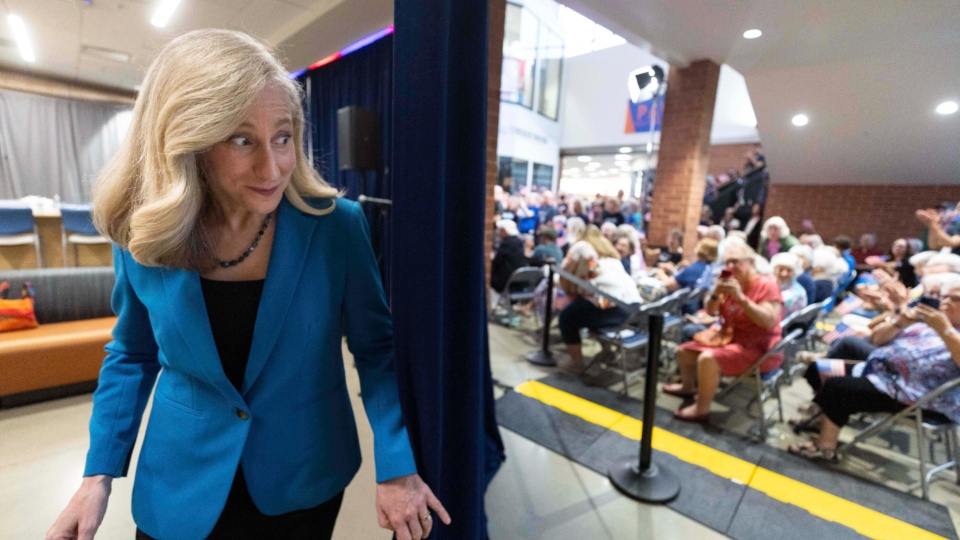
There was not a ballot for governor in the primaries, as only one Republican and one Democrat offered themselves as candidates, so the two of them will face off in November. The Democrat is former U.S. Representative Abigail Spanberger. She prides herself on her former job as a Central Intelligence Agency employee. Asked if she would support the repeal of the Right to Work law, she said she would not but might be open to “reforming” it. How it would be reformed, nobody knows.
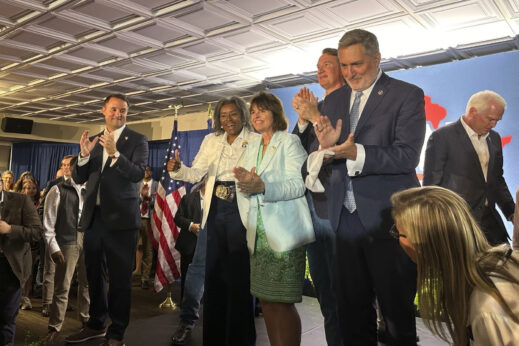
The Republican candidate for governor is Winsome Earle Sears, the present Lieutenant Governor. She is Jamaican American and a U.S. military veteran. Her attitude is shaped by her Evangelical Christian beliefs, including opposition to abortion and LGBTQ rights. She is also opposed to DEI/affirmative action, because she says that minorities like herself can prove their worth without those dependency-creating policies.
So, we have a choice for governor between two figures on the right.
Down-ballot battles
For lieutenant governor, there was only one Republican candidate in the primary, namely John Reid, who is currently a radio program host but has some connections within the Republican Party.
An unusual element entered the Republican conversation about Reid, as he is openly gay in a fiercely homophobic party. He was gay-baited within his own party and asked by Gov. Youngkin to drop out, but he refused, and at any rate, was the only Republican candidate in the primary. But don’t confuse this gay candidate with any agenda even remotely approaching progressive; his views on everything are ultra-right. He says his goal is to free the public schools from “left-wing indoctrination”.
On the Democratic side, six people ran for the lieutenant governor nomination. They included Levar Stoney, the former mayor of Richmond, Virginia’s capital; State Sen. Ghazala Hashmi, a Muslim of South Asian ancestry who is a strong defender of public education and was supported by the influential grassroots organization New Virginia Majority; State Sen. Aaron Rouse, who has strong popular support in the Tidewater/Hampton Roads area of Southwestern Virginia; Babur Lateef, an ophthalmologist and chair of the Prince William County Board of Education in Northern Virginia; Alex Bastiani, a left-leaning labor activist; and Victor Salgado, a former prosecutor who went after political grafters.
The two African American candidates, Stoney and Rouse, and Sen. Hashmi started out the vote count on the evening of June 17 running a three-way race, with the other candidates far behind. Stoney seemed likely to win, but at the end of the count, Hashmi edged out the other two main contenders.
Stoney had the support of major Democratic Party figures but ended up losing decisively in his own home city of Richmond, giving the election to Hashmi. Stoney had always been controversial in Richmond, but this year, his reputation there tanked because of repeated crises with the city’s water supply.
During the first week of January, there was a major failure of the water system, which had Richmond residents going out and collecting winter snow so that they could have water to flush their toilets. More incidents followed. It was soon revealed that the Stoney administration had known for years that the water distribution infrastructure was in terrible shape and that immediate remedial action was needed, but nothing was done, and the public was kept in the dark.
For state Attorney General, the Republican incumbent Jason Miyares decided to run for re-election and had no challenger in the primary. On the Democratic Party side, Jay Jones, a former delegate from the Norfolk area, narrowly beat Henrico County State’s Attorney Shannon Taylor. Jones is running on a platform of defending consumers against powerful corporations.
As far as the House of Delegates primary election went, most Democrats considered to be progressives retained their seats. How many new progressive Democrats will emerge from the June 17 results is yet to be seen, as the campaign continues through the summer and fall. It also remains to be seen if the Trump administration’s dropping approval rate will lead to any of the Republican candidates rethinking their extremist positions.
A lot can change between now and November—and between November and the 2026 midterms—but Virginia will be a place to watch to measure how well the anti-MAGA coalition is being mobilized and activated.
As with all news-analysis and op-ed articles published by People’s World, the views reflected here are those of the author.
We hope you appreciated this article. At People’s World, we believe news and information should be free and accessible to all, but we need your help. Our journalism is free of corporate influence and paywalls because we are totally reader-supported. Only you, our readers and supporters, make this possible. If you enjoy reading People’s World and the stories we bring you, please support our work by donating or becoming a monthly sustainer today. Thank you!
CONTRIBUTOR