WASHINGTON—The Transport Workers (TWU) strongly oppose the planned megamerger between the Union Pacific and Norfolk Southern railroads, while other rail unions are wary of the $85 billion deal. TWU, the Train Dispatchers and the Brotherhood of Railroad Signalmen are especially concerned about looming safety and job cuts.
Combined, the two railroads, under the Union Pacific name, would employ approximately 40% of the nation’s 115,000 freight rail workers, a large majority of them union members.
Whether the GOP Trump administration will listen to the workers is problematic—as is who will listen. Just before the July 29 announcement, Trump Attorney General Pam Bondi fired the top two leaders of the Justice Department’s Antitrust Division. She objected to their disapproval of a prior merger.
The merger between the two railroads was rumored for weeks in trade publications. The bosses of the two want to close the deal by next January. It would create the first-ever coast-to-coast transcontinental railroad. Union Pacific reaches eastwards to Kansas City and the two lines overlap west of the Mississippi River. Norfolk Southern mostly operates east of the river.
The bosses of the two railroads touted the merger’s benefits in eliminating having to shift freight from one system to the other as it moves across the country. One railroad exec said the merger would let them avoid freight bottlenecks, specifically Chicago, the nation’s rail hub.
Would cut rail service
They were silent on the fact that a merger would cut total U.S. Class I freight railroads—the big players—from six to five. That would increase the nation’s railroad oligopoly.
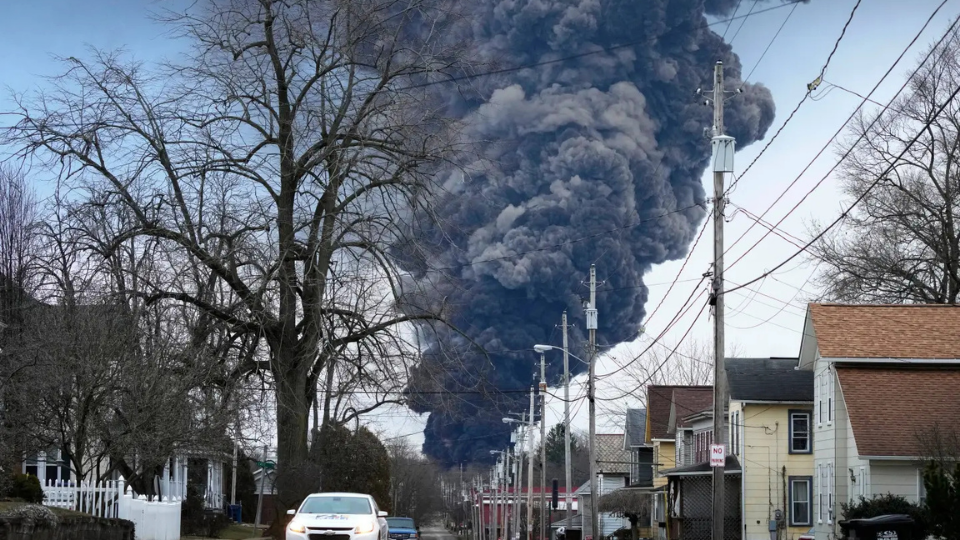
TWU represents the Norfolk Southern workers. It centralized its dispatch operations so much that lack of a timely warning to the engineer about an overheated—and then broken—axle was one big reason for the Norfolk Southern derailment in East Palestine, Ohio, two years ago.
But the union slammed Union Pacific. That railroad “has a shameful safety record and was caught by the federal government trying to meddle in a safety audit. There is no world where Union Pacific should be controlling a coast-to-coast rail network,” said TWU President John Samuelsen.
“A supersized Union Pacific would be catastrophic for TWU rail workers, shippers, and the safety of millions of Americans who live and work near freight rail lines.”
The union’s Rail Division director, John Feltz, elaborated: “Union Pacific cut railroad jobs even as other freight railroads ramped up hiring after the pandemic. They are not to be trusted by railroad workers nationwide and the TWU will fight any attempt to ram through a merger that Wall Street might like but is bad for railroad workers and the safety of everyone.”
“This is going to be a long, drawn-out process where many groups will have a say. We expect the Surface Transportation Board, the Federal Railroad Administration, key lawmakers, other railroads, and shippers to stand with organized labor and oppose this deal.” But so far the two agencies, other rail lines and Congress have been silent.
Signalmen President Mike Baldwin said rail workers must have “direct consultation all phases” of the merger. “Safety standards must be strengthened, not sidelined,” he added. The merger “may look impressive on paper,” Baldwin said. Reality is another matter.
“We’ve seen how consolidation often plays out in the real world: Cuts to staffing, rushed integrations, and top-down decisions that ignore the craft-knowledge of railroaders are a recipe for diminished safety and growing distrust.
“With past mergers, the cost has often been shouldered by those doing the work, not by those collecting the profits.
“We have no interest in being spectators, while another megamerger sidelines the workforce and compromises safety. This isn’t just a business deal—It is a seismic shift in how freight rail operates in America. Signalmen must be heard…The workforce is already stretched thin and beyond safe limits.”
The Brotherhood of Maintenance of Way Employees and the Brotherhood of Locomotive Engineers and Trainmen, both Teamsters Rail Conference unions, took a wait-and-see attitude towards the deal.
“We will withhold further comment until we have had the opportunity to meet directly with the executive teams of both carriers,” they said in a joint statement. “Those discussions will be critical to evaluating our position on this merger and what effect it may have on rail operations, employment, service and public safety.
Safeguarding well-being of members
“We are committed to safeguarding the well-being of our members and standing in solidarity with our brothers and sisters across the rail industry,” the two Teamsters-affiliates said, in a statement other rail unions echoed. “Our two unions will approach this merger with clear eyes and a firm resolve to protect jobs, rights, and the safety of those who keep this country moving.”
After Norfolk Southern Vice President Wai Wong confirmed the merger to him, Train Dispatchers (ATDA) President Ed Dowell said “any further consolidation of Class I railroads could not only have a negative impact on our members and their families, but on the nation’s supply chains and rail infrastructure.“
Dowell was the only union president to recall the disasters of past megamergers in the rail industry. They ranged from “the system meltdown following the Conrail split to the prolonged disruptions that resulted from the Union Pacific–Southern Pacific merger.”
He did not mention the disastrous New York Central-Pennsylvania Railroad merger that led to the combined Penn Central’s complete collapse, endangering freight rail service and jobs throughout the Northeast and Midwest. The U.S. government had to create Conrail to replace the combination.
“The recent CPKC (Canadian Pacific-Kansas City Southern) merger has come with its own set of problems as well, and many of those issues remain ongoing. There is no reason to believe this time will be different,” Dowell warned.
“Due to the fluidity of the situation, ATDA is preparing for the potential outcomes and will continue to advocate for the interests of its members throughout this process,” Dowell continued. His union “will provide timely updates as more information becomes available, including holding meetings with potentially impacted members.”
Members of both congressional transportation committees—on both sides of the political aisle—had yet to comment. Also silent, so far, was the Federal Trade Commission, the government’s main anti-merger watchdog.
Under now-departed Biden FTC Chair Lina Khan, it not only challenged mergers on anti-competitive grounds—i.e. trying to prevent the monopolies and the oligopolies corporations concocted—but also on their impact on both consumers and workers.
“If the agency is going to go up against some of the most powerful companies in the economy, it has to make sure it has the resources to fight back,” Khan, now a Columbia University law professor, told interviewer Brian Conover in a recent podcast.
But in an indication of the way the new Trump-named FTC majority is thinking, it just reopened the record on a major oil company merger from last year. Specifically, the FTC is rethinking its ban on the CEO of one of the two firms having anything to do with oil for five years. He had colluded with the Saudis for years to fix U.S. and world oil prices, the Biden-named FTC majority said then.
We hope you appreciated this article. At People’s World, we believe news and information should be free and accessible to all, but we need your help. Our journalism is free of corporate influence and paywalls because we are totally reader-supported. Only you, our readers and supporters, make this possible. If you enjoy reading People’s World and the stories we bring you, please support our work by donating or becoming a monthly sustainer today. Thank you!
CONTRIBUTOR