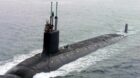
Since August, U.S. warships, fighter planes, and troops have deployed in Caribbean waters off Venezuela and in Puerto Rico. Venezuela’s neighboring countries in Latin America and the Caribbean area are reacting cautiously. Many oppose U.S. aggression, but at a distance. Others are either non-committal or accepting of the aggression.
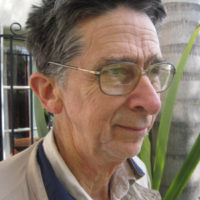
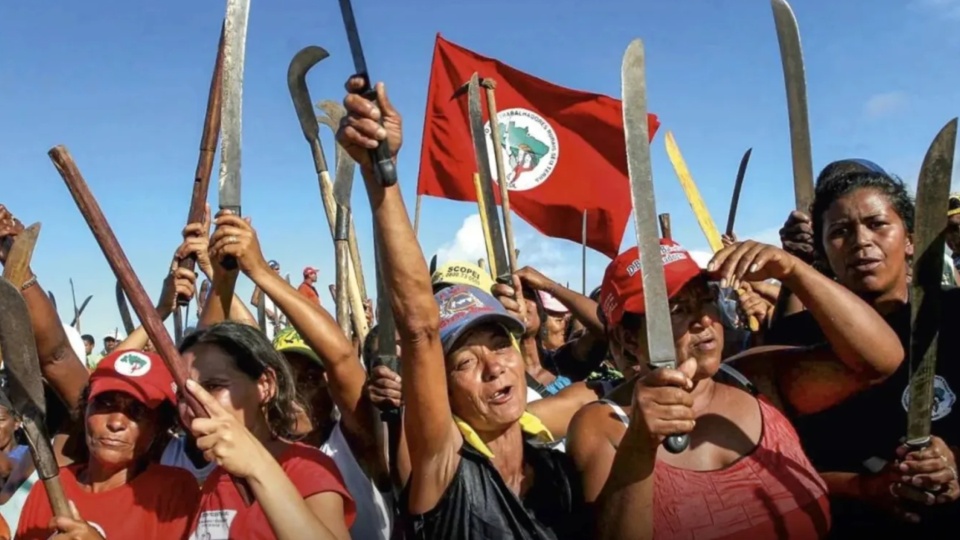
Colombia and Brazil are backing Venezuela—or soon will be—in very different ways. Recent remarks of João Pedro Stédile, co-founder and a director of Brazil’s Landless Workers’ Movement (MST), warrant special attention.
Stédile was interviewed Oct. 16 on Rádio Brasil de Fato, where he called for the organization of “internationalist brigades of activists…to go to Venezuela and place ourselves at the disposal of the Venezuelan government and people.”
He raised the example of the “historic epic that the global left achieved during the Spanish Civil War of 1936, when thousands of militants from around the world went to Spain to defend the Republic and the Spanish people.”
The MST, which he heads, “is the largest social movement in Latin America with an estimated 1.5 million landless members organized in 23 out 27 states.”
The militant call for solidarity comes as U.S. attacks from the air escalate. They have so far killed dozens of crew members of boats in waters off Venezuela alleged to be carrying illicit drugs. U.S. accusations against Venezuelan President Nicolás Maduro that he is a top-level drug dealer, serve as the pretext.
The U.S. government is now offering a $50 million bounty for his capture, despite the fact that its allegation that he heads the drug-dealing Cartel de los Soles still lacks any evidence. The cartel doesn’t even exist, according to a United Nations report. Jordan Goudreau, a former U.S. Special Forces member who led a botched 2020 effort to overthrow Venezuela’s government, recently claimed the CIA created the cartel.
President Donald Trump recently indicated the CIA would be operating inside Venezuela. It’s widely assumed that the U.S. government wants control of Venezuela’s oil and other resources and is contriving to remove a government heading towards socialism.
Venezuela’s government, meanwhile, is preparing for a possible U.S. attack, training militia troops by the millions. Defense Minister Vladimir Padrino López announced on Oct. 21 that the military will cooperate with Colombian counterparts to fight trafficking in drugs—an effort to repair relations between the two countries and also show the emptiness of Washington’s allegations.

Ties between the countries had deteriorated after Colombia’s government backed accusations that Venezuela’s 2024 presidential elections were fraudulent. But on Aug. 10, Colombian President Gustavo Petro stated on social media that, “Colombia and Venezuela are the same people, the same flag, the same history. Any military operation that does not have the approval of our sister countries is an act of aggression against Latin America and the Caribbean.”
Petro recently announced the Colombian military will be sharing intelligence with Venezuela.
The U.S. vilification campaign extends to Petro who, speaking at the United Nations General Assembly on Sept. 23, condemned U.S. support for Israel’s war on Gaza and U.S. imperialism generally. He railed against the U.S. at a rally outside the UN Headquarters.
In response, the U.S. government revoked his visa. Petro had previously put himself on Trump’s blacklist by refusing to accept Colombian deportees sent handcuffed from the United States in a military plane.
On Oct. 18, Petro accused the United States of killing a Colombian fisherman and violating Colombian sovereignty. Responding, Trump called Petro “an illegal drug dealer…[who] does nothing to stop” drug production. He imposed import tariffs and suspended subsidies granted Colombia for drug-war activities. In response, Petro recalled Colombia’s ambassador in Washington.
Colombia may be on Venezuela’s side, but that’s not clear with other countries in the region. Colombia, president pro tempore of the Community of Latin American and Caribbean States (CELAC) group of nations, arranged for a virtual meeting of foreign ministers to reach a common position. In 2014, CELAC had declared the entire region to be a “zone of peace.”
At the meeting taking place on Sept. 1, representatives of the 23 CELAC nations expressed support for “principles such as: the abolition of the threat or use of force, the peaceful resolution of disputes, the promotion of dialogue and multilateralism, and unrestricted respect for sovereignty and territorial integrity.”
Most of the countries voting approved, but Argentina, Ecuador, Paraguay, Perú, Costa Rica, El Salvador, Guyana, Jamaica, and Trinidad and Tobago did not.
Member nations of the Bolivarian Alliance for the Peoples of Our America–Peoples’ Trade Treaty (ALBA-TCP) did condemn U.S. military action in the Caribbean, though. The CARICOM group of Caribbean nations, meeting in late October, expressed support “for the sovereignty and territorial integrity of countries in the region” without reference however, to the United States and Venezuela.
Trinidad and Tobago was an outlier in its open support for U.S. aggression: Prime Minister Kamla Persad-Bissessar insisted that, “I have no sympathy for traffickers; the U.S. military should kill them all violently.”
Other regional presidents have spoken out against U.S. intervention, specifically: Mexican President Claudia Sheinbaum; Honduras’s President Xiomara Castro, Daniel Ortega, Co-President of Nicaragua, and Brazilian President Luiz Inácio Lula da Silva.
Lula is facing calls by the MTS to do even more, given the scale of the threat facing the region from U.S. imperialism. “It’s time for Lula’s government to take more decisive action and show more active solidarity with Venezuela,” the organization has said.
Stédile said in his Oct. 16 interview that U.S. threats against Venezuela have been ongoing for some time but that “the process was accelerated by the Trump administration,” motivated by “a mixture of madness and fascism.”
He worries that, with brute force, Trump may try to overthrow the Maduro government and “hand it over to María Corina [Machado] on a silver platter.” Stédile said that the awarding of the Nobel Peace Prize to Machado may have been a part of this strategy.
“If the United States is exerting all this military pressure to try to recover Venezuela’s oil, and…[if] María Corina…comes to power after the invasion, her first act will be to privatize PDVSA [Petróleos de Venezuela] and hand over other Venezuelan resources—I imagine iron, aluminum, gold, which they have a lot of—to American companies for exploitation.”
The U.S. effort, however, is mistaken about its odds for success, according to Stédile. “Never before has the Maduro government had so much popular support,” he said.
We hope you appreciated this article. At People’s World, we believe news and information should be free and accessible to all, but we need your help. Our journalism is free of corporate influence and paywalls because we are totally reader-supported. Only you, our readers and supporters, make this possible. If you enjoy reading People’s World and the stories we bring you, please support our work by donating or becoming a monthly sustainer today. Thank you!
CONTRIBUTOR