NEW HAVEN, Conn.—The historic New Haven People’s Center was filled to capacity on Saturday, Feb. 28, for the 52nd annual People’s World Black History Month event, where youth and community members gathered to honor this year’s theme: “DEFEND CIVIL RIGHTS! Unity in the Fight for Our Future.”
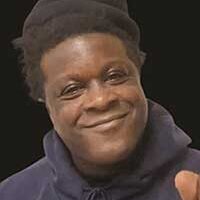
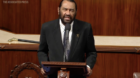
Guest speaker Eric Brooks engaged the entire audience with a ringing call that honored the long struggle of Black people in the United States and recognized the ongoing resistance in 2026 against racial and political repression. Brooks, editor of the CPUSA.org, the website of the Communist Party USA, also serves on the organization’s African American Equality Commission.
His remarks, which culminated an inspiring program featuring young people, began by addressing the current climate in the country, emphasizing the continued fight for democracy and freedom for Black communities. He referenced 1619 to draw attention to the nation’s origins in slavery and to highlight the lasting impact of racial inequality today.

Brooks said executive orders by Trump have rolled back many key civil rights protections, including diversity, equity, and inclusion (DEI) programs across federal agencies which affect those with disabilities, women, LGBTQ people, and people of color.
Throughout his remarks, Brooks underscored the urgency of mobilizing against policies harmful to minority communities, civil rights, and democratic rights. He stressed that the resistance will require grassroots organizing, collective unity, and political engagement in order to achieve real, lasting change in this country.
As guests arrived, they were greeted by the sounds of Paul Robeson performing his historic concert at Carnegie Hall in 1958.
Host Mary Thigpen gave the welcome, recalling that 100 years ago, in February 1926, Dr. Carter G. Woodson founded Negro History Week in response to the Jim Crow era, when Black history was deliberately excluded from school curricula. The movement later expanded into Black History Month. She reiterated that in 2026, MAGA policy is shredding long‑standing civil rights, voting rights, protest rights, and legal protections that previous generations fought to secure.

In tribute to the late Rev. Jesse Jackson, she recalled the ten-day “Rebuild America – Keep Hope Alive” march across Connecticut in August 1991, beginning at Bridgeport East End’s “Mount Trashmore” and ending at the state capitol in Hartford with more than 2,000 people.
Arts and writing competition
This year’s arts and writing competition for students in grades 8 through 12 showcased a wide range of impressive submissions of poetry, art, and essays which drew connections between the 65th anniversary of the Freedom Rides and today’s fight against fascism and for civil rights. The competition prompt also honored the brave legacy of Paul Robeson, acclaimed artist and activist who risked everything to advance racial justice, civil liberties, and peace. Every participant was recognized with a certificate and a copy of Paul Robeson’s book, Here I Stand.
First-place artwork “Turn the Volume Up,” created by Emilia DiPippo from Wilbur Cross High School, explores how the civil rights movement shaped her identity. She reflects on how Brown v. Board of Education made it possible for her to attend school alongside her best friend and makes the point that “progress is not permanent.”
Jaylee Pimental of Wilbur Cross High School wrote the first-place essay, titled “Freedom Was Earned, Not Given.” It explains how the civil rights movement was about far more than changing laws. Ordinary people marched, protested, and risked everything because they were tired of being treated unfairly due to their skin color. The essay emphasized that people of all races had to unite and speak out to transform this country’s laws, concluding, “Justice is not just for one group, it’s for everyone.”

Diana Robles from High School in the Community delivered her third-place poem, “When We Fight, We Win,” while classmate Japhet Gonzalez presented his second-place poem “17,” dedicated to the young freedom fighters of the 1960s whose sacrifices fuel his commitment to activism as a young person of the same age today.
Sound School student Journey Rosa earned the first-place poetry award with her powerful piece “Inheritance is a Verb,” which concludes “progress is not permanent unless we make it so.”
An 8th grade student was invited to share his essay about the terrifying story of a young family member who witnessed his parents being taken away by ICE. The story exposed the trauma that many immigrant families are facing under the current administration and what young people go through when their parents are kidnapped.
The story closed with the observation: “It’s so unfair to see how families are torn apart, and especially by a leader that doesn’t even know about history. Most of America was built off of immigrants, and getting rid of those immigrants is like removing the legs of a chair.”
Youth panel
The ceremony then shifted to a youth panel discussion moderated by Local 33 Unite Here Secretary Treasurer Arita Acharya. The conversation brought together two high school students, Brandon Daley of Metropolitan Business Academy and the Citywide Youth Coalition, and Melody Yunga of Wilbur Cross High School and CT Students for a Dream.
They were invited to reflect on their activism in today’s fight for civil rights and equality at a time when youth activism is being attacked by MAGA. As student activists, both called on the audience to support their fights.
Daley spoke of his organizing, which resulted in 171 high school students traveling from New Haven to the state capitol in Hartford the following week to testify before the Education Committee and demand an increase in needed public school funding.
Yunga called for participation in her organizing along with the Connecticut for All coalition for a public hearing before the Judiciary Committee to pass state legislation to expand protections for immigrant communities from the undemocratic terror being perpetrated by ICE around the country.
Acharya spoke of the New Haven Rising neighborhood organizing and demands that Yale University, with its $40 billion endowment, give a transformative amount of funding to make up the difference in education, housing, and living wage job needs in the largely Black and Latino city of New Haven. She received cheers when she spoke of her union’s organizing of post-doctoral workers at Yale.

Support for People’s World
Healthcare union organizer Stephanie Deceus led the People’s World fund appeal, highlighting the daily news platform’s importance to the labor-led people’s movement and the need for continued support to keep it thriving. With pride, the event’s $2,000 goal for People’s World Fund Drive was met thanks to the generosity of the diverse audience in an expression of appreciation for the role of the working-class publication.
Reflecting on the richness of the program, guest speaker Eric Brooks connected with the audience in his call for unity and solidarity to move forward and refuse to go back to the conditions of enslavement.
As the festivities concluded, participants gathered in a drum circle, where both attendees and youth played powerful rhythms symbolizing unity and strength. Participants left inspired with hope for growing coalition unity and solidarity to move forward for an expansion of civil rights, equality, and peace.
POETRY COMPETITION WINNERS
POETRY – First Place
“Inheritance is a Verb”
Journey Rosa
Sound School, New Haven
the civil rights movement is usually taught like a victory lap.
like discrimination was outlawed
and justice stayed put.
but for me, those rights mean access,
access that still feels conditional.
they mean the difference between a school
that prepares you for the future
and one that prepares you to endure it.
i’ve learned in classrooms
where underfunding isn’t abstract,
it’s missing counselors, broken heat,
and teachers doing the work of three people
because the system decided that was enough for us.
the right to education means i’m allowed to dream
without permission.
the right to housing means stability
shouldn’t be a privilege.
the right to employment means my name,
my skin, my neighborhood
shouldn’t be a disqualification before i even speak.
these rights don’t live in laws for me,
they live in outcomes.
and too often, they’re still waiting to be fulfilled.
people fought and died
so i could sit in these spaces at all.
young people,
not much older than me,
who chose courage
before they were ever promised safety.
the freedom riders were teenagers
who understood that fear doesn’t disappear
when you ignore it,
it disappears when you confront it together.
they inspire me because they didn’t wait
to be invited into history.
they stepped into it.
they understood legacy isn’t something you inherit quietly,
it’s something you carry loudly.
and they never fought alone.
it took Black organizers,
Latino laborers,
and progressive white allies
standing shoulder to shoulder
to force this country to look at itself.
not unity built on comfort,
but unity built on commitment.
the lesson for today is simple
and uncomfortable:
nothing changes without collective pressure,
and nothing survives without solidarity.
because when rights are challenged,
division is the first weapon used against us.
i think about my little sister,
six years old,
still learning the world as something fair.
i want her to grow up believing
her education will be funded,
her home will be secure,
and her future won’t depend on who decides
she deserves opportunity.
that’s why carrying the legacy forward
means more than remembering names.
it means organizing, voting, speaking,
and refusing to let silence become policy.
it means understanding that progress is not permanent
unless we make it so.
because if freedom is unfinished,
and inheritance is a verb,
what does it say about us
if we don’t continue the sentence?
POETRY – Second Place
“Seventeen”
By Japhet Gonzalez
High School in the Community, New Haven
They were teenagers too
That’s what shakes me
Not statues
Not chapters in a book
with strong, bold, words like historic, landmark, amendment.
They were kids
Backpacks on their backs and homework in their hands
Favorite sports, favorite songs,
who decided Freedom
was more important than being young
They sat at counters
where coffee was served with forced smiles
They rode buses
Where the driver didn’t stop eyeing the rearview
They crossed bridges
where the air tasted like tear gas
Some of them never turned seventeen
Some of them never made it to graduation
But they still graduated
from silence
to history
That’s what inspires me
Not that they were fearless
but that they held that fear
and went anyway
Because democracy isn’t an exhibit
It’s not encased in glass
It’s fragile
It cracks when people stop caring
It disappears when people decide
“someone else will handle it.”
Our consistency makes change
Change isn’t a gift wrapped in red, white, and blue
They are earned
with marches
with songs
with organizing
And with sacrifice
How can the torches pass the flame?
We gather the fuel and we remember
We burn our doubt and learn the names
We refuse to let history be edited into something tame
And so
We register
We vote
We speak
We create
We challenge
We build
We protect each other
Because the truth is
the same age that once sat at lunch counters
is now sitting on posters in classrooms
Seventeen is not too young
Seventeen is powerful
The legacy of historical leaders isn’t just something we celebrate
It’s something we continue
They passed the mic
They passed the movement
They passed the future
And now the future is in our hands.
POETRY – Third Place
“When we fight, we win”
By Diana Robles
High School in the Community, New Haven
When we fight, we win
echoes from the marches,
from voices that rose against segregation,
A vow whispered from those who refused, to demand dignity, justice, and the right to simply live.
They pushed forward through danger,
young people standing shoulder to shoulder
with elders who had already carried decades of struggle.
so I could walk into a classroom,
a workplace, a voting booth
without chains disguised as rules.
The unity of Black, Latino, and white organizers
Their stories are not history to admire from afar.
They are instructions.
They are fuel.
They are proof that change is built
when people refuse to stand alone.
And now it’s our turn
to speak when silence is easier,
Because to be ignorant is to be complacent,
We must stand together when division is loud, to remember that the fight for justice
belongs to all of us.
I watch as voting rights get chipped away,
books banned, voices silenced,
and I realize their fight is not behind us.
It’s right here, breathing down our necks.
We inherit not just their victories
but their unfinished work.
Its echoes reach us now,
asking whether we will stand as fiercely
when justice is once again contested
So I lift my voice,
I join my hands with others,
and I carry their legacy forward
Because the struggle is not over,
and neither is our power.
When we fight, we win.
We hope you appreciated this article. At People’s World, we believe news and information should be free and accessible to all, but we need your help. Our journalism is free of corporate influence and paywalls because we are totally reader-supported. Only you, our readers and supporters, make this possible. If you enjoy reading People’s World and the stories we bring you, please support our work by donating or becoming a monthly sustainer today. Thank you!
CONTRIBUTOR