The origins of chess are contested, but few dispute that while the game began in India, it was the Sassanian Persian Empire that refined it into a recognizable strategic system. It was Persia that codified its language, symbolism, and intellectual framework: the shah (king), the rokh (rook), and shatranj, the modern chess game.
This is not a trivial historical detail. It is, in many ways, a metaphor that has returned with force.
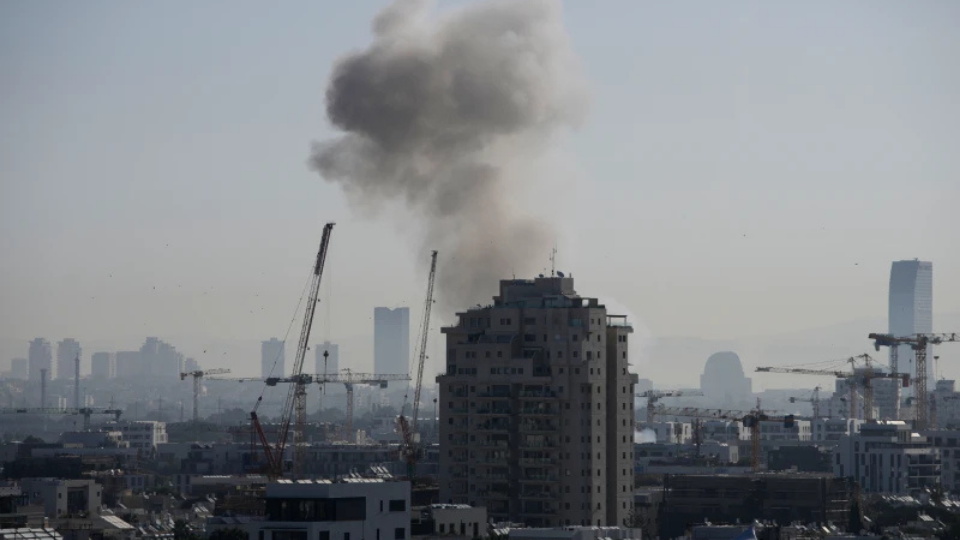
Since the start of the U.S.-Israeli war on Iran on February 28, 2026, political discourse—across Western, Israeli, and alternative media—has repeatedly invoked the analogy of chess to describe Iran’s conduct.
The comparison is seductive. But it is also incomplete.
Israeli Prime Minister Benjamin Netanyahu articulated this framing as early as May 2012. Speaking of Iran’s negotiating posture, he said that “it looks as though they see the talks as another opportunity to delay and deceive and buy time… Iran is very good in playing this kind of chess game, and you know, sometimes you have to sacrifice a pawn to save the king.”
That statement was not merely rhetorical; it revealed a long-standing Israeli interpretation of Iran as a strategic actor operating within a calculated, long-term framework.
More than a decade later, that framing has resurfaced with renewed urgency. Analysts, policymakers, and commentators now routinely describe Iran’s actions as deliberate, layered, and patient—defined not by immediate gains, but by positional advantage accumulated over time.
Some observers contrast this with what they perceive as a fundamentally different approach in Washington: one driven by immediacy, spectacle, and the politics of rapid outcomes.
But such a contrast, while tempting, risks oversimplification.
Iran’s approach is rooted in historical continuity. It understands the current war not as an isolated confrontation, but as the latest phase in a decade-long process of pressure, containment, and confrontation.
In this sense, the battlefield is not defined by days or weeks, but by political cycles measured in years—if not generations.
The objective of its adversaries, however, has remained consistent: Shāh Māt—checkmate—the dismantling of the Iranian state as a coherent political entity.
Yet this is precisely where the central miscalculation emerges.
When the Iranian Revolution overthrew the U.S.-backed Shah in 1979, the collapse of the system was swift and decisive. But it was not the result of external pressure. It was the inevitable outcome of a structurally brittle system.
That system was vertical—organized as a rigid hierarchy with power concentrated at the apex and legitimacy flowing downward. When the apex collapsed, the entire structure disintegrated.
If the people are the piyādeh—the pawns—then in that moment, they did not merely encircle the king; they overturned the entire board.
This experience helped shape a strategic doctrine that would later define U.S. and Israeli military thinking: the belief that removing leadership—what is often termed “decapitation”—can trigger systemic collapse.
This doctrine appeared to succeed in Iraq following the 2003 invasion and the eventual execution of Saddam Hussein. It appeared to succeed in Libya after the killing of Muammar Gaddafi in 2011.
In Latin America, the same doctrine has shaped U.S. intervention across decades—from the 1954 CIA-backed overthrow of Guatemala’s Jacobo Árbenz to the 1973 coup against Chile’s Salvador Allende and, most recently, the U.S. kidnapping of Venezuela’s Nicolás Maduro in Caracas in January 2026. In each case, the assumption was the same: remove the leadership, and the system would collapse with it.
But this model has repeatedly failed when applied to movements and societies rooted in popular mobilization rather than elite control.
In Gaza, Lebanon, and, crucially, Iran, the assumption that political systems function as fragile pyramids has proven fundamentally flawed.
These are not systems sustained solely by leadership. They are sustained by social depth. In other words, they are not pyramids—they are networks.
Their resilience lies in their ability to regenerate from within society itself. Leadership can be removed, but the political energy that sustains it cannot be easily extinguished.
Israel has long recognized, at least implicitly, that assassinating Palestinian leaders does not end Palestinian resistance. Yet it has persisted in such tactics, while simultaneously expanding its strategy.
Increasingly, the focus has shifted toward the population itself—raising the cost of resistance by targeting the social fabric that sustains it.
In Gaza, this strategy has reached its most extreme form: the systematic destruction of civilian life and the open pursuit of mass extermination and mass displacement.
In southern Lebanon, a similar logic is evident. Entire communities have been uprooted, towns devastated, and infrastructure erased—not merely as “collateral damage,” but as part of a deliberate strategy.
The aim is unmistakable: decapitate the leadership, then erode the people. Yet in Iran, this logic has encountered its most profound limitation.
Both Washington and Tel Aviv appear to have assumed that internal dissatisfaction could be weaponized—that social grievances would override national cohesion in the face of external pressure.
This assumption reflects a deeper misreading—not only of Iranian society, but of how legitimacy itself functions within it.
Iran is not a monolithic system in the way it is often portrayed. Its political life is dynamic, contested, and deeply embedded in society. Legitimacy is not imposed from above; it is continuously negotiated within the public sphere—through electoral participation, protests, and other forms of political engagement.
This dynamism produces a system that is far more resilient than it appears from the outside. The removal of a leader, or even multiple leaders, does not signify collapse. Nor does the symbolic destruction of state power.
The system persists because it is not reducible to individuals. It is reproduced through collective political experience.
This is where the chess analogy becomes truly revealing.
Iran’s strategic strength does not lie in protecting a single “king,” but in its ability to reconfigure the board itself.
In this game, continuity is not tied to any one piece. It is embedded in the relationships between them. The rallies, marches, and sustained public mobilization that have continued throughout the war are not incidental. They are central.
They represent, in effect, a collective “Shah”—a form of political sovereignty that cannot be eliminated through assassination or decapitation.
Some may argue that Iran is not merely playing chess, but rewriting its rules. That, perhaps, is the most unsettling realization of all.
For if the rules themselves have changed, then the strategy designed to defeat Iran may already be obsolete.
As with all op-eds and news analytical articles published by People’s World, the views expressed here are those of the author.
We hope you appreciated this article. At People’s World, we believe news and information should be free and accessible to all, but we need your help. Our journalism is free of corporate influence and paywalls because we are totally reader-supported. Only you, our readers and supporters, make this possible. If you enjoy reading People’s World and the stories we bring you, please support our work by donating or becoming a monthly sustainer today. Thank you!
CONTRIBUTOR