Streets and hospital corridors at night in Cuba are dark. Cars and buses don’t move. Cubans walk or ride bicycles. Trucks don’t arrive to remove trash, and so it burns. Offices, production units, and operating rooms are closed down. Older people and babies are dying when they shouldn’t have to.
It’s been more than three months since a regularly scheduled oil tanker arrived in Cuba’s ports, with all incoming energy shipments halted since the U.S. government on Jan. 29 imposed punishing tariffs on any nation sending oil to Cuba.
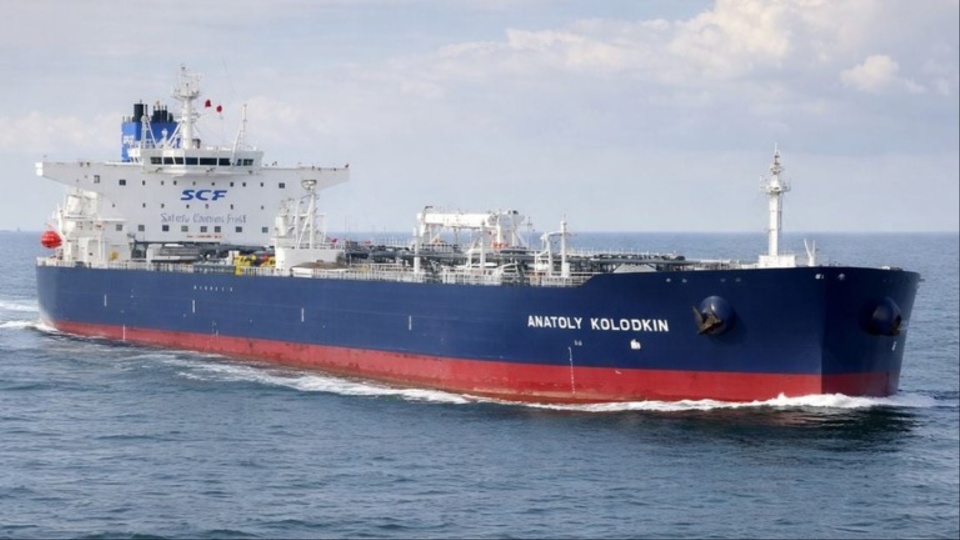
Finally, this past weekend, came a reprieve: On March 30 the Russian tanker Anatoly Kolodkin, loaded with over 700,000 barrels of oil aboard, arrived in the waters off Matanzas, Cuba.
The vessel, sanctioned by the U.S. government in 2024, has been following a wandering course on its way to Cuba, accompanied by media speculation over whether U.S. President Donald Trump would allow it to reach its destination. For now, it’s cargo seems to be the sole exception to the rules of Washington’s oil chokehold.

The effort to strangle Cuba’s energy grid tops off a long, cruel, and illegal economic blockade aimed at removing the island’s socialist government—a government which offended the U.S. ruling class long ago by saying “No” to oppression and exploitation, “Yes” to national independence, and by acting accordingly.
Despite the breathing room offered by the Russian oil tanker’s arrival, a crisis like no other remains at hand. Cuban President Miguel Díaz-Canel assured visiting solidarity activists recently that Cuba “would not abandon its socialist principles of sovereignty and dignity.” He told interviewer Pablo Iglesias on March 27 that, “I share with my family that we would give our lives for the revolution.… [W]e, as revolutionaries, always prepare for the worst-case scenario.”
Cuba has friends
Organizations and individuals worldwide have been responding to Cuba’s dire needs. Britain’s Cuba Vive Medical Aid Appeal recently raised £250,000 for Cuba. Solidarity activists in Italy and Spain are sending aid. Those in the United States are campaigning for donations to allow Global Health Partners and Global Links to send medical supplies. The Hatuey Project and the Los Angeles Hands Off Cuba group have sent supplies.
The international Nuestra América (Our America) Convoy arrived in Havana in the days prior to March 21. The Progressive International had conceived of and organized this gathering of hundreds of solidarity activists from more than 40 countries. They brought tons of humanitarian materials.
Speaking at a welcoming event for participants, Gerardo Pisarello, Spanish parliamentarian for the Sumar Party, stated that, “We are here today to give back to millions of Cubans what they taught us as they sent out doctors, teachers, and vaccines to the most remote corners of the world.”

The Mexican tuna boat “Maguro,” renamed “Granma 2.0,” departed from Progreso, Yucatán, and arrived late because of bad weather. Abroad were 25 solidarity activists, 30 tons of food, medicines, healthcare materials, and 73 solar panels. A Mexican Navy ship and two smaller boats had accompanied the vessel.
Nations in solidarity
Some countries are reaching out. None have sent oil, though, until now. Spain’s government will be delivering food and medical supplies to Cuba via the United Nations system. Canada is donating $8 million CAD worth of aid, also through UN agencies. South Korea’s agricultural ministry gave 24,000 tons of rice to Cuba in December 2025.
The Red Cross in Vietnam transferred $15.1 million to Cuban officials in August 2025 and $23.3 million more in October. The Vietnamese private company Agri VMA, a rice grower in Cuba’s Pinar del Rio since 2023, delivered 250 tons of rice to Cuba’s Ministry of Agriculture on Feb. 17. Brazilian social movements and oil workers mounted an “Oil for Cuba” campaign aimed at pressuring Brazil’s government and its Petrobas oil company to send oil to the island, while the Communist Party of Canada is urging Ottawa to sell Albertan oil to Cuba.
Mexico and China are doing the most. Mexico’s government concentrates on food. Two Mexican Navy ships with food aboard, plus other supplies, arrived in Cuba twice during February and twice during March. They have brought 3,125 tons of aid material in all.
Mexican President Claudia Scheinbaum, speaking to reporters on March 24, insisted that, “No one determines the fate of another nation except its own people.… The self-determination of peoples is enshrined in our Constitution and is our firm conviction.”
Former President Andrés Manuel López Obrador (AMLO) on March 14 urged Mexicans to deposit funds for aid to Cuba in the bank account of the civil association “Humanity with Latin America” (Humanidad con América Latina). AMLO was endorsing the plea for funds published earlier by La Jornada news service and signed by over 200 activists, mostly journalists and academics.
China lends a hand
China is Cuba’s other major supplier of essential goods. Cuba needs energy independence, specifically freedom from fossil fuels. The crude oil Cuba itself produces is insufficient, heavy, and difficult to use. Cuba’s oil-fueled electricity generating plants are antiquated and break down frequently.
Its solar power capacity, amounting in early 2025 to only 5.8% of the island’s total energy need, now exceeds 20% of Cuba’s total requirement. That’s enough to supply almost 40% of Cuba’s electricity needs during daylight hours. China has supplied the credit, the photo-voltaic units, the associated equipment, and the technical assistance to make this happen.
As of late last year, 49 new solar parks were producing electricity. There will be 92 of them by 2028. The new installations account for 1,000 megawatts of additional daily capacity, and after next year, there will be 1,000 more megawatts.
According to energy analyst Jonas Muthoni. “Each megawatt of solar capacity installed represents approximately 18,000 tons of imported fuel no longer needed. If Cuba reaches its 2,000-megawatt target by 2028, oil blockades could become economically irrelevant.” Cuba must add “500-600 megawatts of battery storage” to meet that objective.

China’s government has also provided individual solar systems for local use. Presently, 5,000 solar systems are being installed throughout the island in 280 hospitals, 430 polyclinics, maternal homes, water pumping stations, and telecommunications units. These are “2-kilowatt kits [with] solar panels, inverters, and storage batteries.” The goal is to eventually install 10,000 of these individualized photovoltaic systems.
China has also provided Cuba with wind turbines, and new wind farms will add to the island’s electricity-generating capacity. Cuba over recent years has obtained electric buses, replacement parts, and miscellaneous equipment from Chinese companies. Many Cubans now use Chinese electric scooters and tricycles. A few electric automobiles have appeared.
A Chinese shipment of 15,600 tons of donated rice arrived in Havana on March 25. An earlier shipment of 15,000 tons had arrived in January. China is providing technical help for increasing Cuba’s rice production.
Mexico’s dilemma
Despite the arrival of food assistance and the promise of greater future energy independence thanks to help from China, Cuba still desperately needs oil now. In 2025, Mexico accounted for 44% of Cuba’s imported oil. The rest came from Venezuela, with a tiny bit from Russia.
With Venezuelan energy production already under U.S. influence since the January attack on that country’s leadership, the oil blockade mostly targets shipments from Mexico. Although Scheinbaum fondly recalled that Mexico provided Cuba with oil in the past, she recently determined that sending oil now is apparently inconsistent with contractual agreements of the state-owned Pemex oil company.
Mexico’s government seeks to preserve U.S.-Mexican trade and commercial relationships. And with good reason: Mexico is now the largest U.S. export market for the United States, and 80% of Mexico’s exports go to the United States.
Analyst Mateo Crossa points out that, “Mexico has become structurally integrated into the U.S. fossil energy regime, serving both as a major importer of U.S. natural gas and as a strategic conduit for U.S. energy exports, particularly to Asian markets via its Pacific coast.” He describes “Mexico’s energy sector…[as] fully aligned…with U.S. strategic interests.”
Additionally, Mexico’s government is negotiating modifications of the United States-Mexico-Canada Agreement on trade, which dates from 2020. Seeking to preserve a favorable investment climate and prosperous trade relationships, Mexico’s government would naturally enough seek to avoid offending its U.S. negotiating partner—for example, by sending oil to Cuba. Already there is friction over U.S. migration policies, U.S. threats of military action against drug traffickers in Mexico, and U.S. lust for Mexico’s strategic minerals.
The U.S. energy blockade of Cuba is evolving, but it also has its gaps. Reuters reported on March 25 that operatives inside the United States had shipped 30,000 barrels of fuel to private sector businesses in Cuba in February. Secretary of State Marco Rubio’s explanation laid bare the blockade’s capitalist underpinnings. The U.S. purpose, he indicated, was “to put the private sector and individual private Cubans—not affiliated with the government, not affiliated with the military—in a privileged position.”
The surprising arrival of oil from Russia offers Cuba a ray of hope. A large world power had not yet intervened, and U.S. decision-makers will surely be adjusting their calculations on that account. The outcome of this latest stage of U.S. anti-Cuba aggression is by no means clear. The continued insertion of international solidarity, especially of entities with resources and power, nations and governments in particular, will help determine what happens.
Cuba’s plight highlights the lack of an effective system of international governance and enforcement of internationally-accepted norms. Just as Cuba is a causality of U.S. imperialism, so too the United Nations system has run afoul of planetwide imperialist claims.
The response so far of almost all national leaders and spokespersons to the crisis in Cuba is telling. The silence of most nations testifies to their timidity in confronting the U.S. blockade and U.S. narrative. Their total immersion in the globalized capitalist system is on display.
We hope you appreciated this article. At People’s World, we believe news and information should be free and accessible to all, but we need your help. Our journalism is free of corporate influence and paywalls because we are totally reader-supported. Only you, our readers and supporters, make this possible. If you enjoy reading People’s World and the stories we bring you, please support our work by donating or becoming a monthly sustainer today. Thank you!
CONTRIBUTOR