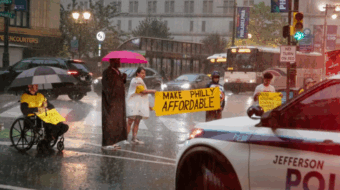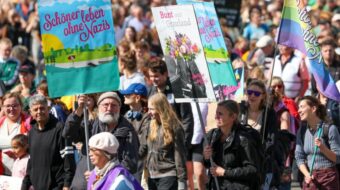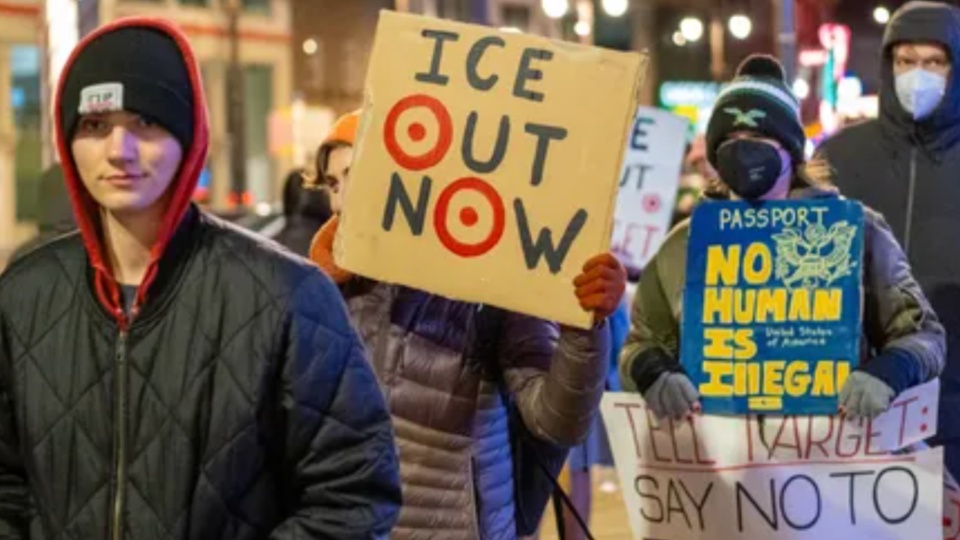
This question has occupied the minds of millions of working people across the United States as Donald Trump and his allies on the extreme right have tightened their grip on American life. The people’s answer has been resounding: The No Kings protests have been the largest demonstrations in American history, while whistle-toting brigades have become symbols of the resistance to ICE.
Among these efforts, two initiatives have stood out for striking at the economic foundations of the extreme right: the recent general strike in Minneapolis and a nationwide Target boycott against their failed promises to Black communities and anti-DEI policies.
The impact that these grassroots struggles have had in fighting fascism makes them inspiring examples for all working people as the fight against Trumpism continues. They also provide critical lessons for activists in Philadelphia—and everywhere—as we continue our own struggles.
The Minnesota General Strike: A day years in the making
The images out of Minneapolis this January rippled across the nation. They showed a city under federal occupation and innocent people arrested or killed by their own government. But scenes of people protecting their friends and neighbors also showed the power of solidarity. The culmination of this solidarity came on Jan. 23, when tens of thousands left their workplaces and braved -15 degree weather to fill the streets in protest.
Less apparent to those outside of the city, however, were the organizing structures that made this all possible.
One of the most notable aspects of the strike in Minnesota was the leading role the labor movement played in the coalition. This was no accident. Unions in Minnesota have been central to winning a variety of policy victories in the state through what they call the “Minnesota Model.”
In this approach, the solidarity that unions have traditionally expressed in the workplace is extended to fights for broader policy wins, whether that be for a $15 minimum wage, against police brutality, or for free school meals. Through these efforts, unions built connections with faith organizations, political groups, and community organizations that allowed them to mobilize swiftly when action was needed.
The importance of this holistic, labor-led approach to organizing was demonstrated amply in the general strike. While, because of decades-old union-busting laws, unions did not formally call for a strike, their memberships mobilized nonetheless. Teachers and hospitality workers called out sick en masse. Even this tactic was a demonstration of the power of the Minnesota Model, as in many cases, it was the Earned Sick and Safe Time law, in effect since 2024, which gave workers the ability to participate.
The Minnesota General Strike demonstrated the importance of the hard, sometimes thankless work that goes into building communities that can fight back against the extreme right. It was because so many Minnesotans were connected with organizations in their community and their workplace that they could work together effectively.
It was the alliance these organizations had built through years of struggle that allowed them to form a single movement. And it was the leading role of the labor movement that gave the general strike the economic power to effect real change.
The Target boycott: Bringing the fight to capital’s bottom line
January also marked the one-year anniversary of another struggle against the extreme right that started in Minnesota: the Target boycott. It was at Target’s headquarters in the state that the company announced it was rolling back the diversity, equity, and inclusion (DEI) initiatives it had enacted in the wake of the killing of George Floyd. It was also at Target’s headquarters that local activists announced an indefinite boycott of the company until these programs are restored.
What started in Minnesota went national. A coalition in Washington, D.C., picketed a local Target for almost an entire year. The American Federation of Teachers joined the boycott on Labor Day. Here in Philadelphia, local churches joined a “Target fast” effort during the Lenten season. The boycott had massive effects on Target’s bottom line, with the company’s stock price dropping by more than 50% and the company’s CEO deciding to step down in late 2025.
One of the most notable aspects of the Target boycott was how its goals adapted over time to the different ways the Trump administration worked with the company to attack working people.
As Target stores were used as bases for ICE raids in Minneapolis this January, and Latino workers were detained in Target stores in the city, a coalition of faith leaders occupied the company’s headquarters demanding change. Nationwide actions at Targets followed, and the company’s CEO broke with the administration by signing a letter calling for de-escalation of actions in the city.
However, organizers have called for substantive changes from Target, including protections for its customers and employees against ICE action, as a condition for stopping their boycott.
This latest effort against Target’s cooperation with ICE has also spread to Philadelphia. The No ICE Philly Coalition has organized a number of actions at local Target stores. They echo the demands that Target clearly state its opposition to ICE actions and affirm itself as a 4th Amendment workplace, which would protect its customers and employees from ICE actions on Target property without a judicial warrant.
In this way, activists hope to bring the action against Target to a new stage, fighting not only the extreme right’s racist anti-DEI policies, but also their brutal attacks on immigrant workers.
Building the resistance in Philadelphia
The examples of the Minnesota General Strike and the boycott against Target are important markers of how to build the fightback against fascism. They show the importance of a fighting labor movement taking a leadership role, the benefits of coordination between unions, faith groups, community organizations, and others involved in the fight against ICE.
Minnesota also underscores the economic power that ordinary people can wield when working together—not least of which because it shows the importance of understanding the connections between campaigns as disparate as those for DEI and against ICE to defeating the extreme right in all of its forms.
That being said, it is not possible for Philadelphians to simply copy the example of other cities. How, then, should we apply these lessons in our own lives? There are three elements that are deserving of particular focus.
First, the example of Minnesota speaks to the importance of being organized. This can take many forms, whether that be through connection to a politically active religious group or to a political or community organization. However one does it, being connected to other ordinary people engaged in the fight against fascism allows us to pool our efforts and achieve goals that would be impossible on our own.
In addition, for those in these organizations working to build broader coalitions between different groups can help to create the kind of city that is capable of resisting even the strongest of federal onslaughts.
Second, for those who are members of labor unions, urging co-workers and fellow members to use their economic and political power to defend working people as a whole is essential. Unions played a leading role in Minnesota, and they can likewise play an indispensable role in efforts against the Trump administration in Philadelphia.
For those who are not members of unions but are interested in organizing their workplace, these examples likewise speak to the power of unions to win not only economic gains for their own workers but their essential role as part of the broader campaign against the extreme right.
Finally, taking actions that use our economic power to fight back is essential. Every one of us can participate in the boycott against Target and ensure that we have signed a boycott pledge to let the company know whose business they are losing. Taking these campaigns to our local stores makes the fight concrete. Similarly, in other campaigns against corporations aligning with MAGA, we should think about how we can have real economic impacts.
In short, the answer to the question “What can I do to fight fascism?” is a multifaceted one. By keeping the lessons of the efforts over the past year in mind, we can ensure that we are each doing our part.
What can I do next?
- Sign a pledge to boycott Target.
- Join a community organization: There are dozens of groups across the city doing the work of fighting MAGA. If you aren’t a member of one, join one! One of many great organizations discussed in this article is No ICE Philly. If you’re not in Philly, there are bound to be local groups in your area.
- Organize your coworkers: If you are part of a union, push them to join the fight against Trump. If you are not, consider organizing your workplace.
- Get involved in local politics: Local officials play a key role in the fight, and local elections are happening all of the time. Support a campaign, or if necessary, start one.
As with all op-eds, the views expressed above are those of the author.
We hope you appreciated this article. At People’s World, we believe news and information should be free and accessible to all, but we need your help. Our journalism is free of corporate influence and paywalls because we are totally reader-supported. Only you, our readers and supporters, make this possible. If you enjoy reading People’s World and the stories we bring you, please support our work by donating or becoming a monthly sustainer today. Thank you!
CONTRIBUTOR