A recent report, State of Latinos in California, published by the UCLA Latino Policy and Politics Institute, shows data that Latinos make up nearly two in five workers in California. What are the trends forecasted in the report?
- Younger Latinos are attaining higher levels of education than previous generations.
- Latino entrepreneurship has grown by 44% percent since 2008.
- Latino workers play indispensable roles in the industries that keep California running.
The report also indicates the structural barriers that keep Latinos from full access to opportunities, such as remaining highly represented in lower-wage, labor-intensive sectors, and the wage gap persists. This data is useful for assessing the role of Chicanos/Latinos in the United States and in the state of California.
The Latino/Chicano(a) identity
Latino/Chicanos(a) are not separate from the working class. We are an important and integral part of the working class. There should be no doubt about this. In California and across the country, demographics indicate that Latinos/Chicanos(a) are influential because of our numbers. The UCLA Latino Policy and Politics Institute’s recent study makes this very clear.
For example, the Latino population has surpassed 68 million, which is 20% of the U.S. population. There are 35 million Latino workers with a 69% labor force participation rate. California has nearly 7.8 million workers with a Latino population of 41%. 37.4 million people of Mexican origin in the U.S. represented nearly 60% of the nation’s Latino population in 2022. Those of Puerto Rican origin are the next largest group, at 5.9%, which does not include another roughly 3.2 million Puerto Ricans who live on the island, according to Pew Research.
Within this community, many Latino/Chicano(a) activists continue to organize at the grassroots level to address tough social problems and engage the community in addressing the extreme inequality in the distribution of urban infrastructure, rural services, and other social needs. In many cases, community activists brought working people together to create community programs and to put pressure on institutions and politicians to improve community access to services and to challenge inequality and unfair practices. Most recently, the Latinos/Chicanos(a) have begun to play an active role in the labor movement, although in the past the labor movement was still a white male-dominated organization. However, as a growing community, we learned from history and past struggles.
This community has matured over the decades, despite all the setbacks endured. We can review one aspect of this maturity. The majority of Latino voters believe that their economic fortunes have declined under the Republican majority, including President Trump’s tenure, with 55% of Latinos viewing Democrats as a little bit more responsive to their needs but clearly view the GOP as hostile, according to UnidosUS.
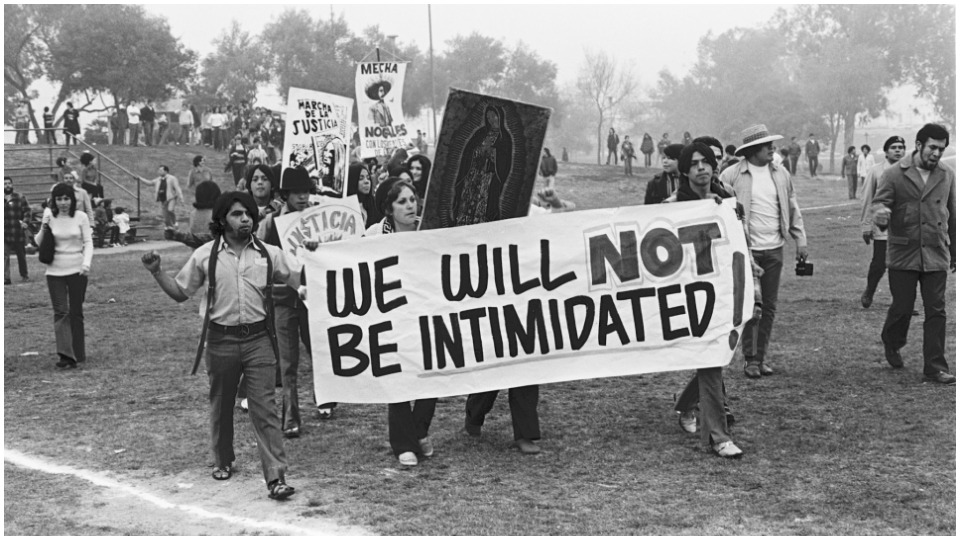
Today, there is a new political maturity in the Latino/Chicano(a) community. This maturity has its roots in the establishment of the Mexican-American movement starting in the 1940s, when many Mexican-American GIs returned to their communities. Political and community empowerment organizing continues today as well.
Although Mexican-Americans have been active members of the progressive movement dating back to the 1800s, this marked the beginning of a rich progressive movement within the Mexican-American community. Later, the Mexican-American/Chicano(a) movement would become rooted in this tradition; it marked the beginning of a rich progressive movement in the Mexican-American/Chicano(a) community, creating avenues for new political maturity and renewed militancy.
The Latino/Chicano(a) community has developed, over the years, alliances with other groups that are necessary for this turbulent period. This new community and alliance-building is an important part of the current Latino/Chicano(a) movement organizing, which will eventually realign California and, in the process, realign American politics. This movement realignment, in collaboration with grassroots community action, the political left, and the trade union movement, is a struggle for social change at the grassroots level. This type of movement scares many people within America, but the struggle and unity-building will continue.
As with all op-eds and news analytical articles published by People’s World, the views expressed here are those of the author.
We hope you appreciated this article. At People’s World, we believe news and information should be free and accessible to all, but we need your help. Our journalism is free of corporate influence and paywalls because we are totally reader-supported. Only you, our readers and supporters, make this possible. If you enjoy reading People’s World and the stories we bring you, please support our work by donating or becoming a monthly sustainer today. Thank you!
CONTRIBUTOR