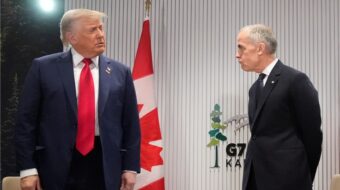
TORONTO—A sweeping new executive order signed by President Donald Trump has forced one of Canada’s most significant foreign investors out of Cuba, drawing sharp condemnation from solidarity groups who say Washington is using financial coercion to override the sovereign economic decisions of other nations.
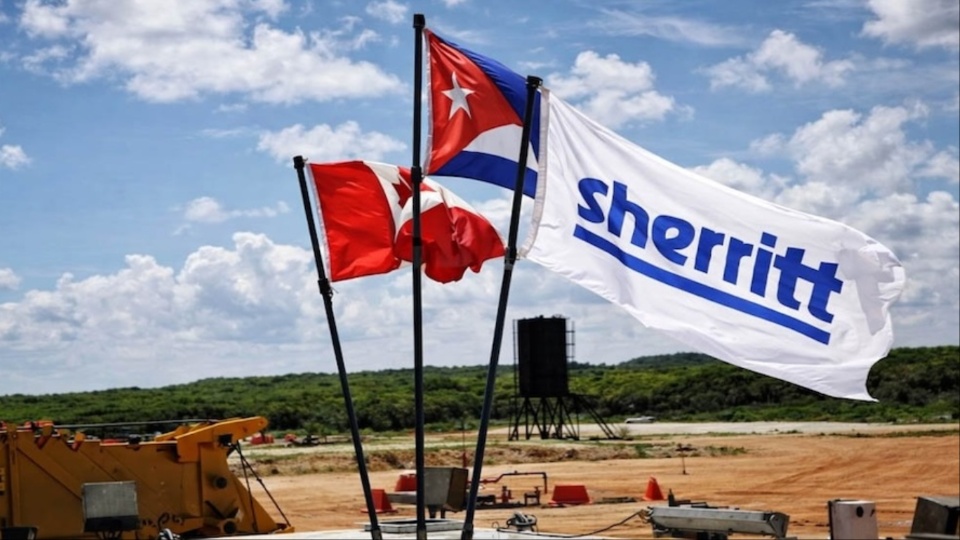
Toronto-based Sherritt International Corporation, the largest foreign investor in Cuba for over three decades, announced on May 7 that it was suspending all direct participation in its joint venture activities on the island and immediately bringing back its Canadian employees currently stationed in Cuba—a direct fallout from Executive Order 14404, which Trump signed on May 1.
After attacking Venezuela and kidnapping its president, Nicolás Maduro, in January, Trump said “Cuba is next.” Step by step, he seems to be making good on the threat.
His May 1 order, framed as a measure to hold the Cuban government “responsible for repression” and supposed threats to U.S. national security, does far more than target Cuban officials. Legal experts say its secondary sanctions provisions—which threaten foreign financial institutions with loss of access to U.S. correspondent banking accounts if they process transactions involving designated Cuban entities—are effectively an attempt to extend Washington’s domestic law across the globe.
The law firm Mayer Brown described the order as “intended to internationalize pressure on the Cuban government by deterring foreign commercial engagement with certain targeted sectors or actors linked to the Cuban government.” Under the order, any non-U.S. person operating in Cuba’s energy, metals and mining, financial services, defense, or security sectors can face asset-blocking sanctions.
On May 7, Secretary of State Marco Rubio announced the first designations under the new authority, targeting GAESA—the Cuban military conglomerate said to control at least 40% of the island’s economy—as well as Moa Nickel SA (MNSA), the joint venture in which Sherritt holds a 50% stake alongside Cuba’s publicly-owned General Nickel Company.
Three decades of partnership with Cuba
Sherritt is widely considered to be Cuba’s largest foreign investor, with a history in the country spanning more than 35 years. The company began purchasing Cuban nickel concentrate for its Fort Saskatchewan, Alberta, refinery in 1991, and in December 1994 formalized a 50/50 joint venture with Cuba’s General Nickel Company to integrate mining at Moa, in Holguín province, with refining in Alberta.

It was also hit by the U.S.’ blockade on Cuba in that era, long before Trump. The company was the first to be targeted by the 1996 Helms-Burton Act, the law which sought to strangle Cuba while its economy was in freefall in the post-Soviet period. Sherritt executives were banned from entering the United States because the industrial sites on which it operated in Cuba had been expropriated from private ownership by the socialist government decades earlier.
Canadian law, however, does not forbid trade with Cuba, and the company was undeterred by U.S. actions. In 1998, Sherritt further expanded into Cuba’s energy sector, establishing Energas S.A., which operates 506 megawatts of independent power capacity—making it the island’s largest independent power producer.
During the commodity boom of the late 2000s, Sherritt’s market value approached $5 billion CAD. In 2025, the Moa joint venture produced 25,240 tons of nickel and 2,728 tons of cobalt, while Energas generated 799 GWh of electricity.
Sherritt had already been battered before the latest executive order arrived, though. It is reported that Cuba owes the company at least $344 million USD, and nickel production has declined from 34,876 tons in 2021 to 25,240 in 2025. In February 2026, Sherritt suspended nickel and cobalt production at Moa due to fuel shortages stemming from the U.S.’ energy blockade of the island.
Still, the May 7 executive order designations appear to be a fatal blow for not only the company’s business with Cuba but perhaps its very existence. Three board members—Chairman Brian Imrie, Richard Moat, and Brett Richards—resigned with immediate effect the same day Sherritt announced the suspension of Cuban operations.

The company has since filed an application with the Ontario Superior Court of Justice to allow its reduced board to continue functioning. Its Fort Saskatchewan refinery continues to operate on existing feed material inventory, but that supply is expected to run out by mid-June 2026, by which point Sherritt must make permanent decisions about its future.
Direct assault on Canada’s sovereignty
The Canadian Network on Cuba (CNC), a solidarity organization, issued a forceful statement calling Trump’s executive order “yet another illegal attempt to extend U.S. domestic law beyond its borders and impose Washington’s unilateral sanctions regime on the entire world.”
“This represents not merely an attack on Cuba, but a direct assault on Canada’s sovereignty, on international trade law, and on the principle that no state has the right to dictate the economic relations of other nations,” the CNC’s Executive Committee wrote.
The statement calls on Prime Minister Mark Carney’s government to invoke and enforce Canada’s Foreign Extraterritorial Measures Act (FEMA), legislation originally amended in the 1990s in direct response to the U.S. Helms-Burton Act, which was itself designed to penalize foreign companies doing business with Cuba. The CNC warns that failure to act now would render FEMA “little more than a hollow gesture.”
“If Canada accepts Washington’s ability to punish Canadian enterprises for engaging in lawful commerce with a third country, then Canada ceases to exercise meaningful economic sovereignty,” the network wrote. “Today it is Cuba. Tomorrow it could be any country or sector that falls afoul of U.S. geopolitical objectives.”
Fred Wilson, writing for the Canadian Centre for Policy Alternatives, said on the eve of Trump’s order: “For most of the 67 years since the Cuban revolution, successive Canadian governments played the ‘Cuba card’ to assert independence from U.S. hegemony—that is, they have refused to align themselves with the United States’ hostile approach to Cuba, and used that lack of alignment to differentiate themselves from the U.S. on the world stage.”
The situation has changed, however. “Today,” Wilson argued, “Canada’s failure to play the Cuba card stands out as a confounding failure of Canadian policy and resolve.” Carney has been mostly silent on the latest U.S. aggressions against Cuba, ignoring pressure from below.
 The Canadian Labour Congress—the largest federation of Canadian unions—has condemned Trump’s attacks on Cuba and urged Ottawa to break ranks. It called on the Carney government to “stand with Cuba and defend the Cuban people’s rights to sovereignty and self-determination.” The CLC demanded that the Government of Canada “vigorously denounce U.S. aggression and defend the principles of international law,” while rushing aid to the people of Cuba.
Going beyond humanitarian concerns, the CNC also highlights a particular irony in targeting Sherritt: The company operates nickel and cobalt refining capacity in Alberta that is crucial to the North American battery supply chain and energy transition. “While Washington speaks endlessly about securing critical mineral independence,” the statement reads, “its policies are actively undermining one of North America’s key refining operations because of its relationship with Cuba.”
Broader fallout
The Trump administration has enacted over 240 new sanctions against Cuba since January 2026, which have been piled on top of the already 64-year-old blockade. These latest measures have slashed the island’s energy imports by 80 to 90%. Cuba’s economy is projected to contract by 7.2% in 2026, according to the Economist Intelligence Unit. The United Nations Human Rights Office has warned that the blockade and ensuing fuel shortage have threatened Cuba’s food supply and disrupted water systems and hospitals.
The extraterritorial reach of E.O. 14404 has alarmed governments and businesses far beyond Canada. Legal analysts at Bird & Bird note that European financial institutions processing transactions traceable to designated Cuban entities risk losing their access to U.S. dollar correspondent accounts, effectively cutting them off from global dollar-clearing systems.
The Morrison Foerster law firm warns that all non-U.S. companies across sectors from energy to financial services will have to review their “Cuba-related exposure” or risk being targeted by the Trump administration.
Sherritt’s departure strips Cuba of its largest foreign mining partner and could reduce the island’s independent power generation capacity by an estimated 10 to 15%. Paolo Spadoni, a Cuba scholar at Augusta University, told the Canadian Broadcasting Corporation, “With Sherritt suspending operations, the U.S. has now effectively targeted all of Cuba’s main sources of hard currency.”
The CNC’s statement demands that Ottawa publicly denounce the executive order, invoke FEMA, provide legal and financial protections to affected Canadian firms, and coordinate with Mexico, the European Union, and CARICOM nations in resisting Trump’s extraterritorial reach.
“Silence and inaction are not neutrality,” the network concluded. “They amount to acquiescence.”
We hope you appreciated this article. At People’s World, we believe news and information should be free and accessible to all, but we need your help. Our journalism is free of corporate influence and paywalls because we are totally reader-supported. Only you, our readers and supporters, make this possible. If you enjoy reading People’s World and the stories we bring you, please support our work by donating or becoming a monthly sustainer today. Thank you!
CONTRIBUTOR