The 1960s were an embarrassing time for the United States, militarily speaking. The utter failure of the Bay of Pigs invasion in Cuba set the tone for the rest of the decade as the U.S. attempted to defeat communism in Southeast Asia by dropping bombs and teenage boys into the jungles of Vietnam and hoping for the best. It didn’t work, and the embarrassment for the U.S. at the hands of the communists continued. Chester Bowles, former Governor of Connecticut, ambassador, and congressman, once wrote in his memoir about the failed Bay of Pigs invasion: “The humiliating failure of the invasion shattered the myth of a New Frontier run by a new breed of incisive, fault-free supermen. However costly, it may have been a necessary lesson.” A lesson that the U.S. government never learned.
For much of the global South, including Cuba, the U.S. has a long history of interventions, assassinations, fomenting dissent, stealing resources, overthrowing elected leaders, and generally acting like the imperialist empire it is. 1902 saw the installation of Cuban-born U.S. citizen Tomás Estrada Palma as president of Cuba by U.S. military governor Leonard Wood. U.S. businessmen then swarmed the island, and by 1905, non-Cuban-born people owned 60% of rural properties.
In March 1952, Fulgencio Batista seized power and proclaimed himself president, lighting the spark for the Cuban Revolution. By the end of 1958, Batista resigned and fled the country, taking with him over $300 million he had amassed during his tenure. During an interview with Tucker Carlson last year, Ted Cruz reiterated his hatred for communists by claiming his father was tortured in Cuba. Cruz then explained that the alleged torturers were agents of the U.S.-backed Batista regime, and not the communists. Never let the facts get in the way of your anti-communist vitriol, and Cruz will take every chance he can get to let the rest of us know that indeed anyone, no matter their level of intellect, can become a United States Senator.
By 1960, with Fidel Castro and his revolutionary comrades in power, the U.S. was becoming uneasy. The leaders of Cuba being openly opposed to the United States was enough of a reason for U.S. President Dwight D. Eisenhower to do everything in his power to overthrow them. Eisenhower directed the CIA to begin planning an invasion of the island. Fortunately, the CIA had recent experience with coups, having worked on the Guatemalan coup a few years earlier.
The CIA took up the task of subverting Castro with zeal, including assassination attempts and even contacting the Mafia to assassinate Castro in exchange for a “monopoly on gaming, prostitution, and drugs.” None of it worked, and Eisenhower left the reins of the wild horse that is Cuba in Kennedy’s hands. Kennedy decided to go ahead with the Bay of Pigs invasion, and the rest, as they say, is history. The Cuban people prevailed, protecting their homeland from foreign invaders. The U.S. government never got over its failed attempt at regime change in Cuba and has been doing everything it can to destroy Cuba since.
For decades, the United States has enforced a total blockade on Cuba. The United Nations estimated in 2023 that the total economic damage to the Cuban economy is in the “trillions of dollars.” In 2009, the U.S. Chamber of Commerce estimated that the blockade costs the U.S. economy $1.2 billion per year in lost sales and exports. The U.S. also uses its power to dissuade other nations from investing and trading with Cuba, including British Petroleum, Royal Dutch Shell, and Clyde Petroleum. After the formal implementation of the blockade, Cuba’s sugar quota decreased by 95%, severely affecting its economy, as it is one of the world’s largest sugar exporters.
The collapse of the Soviet Union, the continuing trade embargoes and blockade, the COVID-19 pandemic, and the capture of Venezuelan president Nicholás Maduro (thus ending the fuel supplies from Venezuela) have all contributed to Cuba’s worsening crisis. Decades of intervention by the U.S. empire have left Cuba struggling against the larger capitalist system that the revolution overthrew in its country all those years ago. The U.S., the loudest extoller of the free market system and its supposed greatness in alleviating poverty, denies the Cuban people access to said market. In 1960, U.S. diplomat Lester Mallory wrote an internal memo arguing in favor of the blockade to make “the greatest inroads in denying money and supplies to Cuba, to decrease monetary and real wages, to bring about hunger, desperation and overthrow of the government.”
Every year since 1992, the U.N. General Assembly has passed a resolution condemning the blockade and declaring it a violation of the U.N. Charter and international law. The only two countries that routinely vote against the resolution are the United States and Israel, two countries whose imperialism is making the world a more dangerous place.
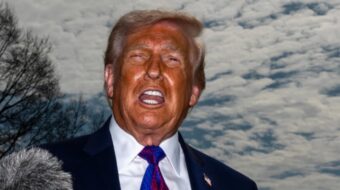
Now, the Trump administration is continuing the legacy of harassing and terrorizing the Cuban people. The U.S. Justice Department indicted Raúl Castro over his alleged involvement in the February 1996 shooting down of two planes piloted by a Miami-based exile group. However, in 1994, Cuba notified the U.S. that these planes were violating Cuban airspace. In 1995, a Cuban official wrote to an FAA official, saying, “I plead that you take the actions necessary to avoid that these events repeat themselves.” In January, 1996, FAA official Cecilia Capestany wrote in an internal memo: “[The State Department] is increasingly concerned about Cuban reactions to these flagrant violations…Worst-case scenario is that one of these days the Cubans will shoot down one of these planes.”
The founder and director of this exile group, Brothers to the Rescue, was José Basulto, a veteran of the failed Bay of Pigs invasion. Basulto repeatedly filed false flight plans with the FAA for years and continually violated Cuban airspace. Basulto’s group played with fire, and they got burned. Four people died that day, and the headline in the New York Times the following day read: “Pilots’ Group, Firm Foe Of Castro, Ignored Risks.”
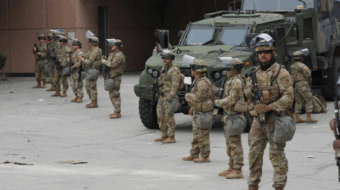
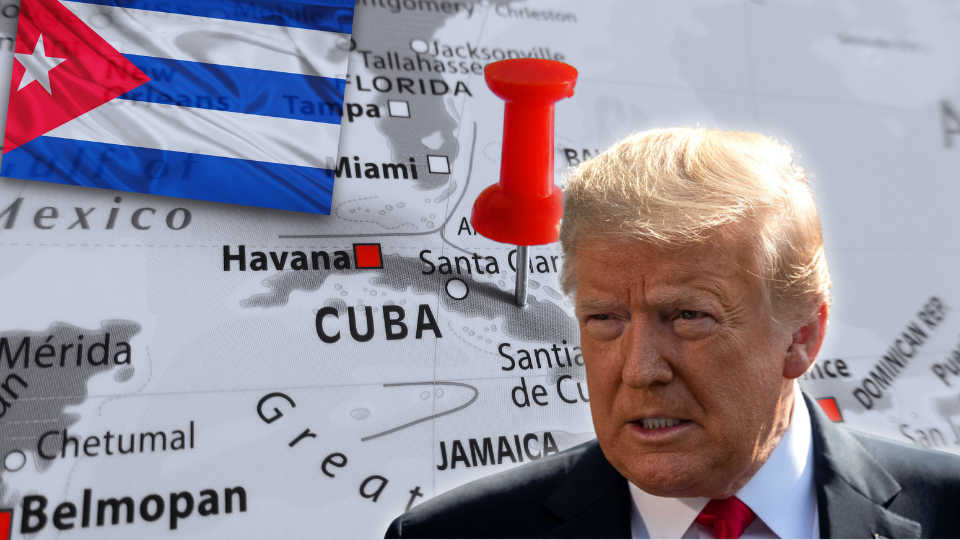
Thirty years later, Donald Trump is using this avoidable incident to manufacture consent to continue to harass and terrorize the Cuban people and perhaps attempt another invasion. U.S. surveillance flights have increased around Cuba, the U.S.S. Nimitz aircraft carrier is en route to the region, and the Pentagon has cooked up claims that Cuba is stockpiling drones in preparation of launching attacks on the U.S. base at Guantanamo Bay or even Florida.
In the months before the abduction of Maduro from Venezuela, Donald Trump repeatedly accused Maduro’s government of posing a threat to the U.S. The U.S. amassed a large military force in the area and sanctioned several senior Venezuelan officials. After abducting Maduro, Trump said Cuba could be “next,” and he would have “the honor of taking Cuba.” The Monroe Doctrine is alive and well in the era of MAGA foreign policy.
As with all op-eds published by People’s World, the views reflected here are those of the author.
We hope you appreciated this article. At People’s World, we believe news and information should be free and accessible to all, but we need your help. Our journalism is free of corporate influence and paywalls because we are totally reader-supported. Only you, our readers and supporters, make this possible. If you enjoy reading People’s World and the stories we bring you, please support our work by donating or becoming a monthly sustainer today. Thank you!
CONTRIBUTOR