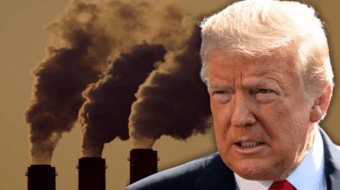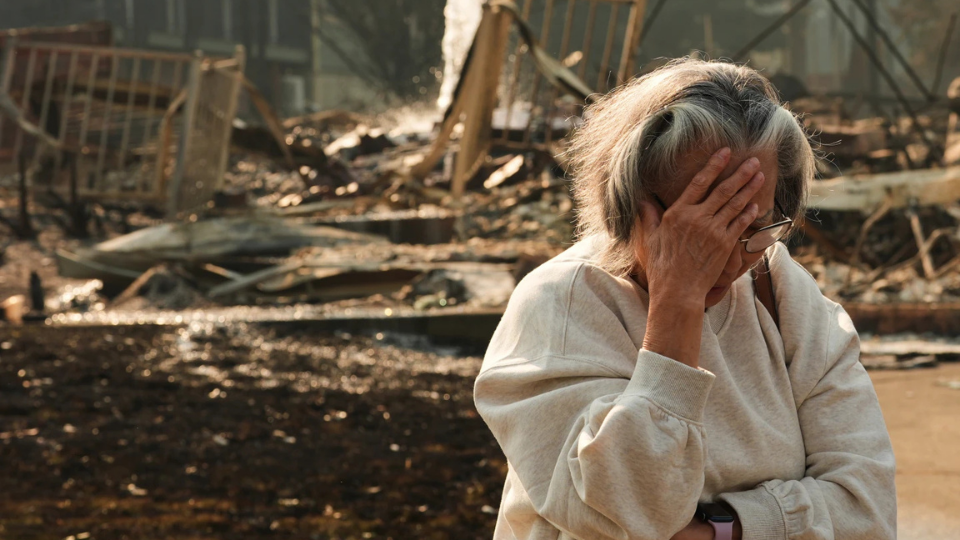
SPOKANE, Wash.—On August 1, the people of Spokane woke to the grim reality of climate change. Washington is already in a state of emergency due to the drought, and the El Niño is only exacerbating the crisis. Our political leaders are failing to hold corporations accountable, and the Trump administration keeps making decisions that worsen these conditions.
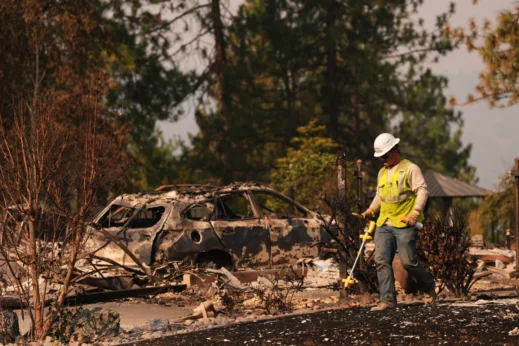
The winds blowing northeast brought the smoke and pushed the wildfires further, and two large wildfires—Old Trail and Fairview—have burned through much of the city. Thanks to the already dry conditions, these fires began and spread rapidly.
Evacuation orders brought traffic jams along the 253 as people swiftly brought their valuables, pets, and families to the nearest evacuation shelters. Unfortunately, this is not the first time residents have experienced this. Last month, a major fire north of the Spokane River, known as the Upriver Fire, occurred. One person died, and 15 homes were lost. It can be argued that these fires are becoming more numerous, more dangerous, and our government is slow to respond to the underlying causes.
Thousands have been evacuated, and responders are still assessing the potential for loss of life. As of this reporting, the Old Trails fire was still spreading fast. Although the weather has cooled and the wind has died down, the fire still blazes on. As many as 65,000 people had been forced to evacuate in North Spokane.
The Old Trails Fire has now captured the country’s attention as the nation’s highest fire priority. The people have now met a crisis with great uncertainty.
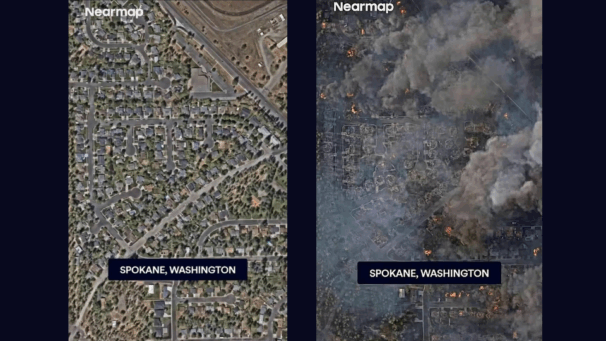
For the people of Spokane, the growing wildfires are like nothing seen before. Of course, fighting fires is in our history–it’s in everyone’s history. Going back to the “Great Spokane Fire” of 1899, our city has a large and well-organized firefighting community. The recent wildfires have been a serious wake-up call for many people. Thanks to intensifying El Niño and Trump’s environmental deregulation and continued militarism, the climate continues to shift in a way that puts the longevity of the human race at stake.
Fight against extreme heat continues
As these wildfires continue to threaten the community, extreme heat temperatures add to the crisis. Entire sections of the community are going homeless or living in undermaintained housing units, and many are finding themselves paying for higher and higher bills just to stay cool. With the most recent ordinance in Spokane providing tenants—not all people—the right to stay cool, many landlords still fight to curb the ordinance’s hit to their bottom lines.
During the crafting of the ordinance, there was a back-and-forth battle between activists and landlords. The Downtown Spokane Partnership—a non-profit organization that manages, promotes, and enhances the downtown district of Spokane, often providing market-rate housing units—has expressed concern about the ordinance due to the effects implementation may have on historic buildings.
Many low-cost housing units are built in historic buildings, and so it would be difficult to implement cooling systems. They encouraged the city council to try meeting their public safety goals without risk to historic buildings. Of course, one could argue that we shouldn’t have to convert historic buildings into housing units, and that new and existing housing units at affordable rates in general should be provided instead.
A property manager wrote in, claiming that this ordinance would “reduce housing inventory” and would “severely undermine public health.” They claim this would reduce housing availability by placing a massive burden on housing providers and increasing the cost of those units. They also claimed that Avista was not consulted on the potential impacts on the local power grid; therefore, the ordinance would place greater strain on public infrastructure. They also claim that “tenant behavior directly dictates indoor temperature”; in other words, they allege that if a tenant plays video games or has a computer or TV, the indoor temperature will be impacted.
Other claims from electrical engineers place more blame on the city’s infrastructure, arguing that the city would not be able to handle widespread implementation of cooling systems. Despite the claim that “the grid would not be able to handle” this ordinance, many working-class people of Spokane face power outages, as Avista rolls out “protective shutoffs” to prevent wildfires. These blackouts leave entire neighborhoods without a means of staying cool. This presents a strong case that the power grid, in general, needs an overhaul to prevent wildfires, keep everyone cool, and withstand intense storms.
The connection to AI data centers
All this comes at the same time that massive AI data centers are being planned in the city. On June 22, the city passed a moratorium on data centers, banning their development within Spokane city limits for one year. One can see the irony in how data centers were being planned—which would have had giant impacts on both the grid and water systems—yet Avista claims a right to cooling would have “severe” impacts on the grid.
Large conglomerates own this grid, and very few companies provide water to the city. This begs the question: What value does AI provide to communities?
If Spokane’s political leaders are willing to allow data centers to be built in our backyard while not allowing residents to stay cool, and also allowing Avista to roll out blackouts to “protect the grid,” then we can see clearly where the priorities of our government are. Many advocates assert that we need to prioritize the needs of the people of Spokane over the predatory, exploitative demands of these large AI corporations and utility conglomerates.
Finding accountability
The people of Spokane, now in this immense crisis of fires and unbearable heat, demand answers. One of the fires—Old Trails—is currently under investigation for arson, but to hold a single individual accountable for one fire does not get to the root of the crisis.
For many people, who to blame is clear and obvious: corporations. Corporations have been polluting the environment and funding political operatives to continue imperialist war efforts, while people suffer from crippling debt, mental health issues, a drug crisis, a shortage of homes, drought, exploitation by insurance companies, and watching their infrastructure slowly decay and collapse right in front of them.
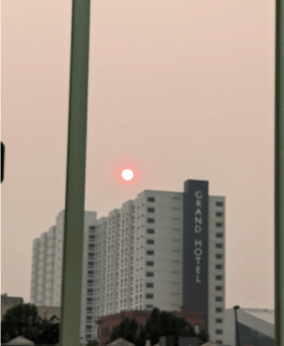
Combine this new development with ongoing weather conditions and a crisis response system that depends on corporations, and it means that—ultimately—corporations are still culpable in this tragedy.
Who provides all the materials and resources to respond to the crisis? Corporations. All the resources are behind a paywall.
The climate crisis
Climate change is still a major factor. The current conditions exacerbated the fire, allowing it to spread further and wreak havoc. The government is still responsible for protecting our community, and we are still polluting the atmosphere and expanding war efforts, while AI companies are still trying to build data centers—putting further strain on much-needed resources.
The displacement and destruction the Spokane community has faced is going to be devastating, especially for marginalized communities. Many LGBTQ+ individuals have been displaced, and we are already facing a terrible housing crisis thanks to private equity firms, market-rate housing, predatory landlords, and a government refusing to do what’s right for the people. We do not have the means to recover from this without substantial debt to the rest of the nation. Will the Trump administration help out? What will happen in the near future is yet to be written.
As with all op-eds published by People’s World, the views above are those of the author.
We hope you appreciated this article. At People’s World, we believe news and information should be free and accessible to all, but we need your help. Our journalism is free of corporate influence and paywalls because we are totally reader-supported. Only you, our readers and supporters, make this possible. If you enjoy reading People’s World and the stories we bring you, please support our work by donating or becoming a monthly sustainer today. Thank you!
CONTRIBUTOR