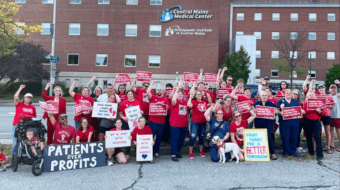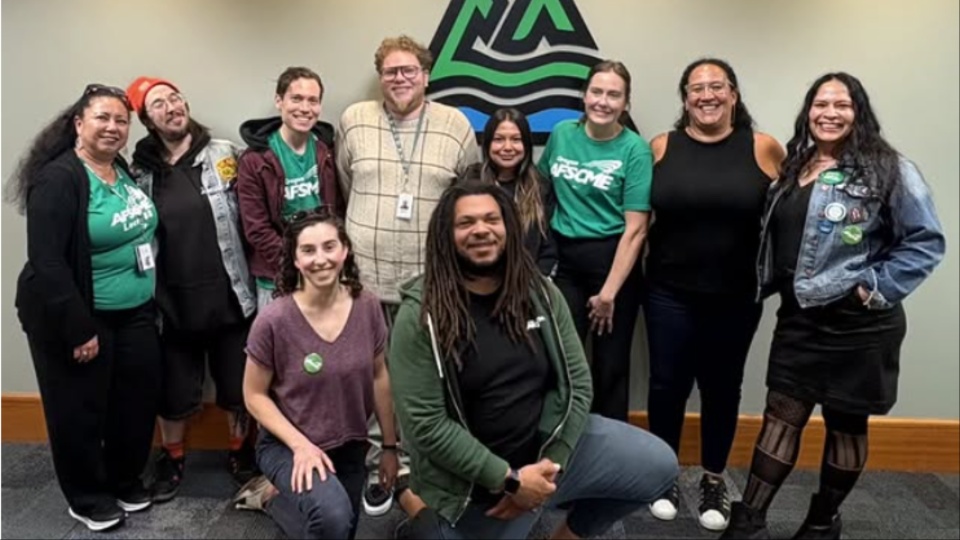
PORTLAND, Ore.—Homeless support workers at Do Good Multnomah in Portland won a union in August 2024, but two years later, they still don’t have a contract. Getting organized was a big achievement, but winning a collective bargaining agreement has turned out to be another matter for Do Good Multnomah Workers United (DGWU / AFSCME 1790).
The latest financial proposal from the company was that 90% of workers take a $1,500 per year pay cut—after two years of no cost-of-living increases or raises. One DGWU worker called the proposal to cut their pay a “slap in the face.” Workers have had no COLAs or raises since negotiations started, but the prices of rent, gas, groceries, and more have continued to rise.
Do Good Multnomah is a nonprofit and has been around for almost 11 years, providing individualized support for homeless people, primarily in the Multnomah County and Portland area. They prioritize veterans but will help anyone across their 16 sites. A wide variety of programs are available—low-barrier shelter, alternative shelter, permanent housing, rapid rehousing, and behavioral health.
Workers unionized and were voluntarily recognized in August 2024, after an initial unionization effort in 2022 that did not succeed. They started contract negotiations 15 months ago, in March 2025.
Ever since bargaining started, layoffs have been increasing. When the negotiations began, there were about 250 unit workers, plus management staff. Now, they are number less than 200, plus about 50 managers.
Some of the layoffs have been the result of the nationwide trend of public sector budget cuts. When the city and county finalized their budgets and revealed the amounts of funds they planned to spend on homeless programs, it resulted in about 30% of services being cut.
But on top of that, in July, Do Good Multnomah announced an additional 14 layoffs. The additional terminations were too much, and DGWU started a public letter-writing campaign titled “No More Layoffs for Do Good Multnomah Workers!” with three demands:
- Make cuts from the top to save frontline staff;
- Settle the first contract with a fair raise for DG’s essential workers; and
- Provide full financial transparency.
In the letter, the union highlights that management has a ratio of about three workers per manager, and that firings are happening disproportionately to the frontline workers.
One of the asks in negotiations is for management to take a pay cut. The highest earner, CEO Daniel Hovanas, earns around $130,000 annually, not as drastic as other Portland companies like Portland General Electric’s CEO at $7.4 million, but the union’s contention is that the overall number of managers is far too high given the size of the organization.
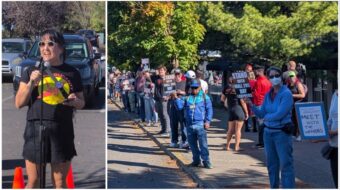
DGWU rallied the public to send 2,662 letters as of Aug. 17, 2026, and the massive community support succeeded in reducing layoffs from 14 to 8. They are proud to fight layoffs and will not sit idly by as workers continue to get fired.
The community showed up for DGWU, and DGWU has shown up for the community; earlier this year, they sponsored Portland’s massive May Day rally and march, as well as a labor protest against ICE in January.
Also highlighted in the letter to management are the failure to agree on a contract and management’s proposal to cut pay. Management has repeatedly said the company is broke, but the union is unsure. That’s why one of their demands in the recent letter-writing campaign was to greater financial transparency.
In June, DGWU issued a counter offer to the proposed $1,500 pay cuts for frontline workers but has yet to receive a response
Workers and management have made considerable progress on non-economic aspects of the contract, but a pay cut should not on the table, DGWU says. However, the recent letter campaign has likely had an impact on recent negotiations, with the majority of TAs signed over the past month.
While the city and county have been finalizing their budgets and cutting services, a large project has been getting headlines because of the financial demands it’s making on local governments: The MODA center, home of Portland’s NBA and WNBA teams.
Billionaire Tom Dundon bought the NBA team but has been asking the state, county, and city to fund renovations to the stadium. The cost has been put on to taxpayers, something residents see as another billionaire bailout. So far, the State of Oregon committed up to $365 million, Multnomah County around $100 million, and the City of Portland approximately $120 million.
At the same time that city and county services are being cut, workers are getting fired and management is proposing a pay cut, a billionaire is getting almost $600 billion in taxpayer subsidies.
DGWU is celebrated its two-year anniversary on Aug. 17, 2026, and set its eyes on three goals for their third year: achieve a strong contract, stop the layoffs, and strengthen their collective voice.
The fight continues, but the union says it will not give up. As negotiations continue, DGWU knows now that they have community support on their side in the struggle for a strong first contract.
We hope you appreciated this article. At People’s World, we believe news and information should be free and accessible to all, but we need your help. Our journalism is free of corporate influence and paywalls because we are totally reader-supported. Only you, our readers and supporters, make this possible. If you enjoy reading People’s World and the stories we bring you, please support our work by donating or becoming a monthly sustainer today. Thank you!
CONTRIBUTOR