“You strangle us for 40 years and then criticize us for the way we breathe.” That was the late Fidel Castro’s response to the criticism of Cuba, now revived by the Trump administration, of Cuba as a failed state.
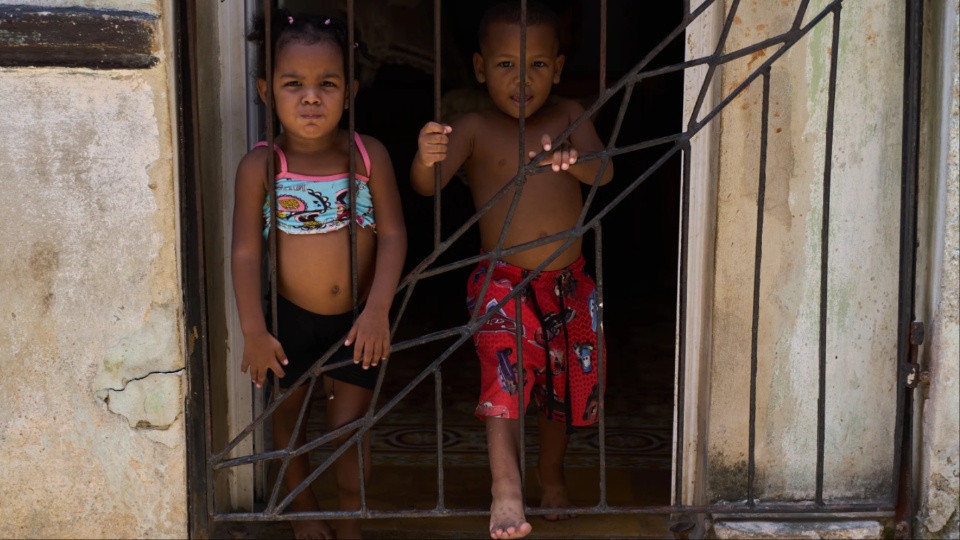
The attacks currently being launched against Cuba go beyond rhetoric, though. In fact, destructive U.S. policies over six decades have finally led to a total humanitarian crisis. Suffering and death rates are up on the island, despite collective resilience.
Recent comprehensive reports provide information about the origins, substance, methods, objectives, and impact of U.S. measures against Cuba, the economic blockade, in particular.
Two of them appear with support from the Center for Economic and Policy Research (CEPR), and Cuba’s Foreign Ministry produced two more. Finally, the United Nations’ Human Rights Council on Sept. 8 heard Special Rapporteur Alena Douhan’s report on “Unilateral Coercive Measures.”
Children are dying
Analyst Guillaume Long, in an interview with Prensa Latina on Sept. 15, discussed the U.S. blockade. This senior researcher for CEPR and professor of international relations at Sciences Po in Paris stated that, after 2017, Cuba’s infant mortality rate rose 148% as a “direct result of the U.S. blockade.” He co-authored a recent CEPR study documenting the disastrous effects of the blockade on infant health in Cuba and on Cuba healthcare itself.
Information in the interview and article apply to the period prior to the U.S. oil blockade and the U.S. regimen of secondary sanctions beginning, respectively, on Jan. 29 and May 1, 2026. Infant mortality rates are very likely higher now than as reported by Long. Secondary sanctions are U.S. penalties aimed at third-country companies for dealing with already-sanctioned counterparts.

An epochal CEPR-supported study appeared in mid-2025 in The Lancet Global Health, said to be “the leading journal in global health.” It shows that deaths in economically-sanctioned countries increased in recent years “by approximately 564,000” annually. They attribute the excess deaths to unilateral economic sanctions, imposed mostly by the U.S. government.
The authors point out that, “This is comparable to worldwide annual deaths from armed conflict.” Plus, “children under five years old accounted for 51 percent of the deaths caused by these sanctions.”
So that the world may know
At a press conference on Sept. 7, Cuban Chancellor Bruno Rodríguez introduced his ministry’s annual report on adverse blockade effects. It appears in advance of the vote to be taken Oct. 28 in the UN General Assembly on a Cuban resolution calling for the blockade to end. For 33 years, delegates informed by these reports have overwhelmingly approved the same resolution.
The report documents U.S. actions and measures taken between Mar. 1, 2025, and Feb. 28, 2026. It may be─should be─read here.
Rodríguez condemned “U.S. policy as an act of collective punishment against the people, with growing repercussions affecting food, electricity, water, health care, education, transportation, and the living conditions of Cuban families.”
The report set the yearlong total of damages at over $8 billion, a 7% increase over the previous year. It places losses over the decades at $178.7 billion, or $3.897 trillion with inflation.
The report cites the U.S. purpose of “provoking hunger, desperation, and the overthrow” of Cuba’s government. According to Rodríguez, these are words used by State Department official Lester Mallory in his April 1960 Memo on U.S. strategy for Cuba, which initiated the blockade policy.
The chancellor pointed to “furiously anti-Cuban U.S. officials and congresspersons” with “extremely conservative, neo-fascist ideology” as propelling the blockade.
Human Rights Council hears details
The 63rd Regular Session of the UN Human Rights Council opened in Geneva on Sept. 9. The U.S. blockade of Cuba was on the agenda for the first time ever. Discussion centered on Special Rapporteur Alena Douhan’s report, developed out of her ten-day visit to the island in November 2025. Jaine Zaina Jallad, Douhan’s successor as Special Rapporteur, presented the latter’s report to the Council.
Douhan explored the historical context of U.S. laws, regulations, executive orders, and the economic impact of “unilateral coercive measures.” The report covers the blockade’s impact on human rights to food, healthcare, and education. It notes Cuba’s response, aspects of international law, international cooperation and humanitarian assistance, and reduced availability of public services like water and electricity.
Douhan concluded, in part, saying, “Primary unilateral sanctions…have been substantially exacerbating the humanitarian situation in Cuba.” She added that, “The measures in force…prevent, impede, delay, or make more costly the delivery of the equipment, spare parts and consumables, food, medicine, shelter, and clothes necessary to ensure humanitarian relief and the recovery and sustainable development of Cubans in need.”

She explained that, “Restrictions on transactions carried out with Cuba…are all aimed at cutting Cuba off from sources of income. They have resulted in a critical decline in state revenue, hyperinflation, growing poverty, and insufficient resources to guarantee the population’s basic needs.”
Included among Douhan’s 15 recommendations is her demand that the U.S. “lift or suspend all unilateral coercive measures.” She called for repeal of penalties in place for companies that export goods to Cuba containing more than 10% U.S. components, for ships entering U.S. ports within 180 days of having docked in Cuba, and for the use of U.S. dollars in Cuba’s foreign trade.
She demanded that the U.S. no longer penalize officials in other countries who arrange for Cuban medical assistance.
The full report is available online.
Cuba’s own report
Cuba’s government submitted its own 16-page report to the Human Rights Council. This report opens with President Donald Trump’s remark on Jan. 8, 2026 that, “I don’t think much more pressure can be exerted, except to go in and smash the place.”
It catalogues assaults inflicted under old and new blockade regulations and repeats information provided by Cuba’s recent Report to General Assembly. It does cover effects of the oil blockade and secondary sanctions put in place after that earlier report.
The May 1 executive order unleashed a “sweeping system of secondary sanctions.” These apply to companies, banks, and individuals dealing with already sanctioned entities.
“They lead to assets being frozen and restriction of operations of any foreign person or entity in strategic sectors…[such as] like “energy, mining, finance, security, and defense.” Targeting foreign companies, they firm up “the extraterritorial nature of the blockade.”
Adverse effects are additive to those resulting from Cuba’s “inclusion on the…[U.S.] list of countries allegedly sponsoring terrorism.”
According to this Cuban Report, the U.S. oil blockade represents “an act of genocide, a form of collective punishment against the Cuban people, and a grave violation of International Law, International Human Rights Law, and even International Humanitarian Law.”
It states that oil is “essential for the national power grid, drinking water supply, healthcare services, public transport, communications, educational institutions, community services, and every sphere of social life.”
The oil blockade is shattering Cuba’s once exemplary healthcare system. The report cites a World Health Organization declaration saying that “health must be protected at all costs,” also that the collective punishment now in play violates “Article 33 of the Fourth Geneva Convention of 1949.”
The report offers specifics.
Ventilators in newborn intensive care units lack “working batteries.” When there is no power, “ventilation must be done manually with uncertain outcomes.” With no electricity, operations continue “under the glow of cell phone flashlights.” A surgery waiting list exceeds100,000 individuals. Some 32,000 pregnant women are “at risk.”
Because of raw-material shortages, 300 of the 395 drugs produced by Cuba are unavailable. Without fuel, crop irrigation is nearly impossible and food supplies and donated aid material remain in warehouses. With fuel in short supply, foreign air traffic is down and so, too, Cuba’s remunerative tourist industry.
To read Cuba’s report, go here or here.
Truth be told
U.S. disruptions of multiple sectors of Cuban society have over many years weakened provisions for protecting and preserving lives. Cubans are scrambling to survive. Unprecedented numbers of impaired and vulnerable Cubans are dying. Washington powerbrokers seem to regard Cubans as disposable.
Two avenues for the early rescue that is necessary are blocked. The veto system prevailing in the UN Security Council prevents implementation of resolutions approved in the General Assembly. And progressives likely to end U.S. assaults will not soon be holding power in Washington.
What remains is international working-class solidarity. Indeed, material aid from all points has arrived in Cuba, items like solar energy materials from China; food aid from Mexico, Japan, and Vietnam; medical equipment from Europe and U.S. donors; and one oil tanker arriving from Russia. But the great need is for oil.
Two factors allow for the current total oil blockade to continue. The U.S. Navy polices Caribbean waters surrounding Cuba. And nations of the world depend on undisturbed flows of fuel and energy for nourishing domestic production and maintaining economic balance. Mexico’s experience illustrates overall reluctance to disturb fuel-distribution systems by transferring oil to Cuba.
International solidarity with Cuba has weakened. Right-wing governments newly in power in Latin America and the Caribbean obey U.S. dictates. Aspirations for continent-wide solidarity, as per Simón Bolívar, Cuba’s José Martí, and Venezuelan President Hugo Chávez more recently, are no more.
In accordance with its interventionist 2025 National Security Strategy, the U.S. government holds sway in the region, and Cuba is isolated.
In a recent article, Spanish socialist Leire Pajín, member of the European Parliament, condemns U.S. violations of the UN Charter but emphasizes Cuba’s “[v]iolations of civil and political rights.” She calls for “genuine dialogue among the Cuban government, the political opposition, and independent civil society…[and] improved governance.”
She claims, “This is what the Cuban people claim and deserve…[and] what the Social Democrats in the EU actively support.” So much for solidarity.
What remains by way of true international solidarity is working-class resistance to the capitalist take-down of Cuba. U.S. labor should be following the lead of organized dock workers worldwide. Off and on for decades, they’ve denied shipments of warmaking materials to zones of conflict.
The National Nurses United union on June 30 demanded “an end to the Trump administration’s blockade of oil supplies entering Cuba.” As of 2024, 43 unions and labor councils had already approved resolutions against the blockade. Resolutions are welcomed, but the need now is for labor action and agitation.
No paywalls at People’s World
We hope you appreciated this article. At People’s World, we believe news and information should be free and accessible to all, but we need your help. Our journalism is free of corporate influence and paywalls because we are totally reader-supported. Only you, our readers and supporters, make this possible. If you enjoy reading People’s World and the stories we bring you, please support our work by donating or becoming a monthly sustainer today. Thank you!
CONTRIBUTOR