Trauma is real and needs ongoing medical care and collective attention. However, what author Catherine Liu calls a generalized “trauma culture,” shaped by a public “trauma script,” has deliberately weakened people’s ability to join together in solidarity-based political struggles. Turning private struggles outward, Liu argues, has undermined the historic working-class push to radically change the capitalist system, which lies at the root of most social violence.
Liu explains how 1960s feminists and other radical groups used consciousness-raising sessions to connect everyday struggles, like getting basic needs met, and personal traumas—such as abuse, violence, or war experiences—to their roots in an oppressive capitalist and patriarchal system. By turning personal hardship into collective political awareness, these movements linked individual suffering to larger social and economic forces and found a way forward through solidarity and struggle.
In contrast, since the 1970s and the rise of neoliberalism, today’s trauma discussions focus mostly on medical and individual perspectives. Liu calls this a public “ritual” or “trauma script.” Medical professionals take stories of suffering and, instead of keeping them private, share them with the public as a kind of commodity—on TV, in books, movies, and now on social media. Daytime talk shows in the 1980s made this approach popular. Liu especially points to Oprah Winfrey, who built her media empire on this “emotional capitalism” and helped shift activism toward feelings and personal stories.
As state policies privatized public goods and weakened the labor movement, the “professional medical class” focused on the politics of “recognition” instead of “redistribution,” as a strategy to protect itself from a “fear of falling” out of a position of economic privilege through risky confrontations with reactionary political forces and conservative media outlets. This shift separated trauma from its social and historical roots, turning systemic violence into a personal and marketable problem. According to Liu, today’s “trauma script” emphasizes stories of individual resilience (a popular buzzword) and social mobility, replacing collective political critique.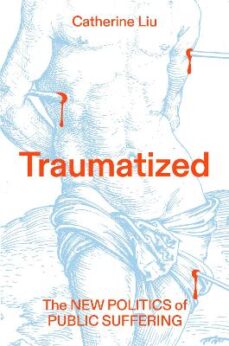
Extreme violence—from genocide and imperialist wars to sexual crimes and the effects of structural poverty—is often stripped of its context and treated as just another form of personal harm. Liu calls this the “gentrification of suffering,” which makes it seem like all suffering is shared equally across social classes. Experts in non-profits and government use this approach to avoid dealing with the harder issues of economic deprivation and widespread abuse in poor communities, problems that often come from a weakened social safety net.
This loss of context is clear in how society talks about post-traumatic stress in military veterans. Discourse on PTSD suffered by veterans who survived U.S. wars usually separates the reality of that medical condition from the political goals, imperialist aims, and real-world damage of those conflicts. For example, the trauma script hides the fact that the U.S. government ordered “massive civilian casualties” in Vietnam to keep control in the region. This background is left out when PTSD is treated only as a medical issue. Historical records show that leaders measured military success by high “body counts” in the fight against communism.
Liu believes that real healing, for both individuals and communities, can’t happen in isolation. For instance, the destruction caused by the U.S. in Vietnam directly led to the emotional wounds suffered by many veterans. While individual trauma is real and needs care, Liu argues that lasting prevention means breaking down the imperialist systems behind these wars and holding those responsible to account, instead of treating psychological recovery as separate from history and politics. Ignoring the real causes only keeps the cycle of suffering going.
By framing these experiences purely in clinical terms, the individual’s conflict is both medicalized and commodified within therapeutic markets (managed by insurance company limits on the distribution of psychological care and radical cuts in public access to mental health care institutions). Consequently, the role of imperialist war and state-sanctioned violence is repressed and systematically forgotten. The resulting psychological symptoms—manifested in scarred men and women—are thus transformed into a professionalized project for individual salvation, managed and curated by experts operating within the parameters of the trauma script.
The deep ideological shift Liu has described in this short book released the “professional middle class” from a responsibility to account for and address historical context and the dynamics of social relations of production by developing a singular interest in “the subjective experiences” of trauma sufferers and survivors of abuses, the displacement of sustained, collective political analysis by the elevated “authentic personal testimony” of survivors. For example, a leading author and trauma researcher drew on the research of scholars who sought to recover the experiences of victims of the Pinochet regime in Argentina in the 1970s through the 1980s, without ever acknowledging the direct U.S. role in aiding those atrocities nor its administration of the Cold War context that wreaked global havoc.
Empathy for suffering came to be seen as the only way to be politically engaged. Non-profit organizations and their donors who support the needs of refugees from humanitarian crises in their home countries never have to contend with the origins of those crises in global dynamics tied to the world imperialist system as long as they “witness” the suffering of the victims and deploy their energies to save those in trouble. As Liu writes, “the objective context that would help us understand those atrocity-producing situations is increasingly minimized,” even to the extent that insisting on addressing those contexts as a systematic function of imperialism or capitalism is itself treated, without a sense of irony, as elitist or “totalizing.”
To show how the “trauma script” has worked over the last fifty years, Liu looks at new medical approaches to child abuse, PTSD in veterans and sexual abuse survivors, Oprah Winfrey’s rise as a billionaire media figure and Democratic Party donor (which is the only part of the book based on Liu’s own research), the split between second-wave feminism and labor-feminists, and a short discussion of “trauma studies” in literary criticism. Along the way, Liu covers the panics over false accusations of Satanic rituals in the 1980s, debates about repressed memories, and “movements” around multiple personality disorders.
While Traumatized is mostly clearly presented, it sometimes makes confusing claims. For instance, Liu calls “Silicon Valley communitarianism” and “left academia’s anarcho-anti-canon culture wars” achievements of the New Left, but doesn’t unpack those terms.
The strength of Liu’s major premise is sometimes undermined by certain omissions and weaknesses in the presentation. The logical link between the “gentrification of suffering” as a pre-packaged and scripted information commodity in media-obsessed capitalism and the simultaneous rise of crime-and-punishment logics of racist mass incarceration is left unexplored. A single reference to the rise of prisons and jails as one of the largest sites of mental health “treatment” since the 1980s merits further research. Liu also offers an underdeveloped reference to what she perceives as an opportunistic retreat by Black leaders from confrontational, system-oriented Civil Rights struggles, placing an outsized share of responsibility for the new ideological patterns and forces on the group as a whole. (Marian Wright Edelman is uniquely named as representative of the retreat into neoliberal patterns on the specific needs of children.)
No balanced acknowledgment of the sustained roles Black leaders have held in the labor movement, in the prison abolition and feminist movements, in the struggle against racist policing, or in the socialist-oriented political movements is given. The critical focus remains sharply directed toward liberals—a term which for Liu vacillates without distinction between intellectuals and professionals associated with the Democratic Party and the general bourgeois superstructure of capitalism in a concrete historical setting. But this focus never addresses the specific role of the ultra-right and the emergent fascist hostility toward the politics both of recognition and redistribution. On a minor note, the lack of a bibliography and index makes access to Liu’s sources sometimes hard to follow.
Ultimately, the author delivers an incisive critique of contemporary trauma discourse and its detachment from broader social and political contexts. Liu traces trauma’s transformation from a collective rallying point for solidarity and systemic critique to an individualized, commodified experience managed by professional and media interests. The prevalence of the “trauma script” has shifted attention away from the root causes of suffering—under patriarchy, capitalism, and imperialism—toward narratives of personal resilience and recognition. While the book offers a compelling analysis of this ideological shift, Liu’s critique could be more balanced and comprehensive, particularly regarding the intersections of race, activism, and the complexities of contemporary political movements. Ultimately, the book affirms the importance of reconnecting trauma to its social, historical, and political origins to foster genuine collective healing and transformative change.
Traumatized: The New Politics of Public Suffering
Catherine Liu
New York: Verso Books, 2026
No paywalls at People’s World
We hope you appreciated this article. At People’s World, we believe news and information should be free and accessible to all, but we need your help. Our journalism is free of corporate influence and paywalls because we are totally reader-supported. Only you, our readers and supporters, make this possible. If you enjoy reading People’s World and the stories we bring you, please support our work by donating or becoming a monthly sustainer today. Thank you!
CONTRIBUTOR