WASHINGTON—Catering to its corporate controllers, and its own radical deregulatory zeal, the Donald Trump regime has crafted plans to increase workers’—and their families’—exposure to hazardous chemicals. The AFL-CIO urges lawmakers to stop that dangerous crusade.
In letters to four congressional committees concerned with job safety and with regulating chemicals, the federation says the Toxic Substances Control Act, first enacted in 1976 and strengthened 40 years later, should be left alone save for “mandatory fee renewals and nothing broader.”
In its final months, the Democratic Biden administration wanted to extend the law, which the Environmental Protection Agency enforces, to cover more chemicals, including asbestos—a known cancer-causing substance and its particles and dust which workers are often exposed to by inhalation—and formaldehyde.
That’s not what corporate honchos want from Donald Trump’s Environmental Protection Agency, which administers the act and regulates the chemicals and their exposure to workers. The National Association of Manufacturers backs EPA’s plan to weaken chemical exposure rules.
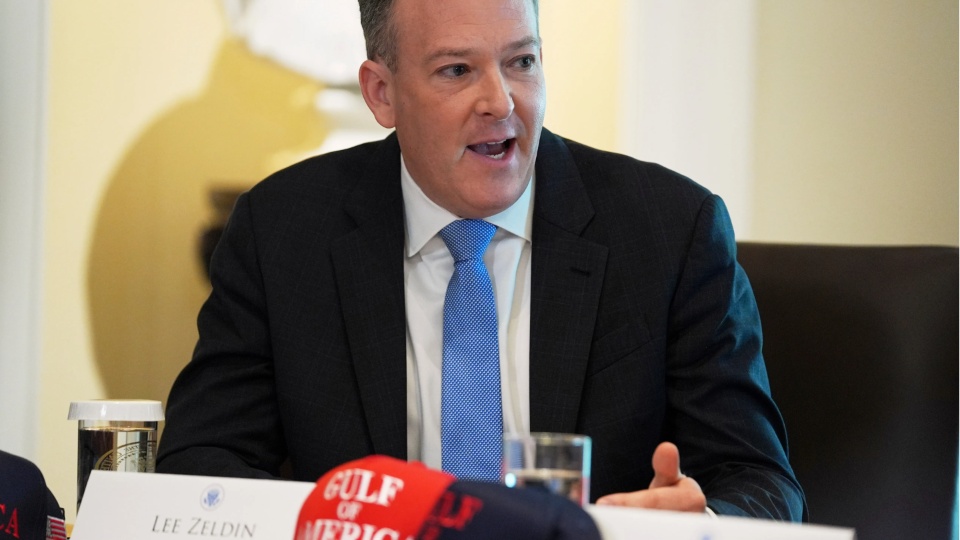
That corporate lobby praises Trump and EPA Administrator Lee Zeldin’s plan to “right-size…chemical risk evaluation.” It calls the Biden administration’s plan to strengthen the law and toughen regulation of chemicals’ risk to workers “confusing, unrealistic, and detached from reality.”
The law mandates the EPA “test chemicals that present an unreasonable risk of injury to human health or the environment,” and regulate their marketing, sale, distribution, and human exposure, a summary says. It’s been doing so, until now. But Trump and Zeldin fired almost half of EPA’s staff and shut down the testing as well, due to the resulting lack of personnel.
Now Trump and Zeldin, a former Republican congressman from Long Island, want to go even further. They’d reduce chemical testing and let chemicals hit the street before tests for their hazards are finished. The AFL-CIO and 19 of its unions—the ones with expertise on occupational exposures to hazardous chemicals–are blowing the whistle on that scheme in letters to relevant lawmakers.
“Workers are at risk because they manufacture, use, transport and dispose of chemicals and chemical-related products, and risk taking home these exposures to their children and families,” the federation and its unions said.
“The law has practical value for its intended purpose: To protect workers from harmful chemical exposures in order to eliminate both acute and chronic occupational illnesses and fatalities.
“An estimated 135,000 U.S. workers die annually from occupational disease, many due to chemical exposures on the job.” That number, a footnote adds, is from a scientific study in 2019.
Protecting workers is not what corporations want. They want a rollback, they told EPA, and the latter agrees with them.
Indeed, the National Association of Manufacturers started lobbying the Trump EPA transition team before the anti-regulatory, anti-worker president took over on Jan. 20. It wants less testing and a faster path for chemicals to make it to market, regardless of hazard. Left unsaid: That boosts profits.
And Project 2025, the extreme right-wing blueprint for governing which became Trump’s de facto party platform last year, advocates really curbing EPA’s regulation. The agency should “ensure decision-making is risk-based rather than…precautionary, hazard-based,” it says.
Project 2025, speaking for its corporate authors, adds new chemicals should be evaluated “in a timely manner” i.e. quickly, “to ensure the competitiveness of U.S. manufacturers.“ And both Project 2025 and Trump’s EPA would assume all the workers handling hazardous chemicals wear personal protective equipment all the time.
That assumption is, in laypeople’s terms, ridiculous, the AFL-CIO says. It also lets corporations evade their duty to curb worker exposure to hazardous chemicals by putting responsibility for protecting workers on the workers themselves. That’s a common corporate refrain, too.
“It is unreasonable for the agency to assume all workers wear respirators all day every day,” the AFL-CIO told Congress. “Respirators can be uncomfortable, ill-fitting, make communication difficult and are the least-effective form of workplace protection.”
Requiring workers to wear respirators 24/7 not only shifts the duty of protecting workers from firms to the workers, but “creates the illusion [that] chemical risks are below reality and places workers in serious danger.”
And while the Occupational Safety and Health Administration also regulates worker exposure to hazardous chemicals, “no OSHA standard permits routine use of respirators as a means to protect workers from chemical exposures…In fact, OSHA is in the process of weakening its respirator obligations on employers,” the letter says.
OSHA also doesn’t have the power to order hazardous chemicals off the market, the federation says. EPA does. It wants that power to remain at EPA.
And OSHA doesn’t let workers sue firms to enforce the law if the government fails to do so, the letter points out. The Toxic Substances Control Act allows citizen lawsuits when EPA doesn’t act. Both agencies should continue to regulate worker exposure to hazardous chemicals, but EPA has more power to do so and enforce its rules, the AFL-CIO and its member unions wrote.
“And OSHA currently has no chemical exposure standards on its regulatory agenda and has not regulated a chemical since 2017,” the fed said. The toxic substances control law “permits EPA to regulate all risks from chemicals, rather than segment the risk among different populations and [chemical] exposure paths.”
That’s another change Trump and Zeldin plan: Segmenting the risk, rather than adding all the chemical risks together. They’d also drop Biden language mandating particular attention to chemical risks to high-hazard communities, such as the “cancer alley” from Houston to Galveston or near the chemical plants of industrial areas of southwest Chicago.
The EPA is not perfect, the unions admit. It’s woefully behind the flood of new chemicals hitting the market every year, and that was even before Elon Musk, Trump and Lee Zeldin took a chainsaw to its staff, especially its scientists who run the chemical tests.
Letting new chemicals hit the market before testing is complete, EPA says, would help industry. But doing that would make yanking hazardous chemicals off the market harder, the AFL-CIO warns. “Review of new chemicals to ensure they do not pose health threats is more difficult once a chemical enters commerce,” it says.
“Also, despite congressional intent [that] the public have a role in the new chemical review process, the current process has become a two-way conversation between chemical manufacturers and EPA.”
That’s a classic instance of what scholars call “regulatory capture”: The agency that is supposed to regulate an industry becomes captive of the industry’s leaders, its findings, and its lobbying.
“Congress has the responsibility to American workers to maintain the integrity and intent of the Toxic Substances Control Act, without weakening it,” the federation and its 19 unions say.
“The safety of American workers and their families should be of the utmost importance to the leaders they have elected,” meaning the lawmakers the unions are addressing. “As experts on occupational exposures and as representatives of American workers, the AFL-CIO and the undersigned unions are deeply committed to protecting and continuing to implement TSCA as it stands,” they conclude.
We hope you appreciated this article. At People’s World, we believe news and information should be free and accessible to all, but we need your help. Our journalism is free of corporate influence and paywalls because we are totally reader-supported. Only you, our readers and supporters, make this possible. If you enjoy reading People’s World and the stories we bring you, please support our work by donating or becoming a monthly sustainer today.
CONTRIBUTOR