A wave of racist alien land laws is sweeping across U.S. state legislatures. An alien land law refers to legislation that restricts the right of a person who is not a U.S. citizen to purchase land or property in the country.
Historically, such legislation is rooted in 19th century laws, especially in Western U.S. states, targeting Chinese and Japanese immigrants and Filipino nationals. Today, these laws are mostly targeting Chinese people in the U.S.
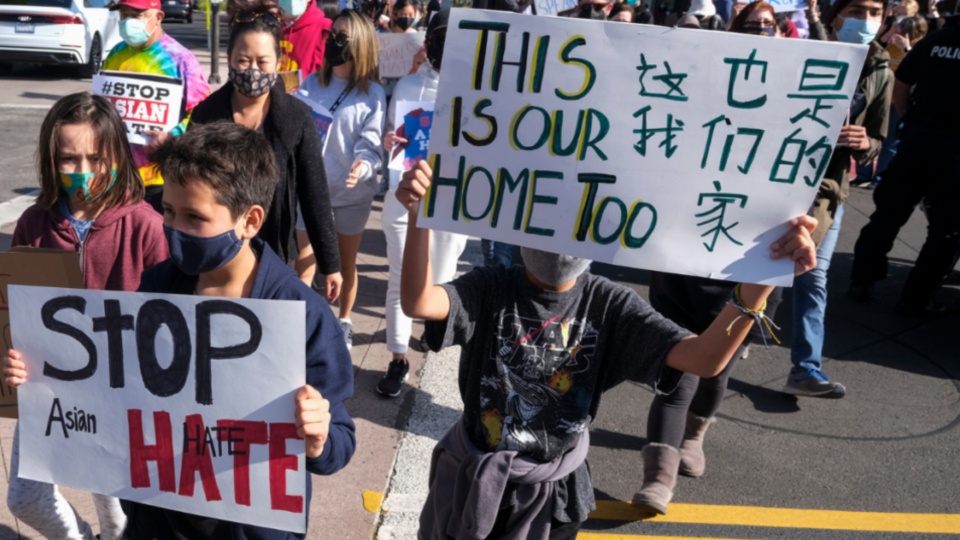
This trend—along with increasing hate crimes, attacks on birthright citizenship, restrictions on Chinese students applying to study in the U.S., and harassment of Chinese scientists accused of spying—contributes to an atmosphere of unrest, concern, and growing fear in Chinese communities.
While alien land laws mostly died out starting with the U.S. alliance with China during World War II and then the adoption of civil rights laws in the 1960s, there has been a resurgence of them in recent years. Bills are appearing in legislatures at a more rapid pace since 2022, increasing from a few each year to 120+ and growing, according to the Chinese American mainstream leadership groups Committee of 100 and APA Justice.
Today, fourteen states are considering 45 bills that would restrict property ownership. Twenty-five states have already passed 49 bills that restrict property ownership in some way.
Florida in 2023 adopted controversial state Senate Bill 264, which banned Chinese nationals from purchasing farmland adjacent to U.S. military bases and critical infrastructure. The law cited national security as its rationale, since from this paranoid perspective, the land could be used as a base for Chinese spying with drones, sabotage during war, etc.
Florida Gov. Ron DeSantis and Republicans also specifically banned Chinese aliens from buying property almost anywhere the state, including hotels and condos. The Florida law is being challenged in court by the ACLU and Chinese American advocacy groups.
Texas Gov. Greg Abbott is also a champion of alien land laws, and on June 2 he signed a new Texas law which he bragged was “toughest in the nation.” Like the Florida statue, it will inevitably face a challenge in the courts.
The laws, once enacted, almost always expand their scope. West Virginia’s HB 2961 (2025) specifically targets Chinese citizens and completely bans them from owning property. While many of the laws as written exempt Chinese-American U.S. citizens, in practice the line gets blurred.

In Arkansas, a realtor refused to sell a home to a Chinese-American U.S. citizen citing the Arkansas alien land law. The person proved his citizenship, but the realtor still refused to sell, citing other reasons. This led to a court case where the realtor was sued for discrimination.
History in this country shows there is no doubt that alien land laws will fuel discrimination against Chinese and Asian Americans.
Republicans propose federal version
Republicans and the Trump administration are now pushing for federal alien land laws as part of the racist attack on immigrants. The Securing American Agriculture Act was introduced in the U.S. Senate in March 2025. Its purpose is to pre-empt any supposed Chinese attempt to gain control of the U.S. food supply chain by “weaponizing inputs” like seeds and fertilizers or smuggling agro-terrorist fungi or biological agents.
There is no evidence for any of that ever happening or being planned.
Agriculture Sec. Brooks Rollins held a news conference on July 8 to announce the “National Farm Security Action Plan,” with a full show of force by big-name Trump administration figures. Present were Defense Sec. Pete Hegseth, Homeland Security Sec. Kristi Noem, Attorney General Pam Bondi, longtime Trump trade advisor Peter Navarro, as well as governors and members of Congress.
The purpose of the plan, justified, of course, in national security terms, is to safeguard America from a “nefarious” China infiltrating the country by purchasing U.S. farmland. Rollins describes this possibility as “a massive national security issue.”
At first, like the Florida law, the focus was on farmland adjacent to military bases, but the scope has since expanded. Rollins pointed to Smithfield Foods, a major pork producer, which owns 89,000 acres of U.S. farmland. She asked, “Do we want Chinese ownership in our food supply?”
Smithfield is actually owned by WH Group, a capitalist multinational corporation headquartered in Hong Kong; Rollins did not mention that fact.
While other “foreign countries of concern” are also specified in the draft law—Russia, Iran, North Korea, Venezuela, and Syria—China is clearly the main target.
Opposing white supremacy
In Congress, Rep. Judy Chu from Southern California’s 28th District, has worked to oppose alien land laws, which she describes as a “flagrant violation of civil rights based on racial profiling.” Chu is the chair of the U.S. Congressional Asian Pacific American Caucus.
To stop the reactionary laws, she talks about the need to “build diverse coalitions of leaders across the country.” She, along with with Rep. Al Green of Texas, introduced in the U.S. House in 2023 a bill entitled “Pre-emption of Real Property Discrimination Act,” which counters state alien land laws based on citizenship.
Control of land is essential to the white supremacist strategy to maintain power and control, and loss of land is a common experience among U.S. people of color. This is deeply rooted in U.S. history, and there are many examples. From the very start, with Columbus in 1492, the European settler-colonial project in America was based on seizure of the land from the indigenous people.
The Alien and Sedition Acts of 1798 increased restrictions for immigrants wishing to become U.S. citizens, maintaining the earlier standard of “free white persons” only. The laws empowered the president to imprison and deport foreigners and detain non-citizens during times of war, invasion, or “predatory incursion.”
Launching a war with Mexico in 1845, the U.S. annexed 525,000 square miles of Mexican land. The U.S., during Reconstruction after the Civil War, promised each of the freed slaves 40acres and a mule. However, after the overthrow of Reconstruction, the government reneged on the promise and transferred the land back to the original slaveholders.
Chinese Exclusion Act and alien land laws
In 1882, the U.S. Congress passed the Chinese Exclusion Act, which banned Chinese people from immigrating to the U.S. It was the first such legislation to specify a particular nationality was banned from entering the country.
Along with the Chinese Exclusion Act, several states adopted alien land laws. These state laws generally coincided with anti-miscegenation regulations, prohibiting intermarriage between white, Black, and Asian communities.
The most famous of these state-level acts would be the California Land Law of 1913, which sought to restrict the growth of the Japanese immigrant community, while also barring Chinese, Indian, and other Asian immigrants from purchasing land. Harsher laws were adopted in the 1920s, leading to the prosecution of more than a dozen Japanese farmers. The laws were to be overturned by the Supreme Court a generation later.
As the Civil Rights movement spread across the country and achieved many successes for working and oppressed people, most states began to repeal their alien land laws from the 1950s to 1970s.
Today, Chinese people are allowed into the country (though not without going through a burdensome visa and application process), but a resurgence of alien land laws at the state level increasingly prohibits them from buying property.
Contemporary alien land laws are part of a general China hysteria, which is a key part of the new Cold War against China. The U.S.’ anti-China foreign policy is bolstered by corporate media reporting on China that is one-sided and negative, with mainstream journalists working to whip up anti-China sentiment.
Are Chinese in the U.S. destined to be portrayed and treated as “perpetual foreigners? Some Chinese immigrants no doubt feel that way. There is already a “reverse brain drain” underway, which is seeing Chinese scientists, academics, and professionals leaving the U.S. for jobs in their homeland or elsewhere.
Taken together, the alien land laws now being passed and proposed make up, in essence, a second Chinese Exclusion Act. The wave of alien land laws is part of the large-scale MAGA righ-wing racist attack on people of color and the working class. Progressives must support Chinese and Asian Americans and oppose alien land laws.
We hope you appreciated this article. At People’s World, we believe news and information should be free and accessible to all, but we need your help. Our journalism is free of corporate influence and paywalls because we are totally reader-supported. Only you, our readers and supporters, make this possible. If you enjoy reading People’s World and the stories we bring you, please support our work by donating or becoming a monthly sustainer today. Thank you!
CONTRIBUTOR