HANOI—Over the last half decade, Vietnam has emerged as a growing middle power in the world. Its economy is one of the fastest—if not the fastest—growing in the world. But just over 40 years ago, before embarking on a set of economic renewal policies known as Đổi Mới, Vietnam was among the poorest countries on earth. Since then, millions of Vietnamese have been lifted out of poverty, and Vietnam has become an economic powerhouse under a socialist-oriented economy.
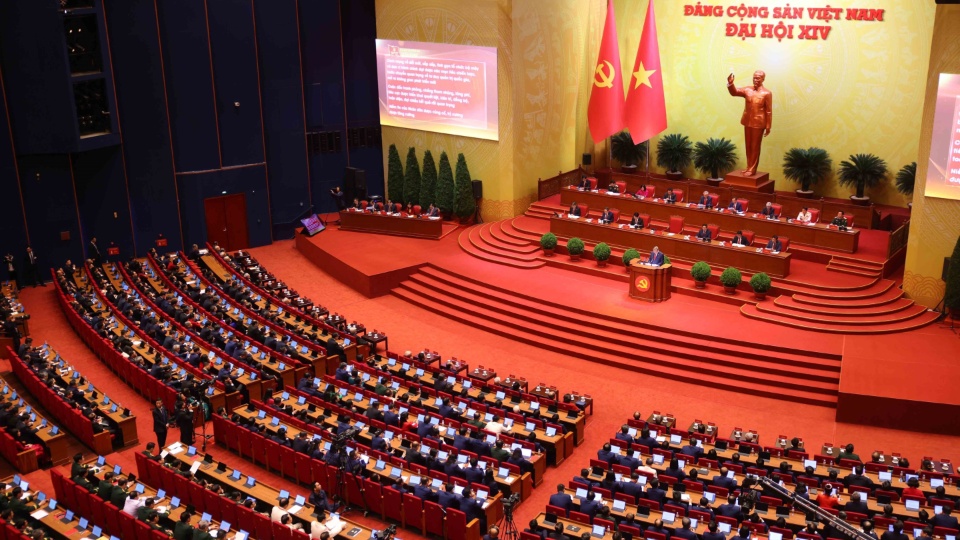
Taking stock of that growth and planning for the period ahead was the task of the 14th National Congress of the Communist Party of Vietnam, which successfully concluded in the capital, Hanoi, on Jan. 23. The congress, the highest body of the party, meets every five years to set the party’s agenda and elect its Central Committee.
The 14th National Congress is the first in what is being called “Vietnam’s era of national rise” and has received significantly more international attention than previous CPV meetings. Foreign media and international diplomats have converged on Hanoi to witness and report on this important Vietnamese event.

Today, congress documents pointed out, Vietnam is a member of 17 multilateral free trade agreements, approximately half-a-dozen bilateral free trade agreements, and is currently negotiating its entrance into even more trade deals. Vietnam is among the leaders in textile production and an important producer of agricultural goods. The Socialist Republic has become an integral part of the global economy.
While these agreements have supported export growth and investment, they are not without risks. Participation in global trade regimes shaped by capitalist interests can exacerbate inequality, place pressure on labor and environmental standards, and constrain economic sovereignty.
The Vietnamese leadership has emphasized that navigating these contradictions requires a strong, socialist-oriented state capable of directing development in the interests of the working majority rather than capital alone. To this end, the outgoing 13th Politburo issued Resolution 79, which reaffirmed the leading role of the public economy in Vietnam.
Vietnam’s global integration is taking place at a time of ever worsening crisis in the international capitalist system. Trade wars and weaponized tariffs have become commonplace since Donald Trump’s return to the presidency in the U.S. In fact, some of the harshest tariffs have been aimed at Vietnam, due to its booming economy and its growing role as a hub for Chinese manufacturing. While Hanoi and Washington have been negotiating around this issue for months and reached a Framework for an Agreement, a final deal remains elusive.
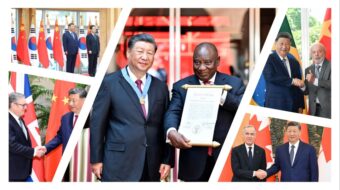
Vietnam has also raised its diplomatic profile. It is an active member of more than 60 multilateral diplomatic organizations and often plays a leadership role in important international bodies, like the United Nations and the Association of Southeast Asian Nations. Vietnam also has strong bilateral ties—including with major powers such as China, Russia, and the United States—and has recently raised the number of its Comprehensive Strategic Partnerships to 12.
This clearly explains why the world has paid such close attention to the 14th National Congress.
The Congress was originally scheduled to last six days, from Jan. 19 to 25. However, in what is being described as a sign of consensus and successful collective decision-making, the Congress successfully concluded its work a day and a half early, on the 23rd.
Among the 200 members elected to the new Central Committee was incumbent General Secretary To Lam, who was chosen to continue in his role. Other prominent members of the current government administration were not elected to the new Central Committee, including Prime Minister Pham Minh Chinh and President Luong Cuong.

Moving forward, the congress set ambitious goals for Vietnam. It said the government will now consider multilateral diplomacy on par with defense and security. With the number of wars around the world increasing, global volatility rising, and major power competition intensifying, the CPV has doubled down on its long-standing ideal that diplomacy and autonomy are the only paths to peace and stability.
Economically, the country will aim for double-digit annual growth over the next five years. By 2030, Vietnam aims to be an upper-middle-income country, and by the country’s independence centennial in 2045, to be a high-income, prosperous, socialist country.
The next step for Vietnam will be national elections for the country’s legislature, the National Assembly, which are scheduled for March. Once elected, the National Assembly will vote for a new Prime Minister, President, and National Assembly Chair, the roles that, along with General Secretary To Lam, will lead Vietnam for the next term. The positions make up what are referred to as the “four pillars” of leadership, which operate under a consensus-based governance model.
After the Congress, many foreign leaders issued congratulatory messages to To Lam and the CPV. It remains to be seen whether Vietnam will attain the ambitious goals set by the 14th National Congress, but the opinion among most attendees and guests was that it is already remarkable that Vietnam has gone from an impoverished, embargoed country to a middle power in just a few decades. It is playing an increasingly important global role, both economically and diplomatically, and the country’s leaders are aiming even higher.
We hope you appreciated this article. At People’s World, we believe news and information should be free and accessible to all, but we need your help. Our journalism is free of corporate influence and paywalls because we are totally reader-supported. Only you, our readers and supporters, make this possible. If you enjoy reading People’s World and the stories we bring you, please support our work by donating or becoming a monthly sustainer today. Thank you!
CONTRIBUTOR