Across the U.S. labor movement, a sense of urgency and gravity permeates discussions as unprecedented attacks on labor rage and a simultaneous groundswell of mass support for unions continues to grow. The need for reasoned strategy and analysis is clarion clear among labor activists.
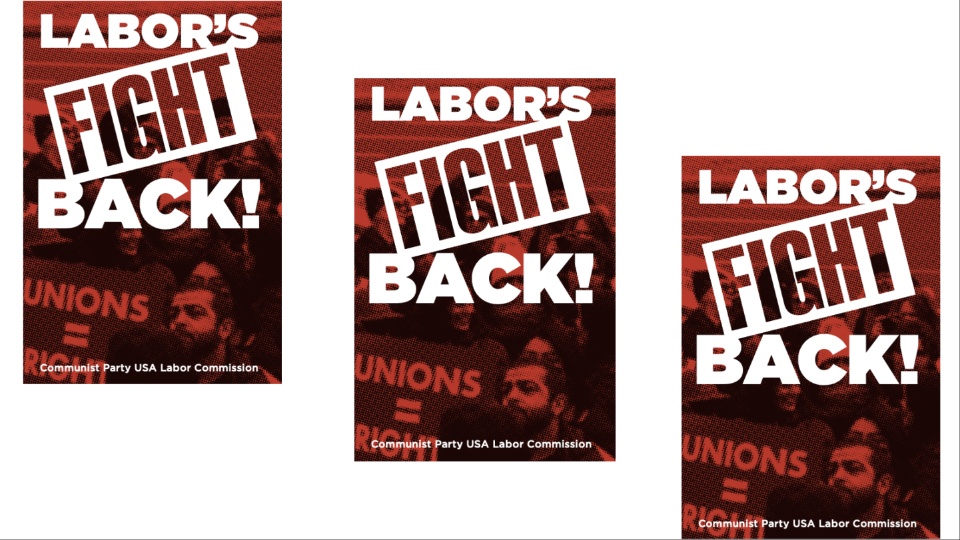
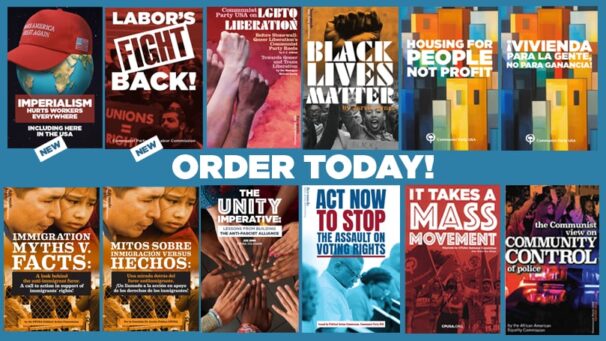
Labor’s Fight Back, a pamphlet issued in April by the Labor Commission of the Communist Party USA, is helping both new and seasoned trade union organizers and movement activists to meet this need and moment.
With an initial run of 3,000 copies rapidly distributed to party collectives and at coalition events, a second printing of the pamphlet is now available for purchase from the CPUSA website.
Labor’s Fight Back represents a new refrain of an old song. As early as the 1920s, Communist Party militants in the Trade Union Educational League (TUEL) distributed educational pamphlets to illustrate organizational strategy and tactics for workers across industries, as well as magazine-type literature like the Labor Herald (1922-24).
These publications helped lay the groundwork for a militant CIO that brought millions of workers into a new and powerful fighting force: industrial unionism. Labor’s Fight Back deftly revitalizes this approach for a new century and context.
Key themes of the pamphlet include:
- The role of young workers in revitalizing the labor movement—bringing fresh perspectives and energy to the table;
- The centrality of a united working-class movement to lead the broad People’s Front for anti-monopoly and anti-fascist democracy;
- The social origins of fascism in the development of unrestricted monopoly capital;
- Democratic, class-struggle unionism beyond “business” or “service model” unionism;
- The role of the Communist Party in developing a fighting working class movement.
Recasting core party insights into the contemporary moment, the pamphlet expounds an old, but updated, strategy of workplace concentration intended to “guide trade unionists in building the power necessary to block a fascist takeover and weaken monopoly capital overall.”
One key formulation of the strategy reads: “Workplace concentration involves winning over workers and community members where they live and work, drawing them into active class struggle and expanding from these strong points. It strengthens the most organized sections of the working class, builds a fighting constituency, and develops leaders through struggle.”
For more than a century, this policy of workplace (or “industrial”) concentration was articulated by leaders such as William Z. Foster, Gus Hall, and Henry Winston in order to ground the Party’s work in the working class. This long-running policy (and conversation) continues within party collectives to this day.
In the Colorado/Wyoming Club of the Communist Party, trade unionists and friends of labor held an animated discussion this summer based on the pamphlet, helping inform and refine the collective’s efforts organizing mental health workers, janitors, educators, county employees, rideshare drivers, servers, museum staff, baristas, and other workers across the region.
More recently, Labor’s Fight Back framed a CPUSA organizing workshop in Kansas City attended by Teamsters, Service Employees, and members of the International Brotherhood of Electrical Workers.
“By working through theoretical questions to ground the practical strategy of workplace concentration, Labor’s Fight Back enabled the educational to link theoretical development with practical skill-building and concrete plans for action,” said Brad Crowder, a union organizer based in Kansas City.
“We cannot advance as a class if we leave out the basic advances won by the struggle of the working class in the past, as well as standing up for the democratic gains that oppressed sections of our class have won,” Bryesen Cooper, an attendee and organizer for the Missouri Workers Center active in the Amazon campaign, told People’s World.
Elsewhere in the South, Labor’s Fight Back is shaping the conversation for trade union militants, including at the Southern Labor Organizing Conference held in Durham, N.C., in June. A multigenerational cohort of movement veterans and young militants from the AFL-CIO’s organizing department, the Union of Southern Service Workers, the United Auto Workers, and other organizations joined in discussion of the current organizing moment and the continued necessity of “anti-racism, militancy, solidarity, and soul.”
The core analysis in Labor’s Fight Back has sparked broader discussion beyond the CPUSA, including a People’s World roundtable with leaders from the Coalition of Black Trade Unionists, the American Postal Workers Union, and the Coalition of Labor Union Women.
Labor’s Fight Back is complemented by other recent publications of the Labor Commission, such as the article “Service Industry Organizing: A Key Site of Struggle,” produced by the Commission’s Service Worker Subcommittee, which elaborates particular tactics and approaches for the special features of organizing in the service sector, a predominant component of the U.S. working class today.
All trade unionists, party members, and friends of labor should review this pamphlet for a contemporary introduction to the CPUSA’s historical understanding of mass organization and economic class struggle.
With a fascist crisis in full-swing, workers have no alternative but to pick up their fighting spirit and follow the best traditions of the labor movement to meet this moment. Labor’s Fight Back offers one readymade guide for activists and organizers taking up the challenge.
For distribution in your local area you can download “Labor’s Fight Back” here or request to have a bundle mailed to you at cpusa.org/pamphlets.
We hope you appreciated this article. At People’s World, we believe news and information should be free and accessible to all, but we need your help. Our journalism is free of corporate influence and paywalls because we are totally reader-supported. Only you, our readers and supporters, make this possible. If you enjoy reading People’s World and the stories we bring you, please support our work by donating or becoming a monthly sustainer today. Thank you!
CONTRIBUTOR