YPSILANTI, Mich.—There is no doubt that drug use is a national public health crisis affecting people from all demographics. According to the Centers for Disease Control and Prevention (CDC), overall drug overdose deaths have increased by 520% since 1999. However, in recent years, deaths have been decreasing; since April 2024, preliminary data show a decrease of 25%. To understand what is going on with these statistics, we have to have a basic understanding of the circumstances—and misconceptions—surrounding addiction.
The steep decline in deaths seems correlated with the increasing availability of Naloxone—aka “Narcan,” the nasal spray that reverses the effects of opioid overdose. In Washtenaw County, Sheriffs have been trained to administer Narcan, and it’s available for free at the library, plus other public spaces and private businesses alike. Since 2022, the preliminary data shows that opioid deaths in the county have decreased significantly, from 80 deaths to 42 in 2024, and now only 7 deaths through April of this year, according to the Washtenaw County Medical Examiner.
Compare this with the most common way our society deals with drug use: criminalization. When President Reagan started amping up the so-called “War on Drugs” and Nancy Reagan told us to “Just say No!,” the number of non-violent incarcerations skyrocketed over the next few decades. Did this really do anything to curb drug use in our community, and what does this model do for people who are already suffering from addiction? Criminalization seems to do more harm than good; it can lead to people being afraid to seek help, and it perpetuates stigma around drugs and the people who use them.
Harm reduction is an alternative to criminalization. This method acknowledges that cold-turkey quitting and rehab aren’t always the most effective ways to treat acute drug addiction and curb fatal overdoses. Techniques include drug testing, instruction on how to reverse an overdose, access to Naloxone, needle exchange, counseling on safer-use practices, and help with figuring out a path to rehab.
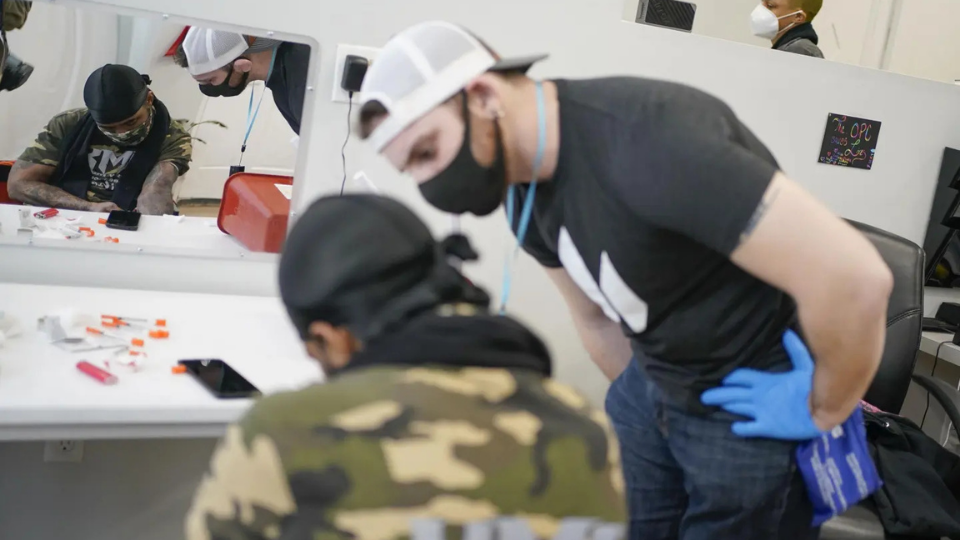
An organization that provides harm-reduction services in Ypsilanti, Michigan, is LEAF (Liberation, Empathy, and Advocacy for the Future). The executive director—and sole employee of LEAF—is Corn Williams. He is the only person in the county trained to test drugs by using a type of spectrometer to assess which substances are present. After basic testing in his facility, he then sends a sample off to be tested at the University of North Carolina. This allows him to advise people on the risk level of the drugs they may consume, which is another way to lower drug overdoses and deaths.
Criminalization and stigma: Barriers to recovery
Typically speaking, when it comes to opioids, many people think of heroin. At LEAF, most of the opioids found in these samples have been fentanyl and other cheap substitutes. Since opening in 2024, Williams said that only one sample has tested positive for heroin. He explained that when drugs are criminalized, and they raise the criminal penalties for a particular substance, addicts just find another substance to fill their place. But these substitutes need to be low-cost— like fentanyl—and they tend to be more dangerous.
The decriminalization of personal use amounts of drugs—meaning no baggies, scales, or large amounts of cash—in Washtenaw County has made this type of program possible. When people aren’t afraid of being arrested for asking for help to be safer, then they actually utilize these services, and lives are saved.
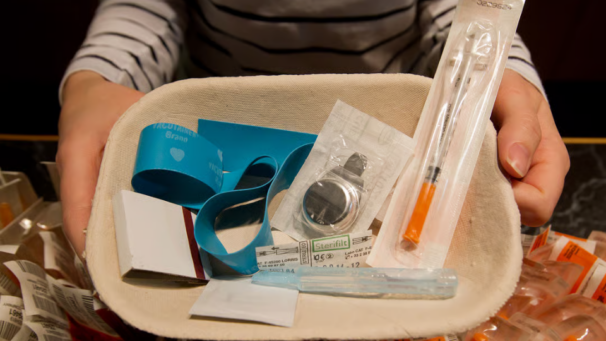
In an interview with People’s World, Williams referred to the city of Ypsilanti as the “epicenter” of homelessness and overdoses in the county. Yet with most local funding going towards prevention, treatment, and long-term drug recovery, there is little money to help with the acute crises caused by a lack of stable housing and safer-use services like LEAF. There were 500 check-ins in the first 3 months LEAF was open, and because the grant only paid for a drug-checking technician, Williams had to do a lot of improvising for the rent and supplies to keep their doors open.
Not only is there a lack of funding to contend with, but also stigma and pushback from parts of society. Reportedly, LEAF’s landlord has frequently called the cops, claiming that people are smoking in the building, among other things. When the police arrive, they never see evidence of the alleged smoking. Yet, this has happened so much that the police have suggested pressing charges against the landlord for harassment.
Law enforcement showing up is not just a nuisance; it also inhibits the work LEAF is doing. A police presence diminishes the trust that these organizations have worked to foster in order to save lives. Williams noted that creating spaces like this helps people move out of “survival mode,” which is a mentality that people often adopt when they aren’t getting vital needs met. Once that is achieved, conversations can be had about safer use and even rehab. Williams explained that people aren’t going to trust you if they think the police are outside waiting for them.
The executive director is currently looking to move LEAF to another site. He would like to be able to purchase an entire building and turn the upstairs into an emergency shelter. He says, “We need a shelter…[with] holistic harm-reduction services…this can be the perfect segway to a safe-use site. There’s not a better municipality [Ypsilanti] to offer all of these resources in one place.”
Sheri Wander runs Peace House, an organization that helps fill in gaps for people struggling with homelessness and addiction, and also helps organize a daytime warming center in Ypsilanti. She said that neighbors were typically unaware that she was providing these services until certain landlords started causing issues. Wander also stated that most businesses in the area are great, but that “there are a few people who have made it their mission to rally fear.” She mentioned being informed that Ypsilanti police were overheard mocking the need for Narcan outside of the library. One could argue that this perpetuation of stigma isn’t helpful, especially when it comes from authoritative figures.
Healing from addiction
Where programs like Alcoholics Anonymous (AA) focus on complete abstinence, Peace House focuses on harm reduction.
“Twelve-step programs can be great, but I know people who have been really harmed by them,” Wander said.
Programs like AA focus on complete abstinence, and if you relapse, you start from scratch. Wander said she doesn’t like the word “relapse.”
“On the surface, it’s neutral, but has connotations of failure in our stigma-filled society,” she explained. She went on to note that even though abstinence programs acknowledge relapse as part of recovery, people are shamed when they do. Relapse can be equated with failure, so they end up using again. Or a person may not be ready to quit entirely, so they don’t start the process. “Recovery is any positive change,” Wander says, and that could look like using less, or only in certain situations.
In a perfect world, addiction would be solved by going to rehab, getting out, and moving on with the support needed for a sober life. Unfortunately, it appears to be a bit more complicated than that. When someone decides they want to attend rehab, the process can be quite difficult.
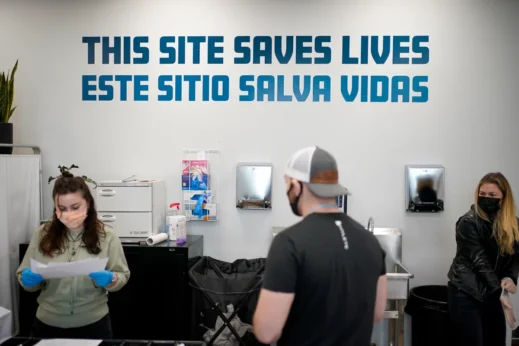
Tegan Johnson is a case manager for Miller Manor—a permanent supportive housing program in Ann Arbor—and helps people navigate the quitting process. She explained that if you are on Medicaid, you have to call Community Mental Health (CMH) to first do a screening to determine the appropriate care. Then they authorize you for treatment one program at a time. After a pre-intake interview, there is typically a waitlist to be accepted and several more interviews. After all this, you still may not be admitted, and you’d have to start the whole process over again. This all takes a lot of patience, organization, and the ability to articulate one’s needs.
Johnson noted that “the lifestyle of addiction is not conducive to organizing projects and keeping track of where you are [in the process].” She also stated that when a person decides to go to rehab, “it may be the only time they’re willing [to go] this month…then there’s a 2-week waiting list.” If a person has private insurance, they may have to pay a huge deductible. Some people end up paying out of pocket, but that can cost upwards of $17,000 for 90 days of treatment. It is clear that there are many hurdles to becoming sober.
On top of all this, exclusive to parents trying to attend a rehab program is the issue of what to do with their kids while they’re away. Dawn Farm is a rehab facility in Ann Arbor that has a program called Strong Roots. It is a sort of three-quarter house, allowing parents to move in and receive support with their children. After the recent federal funding cuts, they received a stop-work order to halt American Rescue Plan Act (ARPA) funded programs, which included the Strong Roots program. According to Dawn Farm’s Facebook page, they had 5 families living there. It was only due to community fundraising that these struggling families got to keep their homes and their support.
Lack of funding means fewer services
Home of New Vision (HNV) was the only program in the county that offered same-day help. Their doors were open 24 hours. It provided a safe place to detox, or just sober up, have a meal, and get some resources in the form of harm-reduction or help with navigating the process of going to rehab. HNV was forced to close its doors in April due to federal funding cuts to addiction and recovery services. HNV has another location, but it’s almost 50 miles west of Ypsilanti, in Jackson, Michigan.
Sheri Wander stated that “most people don’t realize there is no emergency shelter in the county.” The only shelter in the county is the Delonis Center in downtown Ann Arbor, and it was never meant to be an emergency shelter. To be admitted into Delonis, one has to be deemed “chronically unhoused.” With a months-long waiting list and only 56 beds, “Who the fuck isn’t chronically homeless?” Now, imagine being unhoused and addicted. “If someone wants to detox, they need a bathroom.” This is a hurdle for someone wanting sobriety.
A lack of funding for services often goes along with a tendency to see addiction as a moral shortcoming instead of a symptom of an individualistic society. It is clear that the stigma surrounding addiction leads to further isolation and makes many community members reluctant to accept organizations that offer harm-reduction and other services.
Wander stated that many people she talks to about safer-use services and the need for an emergency shelter in our community have the attitude that, while they don’t hate homeless people, their neighborhood just isn’t the place for a shelter. But advocates interviewed by People’s World all seem to feel the opposite—that where the people who need help exist is where the services to help them should also exist, and that helping people with their basic needs of food and shelter can work wonders when trying to help people with addiction.
There is no one-size-fits-all solution to this issue. But in the words of Sheri Wander:
“Radical love…is messy…there are no black and white answers. And so…in order to really care about people, you have to be willing to engage in that messy.”
If you or someone you know would like to help:
You can donate to Peace House at their website.
LEAF accepts food and clothing donations directly at 211 E Michigan Avenue Ypsilanti, MI
We hope you appreciated this article. At People’s World, we believe news and information should be free and accessible to all, but we need your help. Our journalism is free of corporate influence and paywalls because we are totally reader-supported. Only you, our readers and supporters, make this possible. If you enjoy reading People’s World and the stories we bring you, please support our work by donating or becoming a monthly sustainer today. Thank you!
CONTRIBUTOR