The end of 2025 brought the first quarter of the twenty-first century to a close. To those of us, “baby boomers,” who came of age in the 1960s and 1970s, the years 2001-2025 seemed to our younger selves like the distant future. Yet, these times have, for the most part, continued the social, economic, and political trends of our youth.
What has been called the “general crisis of capitalism” remains the dominant force in our lives. The rich have gotten much richer; workers continue to face increasingly difficult economic problems; and we have seen the rise of repression against people of color, LGBTQ+, and immigrants. Violence remains a serious problem in our society, in part because of a highly militarized society, and a continued use of force or threat of force by the U.S. government against those who do not bow to its will. And all of these trends have been bolstered by the presidency of Donald J. Trump.
Some specifics (and by no means an exhaustive list):
The continued influence of the military on the U.S. government and in society. For comparison sake, the Fiscal Year 2001 military budget that the Clinton administration requested was $305.4 billion. In Fiscal Year 2026, the number will be $900 billion. If one were to calculate the rise in the cost of living over those years, the 2001 number would be equivalent to $711 billion currently. That figure translates into an increase of over 130%. The actual budget increase will be over close to 300%.
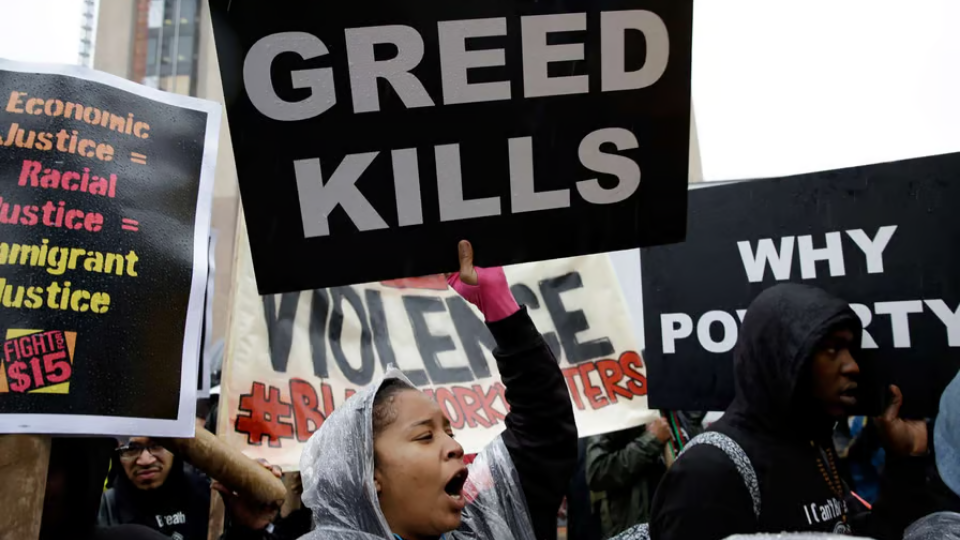
Closely correlated to the increase in “defense” spending has been the growing inequality in U.S. society. Not only have the richest Americans been raking in billions in Pentagon contracts, but they have also been doing so in many sectors of the economy. In 2001, the top 1% controlled about 26.3% of all wealth; a quarter of a century later, that number had swelled to 31.0%. In terms of real money, the figures are quite striking: In 2001, the figure for the top 0.1% (that is, the top one-tenth of one percent) was about $4.2 trillion; in 2025, it had ballooned to about $23 trillion. In contrast, the wealth of the bottom 50% of households was $1.3 trillion in 2001; by 2025, it had increased to about $4.1 trillion.
In other words, the top 0.1% saw their wealth increase by more than five times; for the bottom half, the increase was only about three times. Much of that increase by the wealthiest Americans has come in recent years.
Under capitalism, the government always needs an enemy. Between 1917 and the early 1990s, it was the Soviet Union. A few years later, a new “enemy,” called “terrorism,” materialized.
The beginning of the twenty-first century was marked by the September 11, 2001, terrorist attacks on the World Trade Center and the Pentagon. In its immediate aftermath, the George W. Bush administration began what has been called the Global War on Terrorism. First in Afghanistan, then expanded to Iraq. Over a twenty-year period (2001-21), the United States sent between 1.9 and 3 million servicemen and women to those combat zones. More than 7,053 U.S. service members and about 8,189 contractors died in those wars. The toll of those injured was far greater, and the psychological costs from conditions such as Post-Traumatic Stress Disorder (PTSD) have left their marks on our society.
At the same time among veterans, a number more than four times of those who died on the battlefield has been the number of suicides. According to the Cost of War project at Brown University, “Over 1.8 million veterans have some degree of officially recognized disability as a result of the wars.”
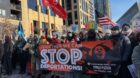
The rise of the extreme right-wing (some of whom could be described as fascist) in all three branches of the federal government, and in numerous cases, at the state and local levels, has become a major feature of our political system in 2025. Around 2010, it was the “Tea Party,” but with the appearance of Donald Trump, it has morphed into the “Make America Great Again” (MAGA) movement and taken over the Republican Party. Their attacks on many of the achievements of the people’s movement, particularly the Civil Rights Movement, the LGBTQ+ community, the Affordable Care Act, and the labor movement, are well-documented. At the same time, the Gestapo-like tactics of the Immigration and Customs Enforcement (ICE) have brought fear to millions and resistance from broad sectors of society.
The Supreme Court has turned into a bastion of extreme right-wing ideology. From the Court awarding the 2000 election to George W. Bush, the “Citizens United” case that allowed the richest people and corporations to flood the electoral system with money, to the slew of recent decisions that buttress the policies and executive orders of the Trump administration, the Court is reversing decades of social progress. A major exception was in 2015, Obergefell v. Hodges, which upheld same-sex marriage.
As a result of the Citizens United case, according to one report, “As of December 31, 2024, 109 individuals had filed campaign finance reports disclosing financial activity in connection with the 2024 presidential election. These candidates reported raising $2 billion and spending approximately $1.8 billion from January 1, 2023, through December 31, 2024.” (Statistical Summary of 24-Month Campaign Activity of the 2023-2024 Election Cycle. The figures speak for themselves.
One cannot conclude a summary of the last twenty-five years and not mention the COVID-19 pandemic that arrived in the United States in 2020. It created economic and social crises from which we have not yet fully recovered. Over one-million Americans (and nearly seven million worldwide) died. The incompetence of President Trump and the outright indifference of his administration to the fate of millions of their fellow human beings is a stain on our history and values that may never be erased.
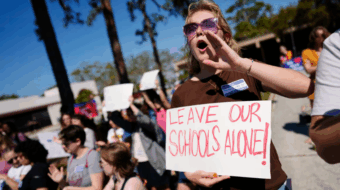
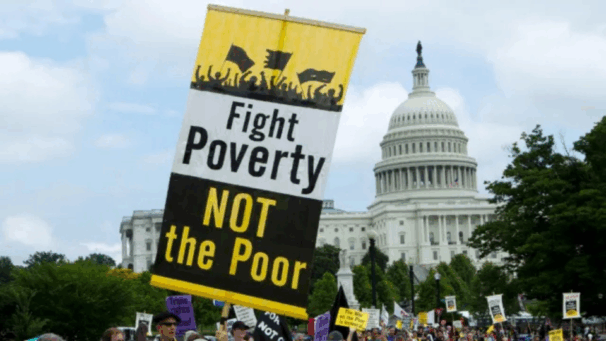
But all is not lost. At every step of misrule by the elites, the people have stood up and fought back. The number of groups opposing U.S. government policy, domestic and foreign, is seemingly endless. They include organizations dedicated to working people, human rights, civil rights, and virtually every oppressed people, covering all aspects of life, from abortion rights, voting rights, the environment, peace, and many more.
Here are a few of the major high points of the struggle:
- The fightback by people of color: In response to the killings in 2014 of Michael Brown in Ferguson, Missouri, among others, activists founded Black Lives Matter. The deaths of George Floyd and Breonna Taylor at the hands of police officers in 2020 led millions into the streets across the country during the pandemic to demand justice.
- Women’s rights: Two events, especially the #MeToo movement and the response to the Supreme Court’s “Dobbs” decision, which took away the right of a woman to decide about her own body, sparked a nationwide uprising.
- Labor: Though the number of workers organized in unions remained static, and the percentage of union members declined, militancy has continued and, in recent years, intensified. Led by newly elected leadership, the United Auto Workers (UAW) won a major victory against the Big Three automakers in 2023. Tens of thousands of East and Gulf Coast dockworkers struck for three days in 2024. In 2025 alone, there have been 199 strikes, including: machinists at Pratt & Whitney, trainmen on NJ Transit, student workers at Western Washington University, Amazon workers in facilities across the country, Los Angeles hotel workers, Starbucks baristas, and many others. The list of other work stoppages is too long to enumerate here.
Since the beginning of the second Trump administration, workers in the federal government, organized in several unions, have faced an unhinged attack by the president. Two major issues have been the president’s unilateral termination of all collective bargaining agreements and the layoffs of hundreds of thousands of employees.
- Politics: Since the turn of the century, Republicans have held the presidency for 13 years, Democrats for 12. In 2001, it was exceedingly rare for a candidate to talk publicly about being a socialist. In recent years, however, that is changing. Twice, in 2016 and 2020, Bernie Sanders, an independent Senator from Vermont, ran for the White House. In the earlier race, he won more than 13 million votes, over 9.5 million four years later. In Congress, a growing number of representatives declare themselves socialists. The same is true at the state and local levels.
And this trend is not confined to members of the Democratic Socialists of America. In 2025, three candidates who openly ran as members of the CPUSA won local races in Maine, Massachusetts, and New York.
The year 2025 also saw the rise of a nationwide resistance to the Trump administration. Large coalitions built a number of demonstrations under the titles “Hands Off!” and “No Kings!” that brought out millions. In June, it was estimated that over five million showed up, a number that was exceeded by the seven million in October.
As we see, the world has undergone tumultuous change in the first quarter of the twenty-first century. The post-World War II era, dominated by the United States, is yielding to a new international arrangement. The Global South—that is, the countries of Asia, Africa, and Latin America—is growing in power and recognition. Led by the world’s largest developing country, China, these countries are demanding new economic relations where they are treated as equals to the developed world and given greater respect. They propose a multilateral system that respects every country’s sovereignty, one built on peaceful relations.
The United States government does not yet accept these ideas. If anything, President Trump is pursuing an “America First” agenda where the rest of the world, especially the Western Hemisphere, plays a secondary role in the furtherance of U.S. hegemony.
There will be another 75 years before 2101. That’s plenty of time for the forces of peace, social justice, and equality to turn the planet Earth into a place where all people can live in dignity and as equals.
As with all news-analysis and op-ed articles published by People’s World, the views reflected here are those of the author.
We hope you appreciated this article. At People’s World, we believe news and information should be free and accessible to all, but we need your help. Our journalism is free of corporate influence and paywalls because we are totally reader-supported. Only you, our readers and supporters, make this possible. If you enjoy reading People’s World and the stories we bring you, please support our work by donating or becoming a monthly sustainer today. Thank you!
CONTRIBUTOR