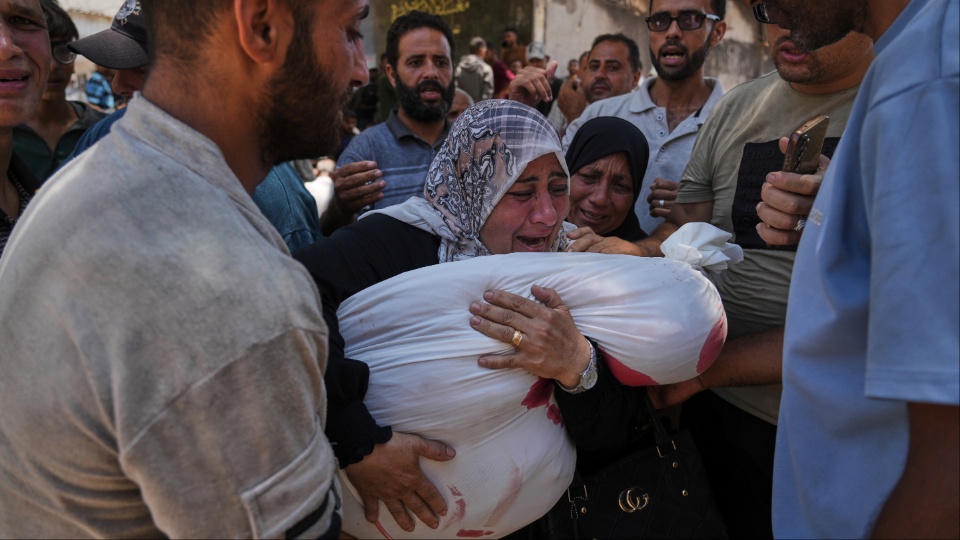
This week, military conflict erupted along the Thai-Cambodian border, where a longstanding dispute over the ownership of an ancient temple has spiraled into violence and loss of life. Next door, Myanmar’s civil war continues to rage. Genocide and ethnic cleansing persist in Palestine, as the perpetrator—Israel—threatens Syria and Iran with more war. In the Eastern Democratic Republic of Congo, death and destruction unfold in a conflict largely ignored by the Western media. Meanwhile, in Eastern Europe, the Russia-Ukraine war grinds on, with NATO members enthusiastically cheering it on from the sidelines—sidelines that are inching ever closer to the battlefield.
And yet, it wasn’t so long ago that political scientists assured us that the global trend was moving toward peace and cooperation. Throughout the 1990s and early 2000s, this idea was repeated so often it became a mantra. Even in recent years, some academic articles clung to the belief that despite setbacks, the world was, on balance, becoming more peaceful.
That level of denial can no longer hold. We are living in an era of rising nationalism, militarism, and open conflict.
According to the Global Peace Index for 2025, this has not been a sudden shift; the world has been becoming less peaceful for 17 years straight. So, what happened? How did we go from a supposedly post-conflict world order to one where genocide unfolds in plain view with little meaningful intervention?
The answer lies, in part, in the myth that capitalists and their politicians began selling in the 1980s: the great lie of neoliberalism. We were told that “free trade” and the “free market” would bring about world peace. The logic went that nations which trade with one another wouldn’t go to war with one another. But this fantasy ignored the very nature of capitalism and the reality of imperialism.
In 1916, Vladimir Lenin published Imperialism: The Highest Stage of Capitalism. In straightforward terms, he explained that for capitalism to continue growing, it must expand beyond national borders. This expansion, driven by the hunt for profit, inevitably leads to competition among capitalist nations over foreign resources and markets, and thus, to imperialist conflict.
“Capitalism has grown into a world system of colonial oppression and of the financial strangulation of the overwhelming majority of the population of the world by a handful of ‘advanced’ countries,” Lenin wrote.
Much has changed since 1916, but one thing has not: capitalists’ need to compete over finite global resources and outlets in which to market their goods.
When Lenin penned those words, World War I was consuming Europe. Fueled by nationalism and militarism, working-class and peasant boys were sent to slaughter one another for the sake of colonial control and capitalist profits. In the war’s aftermath, those same ideologies of nationalism and militarism would give rise to fascism in Italy and Nazism in Germany—the ideologies of the most reactionary elements of finance capital.
Today, we are seeing similar patterns re-emerge. Fascist rhetoric and far-right extremism are spreading around the globe. On any given day, one can open the news or social media sites and find Israeli politicians and their supporters not only rejecting ceasefire proposals but actively calling for more war and conquest. Across the so-called developed world, far-right parties are gaining ground. Most recently, Japan’s Senshin-to has joined the reactionary ranks of Trump’s MAGA movement, Israel’s Kahanists, Germany’s AfD, Hungary’s Fidesz, the True Finns, the Sweden Democrats, and Ukraine’s Zelensky and his Azov-aligned forces.
Just this year, all NATO member states—including the aforementioned countries of Germany, Finland, Sweden, and Hungary—agreed to increase military spending. This escalation comes at a time when millions of working-class people in these countries are struggling to meet basic needs. At the same time, welfare states are being dismantled bit by bit. The war economy doesn’t just bring death and suffering to those caught in conflict zones, it also diverts essential resources away from healthcare, housing, and education, harming working-class people at home.
These developments are not isolated or coincidental. Rather, they are symptoms of a deeper systemic crisis. As capitalism enters a period of stagnation and intensified global competition, ruling elites increasingly rely on nationalism, xenophobia, and militarism to maintain control and deflect blame. Authoritarian politics becomes a tool to suppress dissent at home, while military aggression becomes a means to secure markets, resources, and strategic advantage abroad. Far-right parties thrive not because they offer real solutions, but because they channel popular anger away from capitalism and toward scapegoats—immigrants, minorities, or “foreign threats.”
The truth is simple and brutal: Capitalism leads to war. Its need for constant expansion in a world of limited resources makes conflict inevitable. The much-hyped promises of free trade and open markets were never capable of ensuring peace. As long as this system remains in place, wars will multiply, and the number of innocent people caught in their path will continue to grow.
CONTRIBUTOR