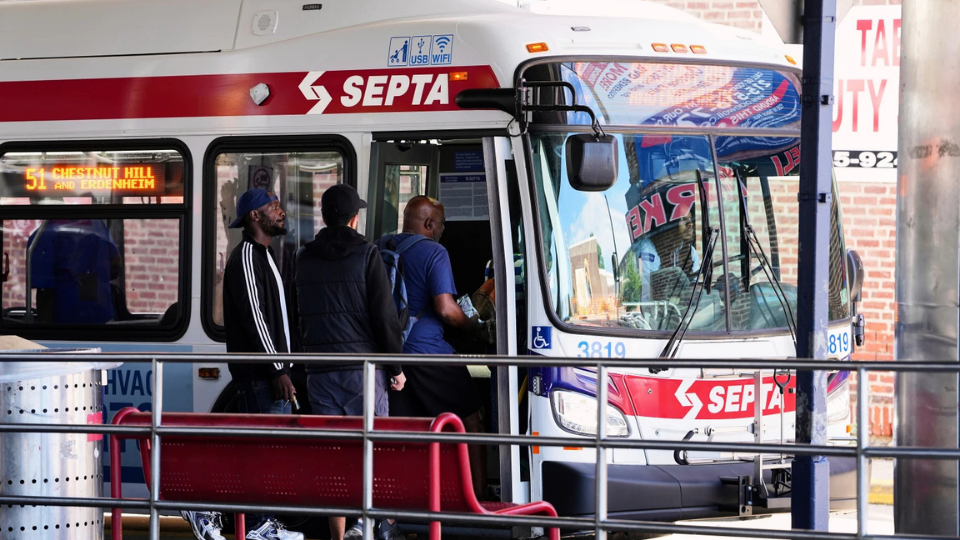
On August 24, after months of hesitation and inaction on the state budget due to ideological differences, the Southeastern Pennsylvania Transportation Agency (SEPTA) implemented the first round of steep cuts to buses, trains, and trolleys in the region to address a funding shortfall.
The SEPTA cuts have been described as a disaster for workers and families across the greater Philadelphia area, an unfortunate consequence of Republican State Senators holding hostage the Pennsylvania state budget, which was due three months ago. After Governor Josh Shapiro’s initial $51 billion proposal was negotiated down to $49 billion in the State House of Representatives (with five different mass transit appropriation bills ignored by the State Senate), and even after the legal complaint, injunction, and emergency fund transfer to keep SEPTA solvent for the next two years, the Republicans refuse to fund transit across the state.
According to Thomas Fitzgerald at the Philadelphia Inquirer, there were 13% fewer riders on buses and rail in the Philadelphia area during the first week of the cuts (628,000 of 723,000 expected), with at least 4,400 people left behind at bus stops because of the crowded buses; there was a 26% higher number of late bus trips than usual. In one week of reduced service, 63% of Philadelphia schools had more late students; 54% had more student absences.
The stopgap solution has been to dig into the Pennsylvania Department of Transportation (PennDOT) capital fund, which is supposed to be used for needed infrastructure upgrades to the tune of $394 million, while retaining the previously proposed 21.5% “across-the-board fare increase.”
WHYY reported in late August that attorney George Bochetto, the former Pennsylvania boxing commissioner who ran in the Republican primary for U.S. Senate in 2022, was part of Trump’s second impeachment trial defense, and previously fought the removal of the Marconi Plaza Christopher Columbus statue, filed a complaint against SEPTA. Bochetto claimed SEPTA was fabricating the financial crisis, holding riders “hostage” and enacting inequitable cuts. He covered himself in glory after Common Pleas Court Judge Sierra Thomas Street’s August 29th ruling halting service eliminations and reductions and September 4th ruling ordering a reversal.
Initially, this meant postponing the fare increase and regional rail service cut, while maintaining the bus and metro rail cuts, but after money was shifted from the capital fund, bus and metro cuts were reversed while the fare hike was enacted. Rachel Moore at PHL 17 reported Bochetto as calling the judge’s injunction “a victory for the riders.” It’s true that cuts to SEPTA harmed working people, but his rhetoric married defense of the people with defense of Republicans in the State Senate. Meanwhile, the state is collectively kicking the problem down the road, sapping and displacing funds intended to repair and replace buses, trains, and trolleys.
In SEPTA General Manager Scott Sauer’s appeal to PennDOT Secretary Michael Caroll, he noted: “SEPTA has implemented austerity measures, including a hiring freeze and administrative cuts, which reduced the size of the deficit from $240 million to $213 million. There is nothing left to cut from the budget but service.”
A little later in the letter, Sauer added that “SEPTA recognizes that transferring capital funds to operating—with no commitment to replace them—is not a sustainable long-term solution to SEPTA’s current budget crisis. These capital dollars will not be available to support critical infrastructure rehabilitation and vehicle replacements when needed.”
Kendra Bozarth argued in The Philadelphia Citizen that the cuts do have a disproportionate effect on Black and brown Philadelphians, but Republicans in the State Senate—who blame Philadelphians for taking more than they give, while the reality is the reverse—are to blame.
According to the first Philadelphia Inquirer article about the lawsuit, consumer advocate Lance Haver claimed he was asked to communicate with Bochetto alongside Republican State Senators Joe Picozzi (Philadelphia) and Majority Leader Joe Pittman (Indiana, PA) to organize the lawsuit. Picozzi denies communicating with Haver, so the Inquirer concluded it is unclear whether those Republicans were involved, which is uncanny.
The government has known this would be a problem for several years. In December, Governor Josh Shapiro is negotiating a bailout with the Delaware Valley Regional Planning Commission through federal funds and emergency funding from the city of Philadelphia and the surrounding counties. This is after Republicans blocked Shapiro’s plan to raise funds for Public Transportation through a sales tax, while their main idea was and is pushing to increase and tax gambling machines in Pennsylvania (at the same time as neighboring states are trying to rein in gambling’s proliferation). And, while the Philadelphia area deserves our headlines, Republican Senators’ refusal to fund mass transit will also affect rural people away from population centers, who have to apply annually for transit funds.
While it is narratively convenient to blame the suburbs surrounding Philadelphia, those people also rely on SEPTA, and cuts to the metro and regional rail hurt workers going in both directions in the region. Pennsylvania Republicans position themselves as taking on big city elites while hanging their rural constituents out to dry, while their ally in the city cynically uses concerns about equity to shift blame from those responsible toward those trying to administer an underfunded economic necessity. SEPTA is saved for now, but until we replace some of these legislators who are more concerned about gambling machine manufacturers’ profits than the ability of people across the state to get to school and work, we will continue to face these problems.
As with all op-eds published by People’s World, the views reflected here are those of the author.
We hope you appreciated this article. At People’s World, we believe news and information should be free and accessible to all, but we need your help. Our journalism is free of corporate influence and paywalls because we are totally reader-supported. Only you, our readers and supporters, make this possible. If you enjoy reading People’s World and the stories we bring you, please support our work by donating or becoming a monthly sustainer today. Thank you!
CONTRIBUTOR