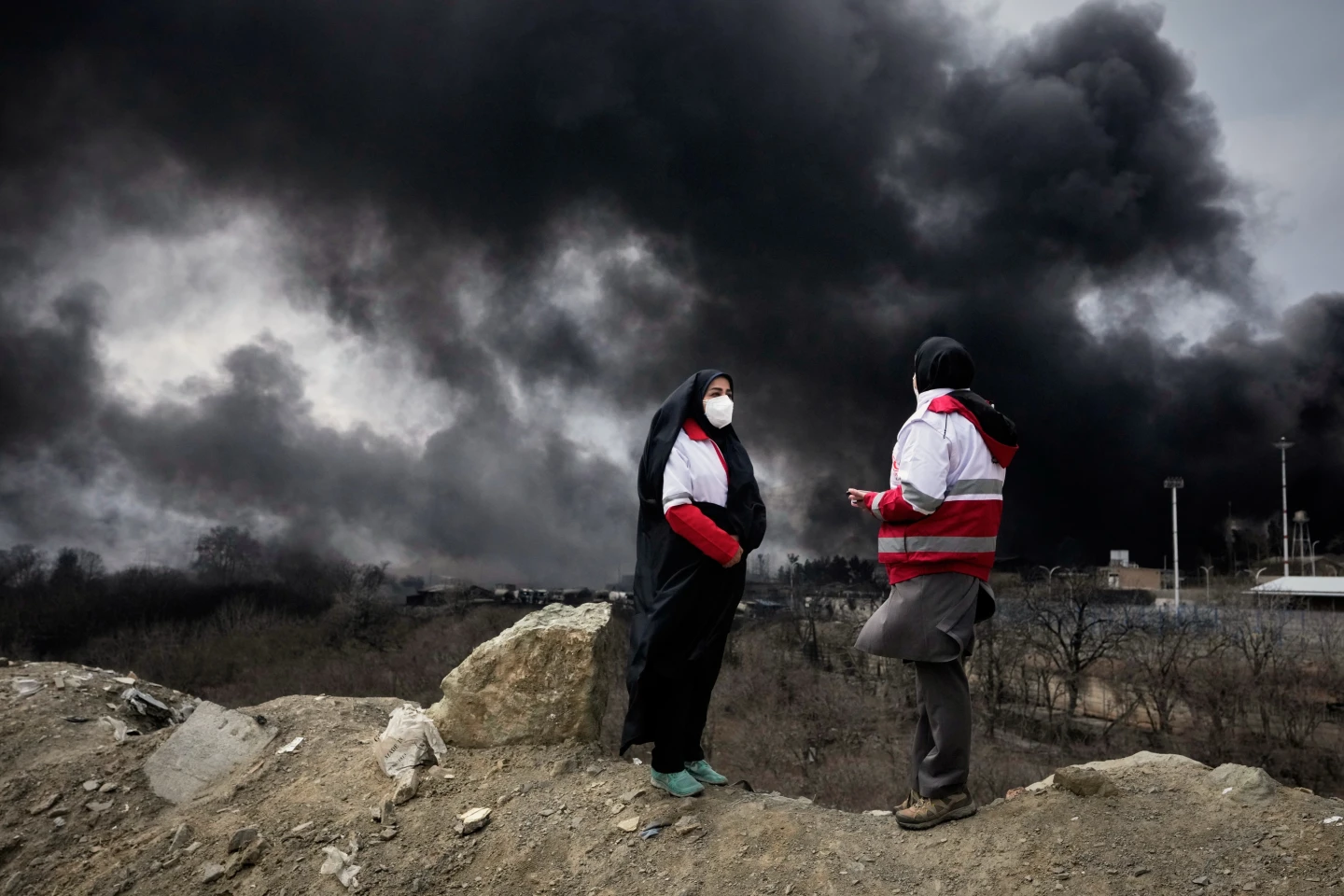
In times of war, reality is often the first casualty—not only on the battlefield but in the narratives that travel across the global information system. As tensions surrounding Iran escalate, much of the international coverage has portrayed the country as teetering on the edge of internal panic and social breakdown. Yet recent reporting from foreign correspondents on the ground tells a far more complex story—one that challenges the dramatic narratives dominating headlines and raises uncomfortable questions about how wartime realities are framed for global audiences.
Recent reporting by CNN correspondent Fred Pleitgen offers a striking counterpoint to the dominant narrative that has circulated across much of Western media coverage of Iran’s internal situation amid escalating tensions. Reporting from inside Iranian cities, Pleitgen described scenes that diverge sharply from portrayals of widespread panic or societal breakdown. According to his observations, daily life in many areas continues with a degree of normalcy: markets remain stocked, fresh produce fills the stalls, cafés serve customers as usual, and fuel stations operate without the long queues or shortages that typically accompany wartime crises.
Perhaps most notable, the correspondent reported an absence of the collective panic frequently suggested in external commentary.
Such firsthand testimony from a Western journalist—broadcast through one of the world’s most influential news networks—raises important questions about the gap that can emerge between lived reality and the narratives constructed during periods of geopolitical confrontation.
Equally significant is what this reporting reveals about Iran’s approach to media access during a moment of heightened tension. Despite facing military attacks and intense international scrutiny, the country has not sealed itself off from foreign journalists. On the contrary, international correspondents have been able to enter the country, travel within it, and report on what they witness.
This openness stands in contrast to the assumption that societies under external pressure inevitably respond by restricting the flow of information. Allowing foreign reporters to document everyday life during wartime suggests a level of confidence in the resilience of domestic society and in the ability of observers to evaluate conditions on the ground for themselves.
Beyond the issue of media access, the reporting also offers insight into the broader social atmosphere within the country. The continuation of daily routines—commerce, social life, and public services—coexists with a visible surge in public demonstrations across several major cities. From Tehran to Isfahan, from Shiraz to Mashhad, large gatherings have drawn citizens who have expressed opposition to external military pressure and voiced support for national sovereignty.
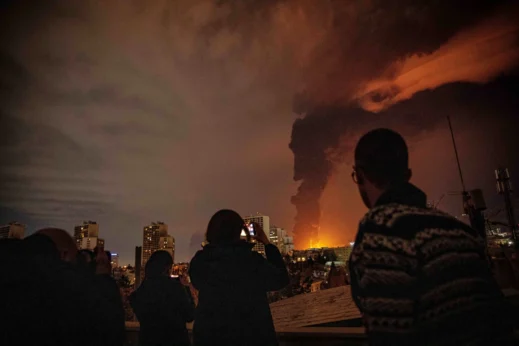
Observers also note the remarkable diversity of participants in these demonstrations. Young people, families, and women appear prominently among the crowds, indicating that the mobilization transcends any single demographic or political constituency. Indeed, millions of Iranians are taking to the streets night after night across the country’s provinces, turning city squares and public boulevards into vast arenas of collective political expression. For many participants, these rallies represent far more than spontaneous protest; they embody a broader assertion of national solidarity in the face of external pressure and a reaffirmation of sovereignty, dignity, and collective resolve.
For the demonstrators, these gatherings also represent a clear rejection of the ongoing American-Israeli military attacks on their country. Participants frame their presence in the streets as a defense of national sovereignty and political independence, expressing the view that external military pressure only strengthens their determination to stand behind their nation and its institutions during a moment of profound geopolitical confrontation.
Such scenes complicate simplified portrayals of Iranian society, often found in international commentary. They reveal a social landscape in which daily life continues alongside political mobilization—a dual dynamic that is characteristic of many societies confronting external threats.
At the same time, the openness granted to foreign journalists inside Iran contrasts sharply with the far more restrictive media environment that often characterizes wartime reporting within Israel. Military censorship regulations and tight control over battlefield information have historically limited the scope of independent reporting, particularly regarding operational details and wartime losses. As a result, international journalists frequently operate within carefully managed frameworks that restrict access to sensitive areas and shape the contours of what can be publicly reported during periods of conflict.
In this sense, the resilience observed in markets, cafés, and public squares becomes part of a larger picture. Societies under pressure often reveal their deepest sources of strength not only through military capacity but through social cohesion and institutional endurance. The ability of communities to sustain ordinary life while simultaneously engaging in public political expression reflects a form of collective resilience that conventional strategic analyses frequently overlook.
For international audiences, the significance of these observations extends beyond the specific case of Iran. They highlight the importance of direct reporting in times of conflict, when narratives can easily become shaped by distance, political interests, or ideological framing.
War inevitably produces propaganda on all sides. Yet the role of journalism—at its best—is to complicate easy assumptions and to illuminate realities that may not fit neatly within established narratives.
What Pleitgen’s reporting ultimately underscores is the necessity of approaching wartime narratives with caution. Societies are rarely as simple as the images projected from afar. Beneath the abstractions of geopolitical rivalry exist complex social realities—communities continuing their lives, citizens debating their future, and populations responding to external pressures in ways that defy simplistic explanation.
In an era when information travels faster than ever, the most valuable reporting may be that which reminds audiences of a simple but often neglected truth: the lived reality of a society cannot be reduced to the narratives constructed about it.
And in times of war, that distinction matters more than ever.
As with all news-analysis and op-ed articles published by People’s World, the views reflected here are those of the author.
We hope you appreciated this article. At People’s World, we believe news and information should be free and accessible to all, but we need your help. Our journalism is free of corporate influence and paywalls because we are totally reader-supported. Only you, our readers and supporters, make this possible. If you enjoy reading People’s World and the stories we bring you, please support our work by donating or becoming a monthly sustainer today. Thank you!
CONTRIBUTOR