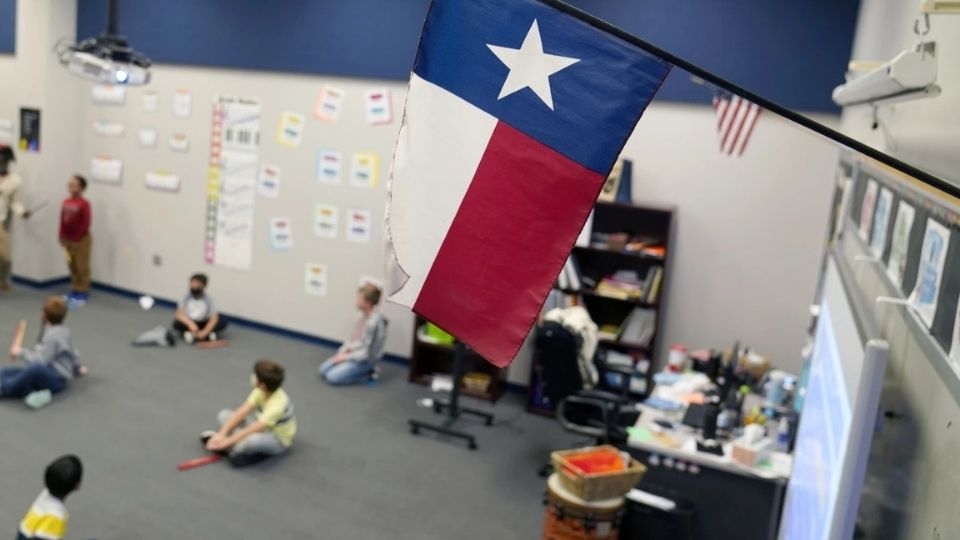
As Texas schools face at least $600 million in federal funding cuts, multiple mental health programs, particularly those implemented in response to the pandemic and mass shootings, are at risk of losing funding.
School programs focused on chronic absenteeism, mental wellness and crisis services that were created in response to the Uvalde school shooting, as well as social workers and counselors, could all be on the chopping block.
Texas schools rely heavily on federal funding to support mental health programs. Data shows that two federal programs that are at risk of being cut or strictly regulated account for 86% of the school mental health funding for more than 2,500 campuses statewide, according to Mental Health America of Greater Houston.
Bracing also for the impending expiration of COVID-19 relief funding, school districts and advocacy groups this legislative session had pushed for more money through a dedicated funding source for school mental health, but lawmakers did not approve it.
Currently, such funding is combined with school safety in the so-called school safety allotment in the state school funding formula, and school districts tend to prioritize the allotment on school security.
“I don’t want to get into a situation where I am asking, do I hire a police officer or do I hire a counselor? I want them both,” said Adrian Johnson, superintendent for the Hearne school district.
The funding cuts and lack of progress on getting a statewide dedicated funding stream for mental health comes at a time when student mental health is worsening. The special legislative session starts July 21, but Gov. Greg Abbott has not assigned school mental health as a directive to lawmakers.
The funding crisis
Created in response to Uvalde, the federal Bipartisan Safer Communities Act helps fund two grant programs in Texas, the Texas Center for Student Supports and the Stronger Connections Grant Program. The former implements mental health training and support in 60 high-needs districts and the latter helps 98 public school districts with case management tools that identify struggling students, as well as mental health personnel.
Almost three years later, the Safer Communities Act is losing over $1 billion spread across the country. Funds that were supposed to last until 2027 are expected to dry up by the end of this year.
This cut puts programs like Texas AWARE, which deploys evidence-based mental health resources in three Central Texas school districts, at risk. The state homed in on those school districts because of their higher rates of community impacts from the pandemic and high rates of population growth.
The cut to the Bipartisan Safer Communities Act is just one in a series of proposed changes to federal funding for public education that will impact how mental health is addressed in schools.
According to an analysis from the Learning Policy Institute, the freezing of five other federal programs that support public schools are expected to result in the withholding of approximately $600 million from Texas, more than 16.1% of the state’s federal K-12 funding. These funds have been used for a variety of services such as English language instruction and literacy, but also after school programs and summer programs focused on mental wellness.
Medicaid and CHIP are also facing cuts in the federal spending bill passed earlier this month, and both provide millions of dollars each year to school districts and local mental health authorities, enabling them to hire and retain mental health providers, offer preventive mental health screenings, and support students with disabilities using specialized services.
Separately, COVID-19 funds are set to expire this year or already ran out, forcing some smaller schools to lay off staff or find alternative ways to keep the social workers and counselors hired during the pandemic.
The confluence of these cuts come as Texas lawmakers missed opportunities to properly fund school mental health this year.
During the legislative session that ended in June, Texas lawmakers agreed on a robust school funding bill that adds $8.5 billion to the state’s public school system. However, most of it has been earmarked for teacher pay; with roughly $250 million being set aside for school support staff and mental health support staff are not necessarily included in the pay raise.
Over 70% of the schools reported that sustainable funding for school-based mental health staff and professional school counselors was the main barrier to having adequate resources to address student mental health needs, according to a survey of 2,690 schools by the Mental Health America of Greater Houston.
“We are hopeful that this will translate to more dollars for mental health. But without any legislation currently earmarking those dollars, that is not a guarantee,” Rebecca Fowler, the director of public policy and government affairs at Mental Health America of Greater Houston, said about the new school funding.
In 2023, 36 Texas health and wellness organizations wrote to the Texas Legislature, urging the creation and funding of a separate “student mental health allotment” because programs were not reaching enough students.
Only 13% of schools used the school safety allotment for mental health supports, according to the Mental Health America of Greater Houston report.
House Bill 1257 by Rep. John Bryant, D-Dallas, attempted to secure dedicated mental health funds, but it did not pass this year.
“Uncertainty around different funding streams makes it hard to navigate these conversations about the future of mental health and young people,” said Kate Murphy, director of child protection policy for Texans Care for Children.
Changing conversations
After the devastating school shootings in Uvalde and Santa Fe compelled lawmakers to prioritize mental health, such support has waned in the last few years. Mental health advocates have pointed the blame at the culture war happening in the Capitol, namely that lawmakers have suggested mental health programs in schools are diagnosing children and reinforcing LGBTQ identities without parental consent.
For example, Senate Bill 400 by Sen. Lois Kolkhorst, R-Brenham, would have required parental consent for any psychological or psychiatric examination, testing, or treatment conducted on a student by a school employee. The bill had eight senators as sponsors, and although it died in the less conservative Texas House, it demonstrates the shift in the legislative conversation surrounding school mental health.
CONTRIBUTOR