PORTLAND, Ore.—Healthcare for all is not just a utopian fantasy. According to the World Population Review, there are 72 countries that have enshrined access to medical care as a basic human right, but the United States, the richest country in the world, is not on the list.
Our for-profit capitalist health system and the billionaire-backed politicians who support it have chosen instead to prop up a predatory system designed to siphon money away from the sick and into the pockets of greedy executives.
Frustration with the healthcare system has become a universal experience in America, as made evident by the national conversation around the murder of Brian Thompson, former CEO of United Healthcare, late last year.
It’s clear that everyone is suffering under the pressure of exploitative private insurance, but Oregonians have finally had enough. Back in 2023, Gov. Tina Kotek, with the help of the Oregon Legislature, created the Universal Health Plan Governance Board (UHPGB).
This board, composed of nine experts with experience in the medical industry, was given the task of researching the impacts of potentially implementing a universal healthcare system in Oregon. The stated goals of this project are:
- Improve the health status of individuals, families and communities.
- Defend against threats to the health of the residents of this state.
- Protect individuals from the financial consequences of ill health.
- Provide equitable access to person-centered care.
- Remove cost as a barrier to accessing healthcare.
To nobody’s surprise, the UHPGB found that universal healthcare would significantly advance these goals, while at the same time being more cost-effective than the current cumbersome system.
Some of the most common arguments against socialized healthcare have been totally debunked:
- The expenses won’t be passed on to the people, instead existing federal funds and state levies will be rerouted to cover the costs.
- Doctors and hospital workers won’t be forced to take a pay cut, in fact, they would have an easier time getting paid once the middlemen have been cut out of the equation.
- It would save money for most businesses; instead of having to haggle for the best deal on coverage for their employees, everyone would have insurance by default.
- Smaller family-owned businesses that couldn’t previously afford to provide insurance for their workers can rest easy knowing that their employees are covered.
- Most of all, a new centralized system would reduce the pain and stress for individuals seeking care.
Navigating the bureaucratic maze of private healthcare is just another nightmarish layer on top of the many difficulties people already face. With universal healthcare, nobody would have to put off going to the doctor for fear of a hefty bill, meaning more people would be getting the routine care that helps them stay healthy.
Seniors won’t have to drain their retirement funds for a medical emergency, and people who are struggling financially won’t have to choose between food or medication. When access to abortion, birth control, and gender-affirming care is under attack at the national level, responsibility falls to the states to protect people’s bodily autonomy.
Since its inception, the board and its four subcommittees have worked tirelessly to develop a comprehensive strategy that would cover all aspects of the rollout. A draft of the plan is currently available to read online, and the board is soliciting comments from the public.
The plan will continue to undergo minor tweaks for the next 12 months, and it is scheduled to be completed by September 2026. The great news is that it’s already guaranteed a spot on the 2027 legislative slate, and it could go to a vote as early as January of that year. The timeline created by the UHPGB estimates that the rollout of the plan would be completed by 2030.
But the success of this legislation is not guaranteed. Even after all that work, the Oregon Legislature has the power to table the project indefinitely. To ensure this doesn’t happen, Oregonians are spreading the word about universal healthcare to make sure their representatives know how they feel about it.
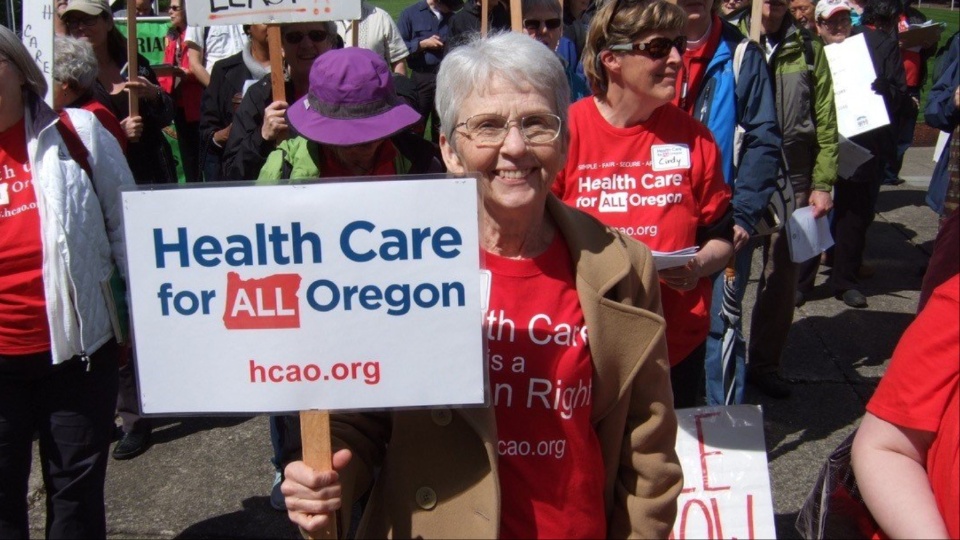
Healthcare for All Oregon (HCAO) is a non-profit entity that was created for this exact purpose. HCAO volunteers across the state attend rallies, fundraise, and collaborate with healthcare workers to raise awareness about the project. With the limitless power of the masses, people are finding they can stand up to the corporate oligarchs and demand the rights they’ve been denied.
This is not the first time Oregon has been a pioneer for progressive policy—the 1971 Forest Practices Act, Bicycle and Bottle Bills, the 1981 Family Leave Act, and the 1990 Worker’s Comp Reform are all examples of its out-front status—and if the rollout is successful, other states would likely follow suit.
As the vote draws nearer there will undoubtedly be resistance from the big insurance companies, which want to maintain their monopoly on healthcare, but HCAO activists and supporters have declared they won’t allow them to dominate the conversation.
No matter how deep the insurance companies’ pockets, no matter how many lies they spread, HCAO wants the people to know the truth: Universal healthcare is good for the people and good for the state of Oregon.
We hope you appreciated this article. At People’s World, we believe news and information should be free and accessible to all, but we need your help. Our journalism is free of corporate influence and paywalls because we are totally reader-supported. Only you, our readers and supporters, make this possible. If you enjoy reading People’s World and the stories we bring you, please support our work by donating or becoming a monthly sustainer today. Thank you!
CONTRIBUTOR