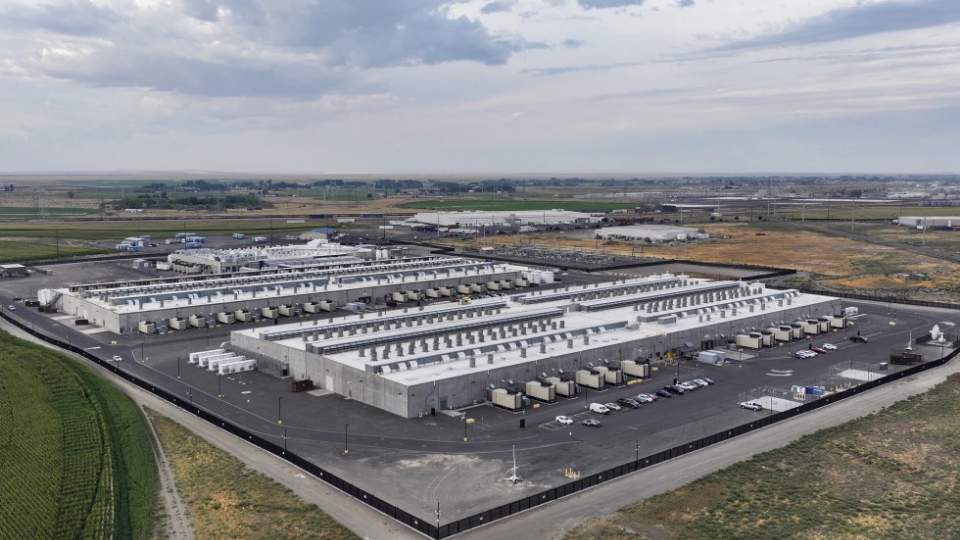
PEKIN, Ill.—Residents came out in mass during a Jan. 26 city council meeting to oppose a proposed data center along an important aquifer in the region. Western Hospitality Partners LLC came to the city of Pekin to propose the plan and little information is available about the obscure company. What is known is that they have been seeking to build other data centers in Kentucky, Indiana, and Pennsylvania. If approved by the council, residents are concerned about the possible environmental impact to the Mahomet aquifer and increased cost of vital resources like electricity and water. “This is a war on our country because it is a war on our resources. Our electricity. Our Water. It’s a war,” said community member Matthew Johnson during public comment.
Information provided to People’s World by the Peoria Sierra Club warns that even as these data centers switch to “closed loop” systems the centers can take up to 70% of a region’s annual water consumption. If approved the data center will have both a damaging effect on the environment while also skyrocketing local consumers’ water bill. “If they use as much water as all of this data is telling us it is, it’s going to be draining faster than we can replenish it. And we’re going to run out of clean water and we’re all going to suffer from it. Water prices are going to be insane,” said Julianne McGlaughlin, who organized the online Facebook group, Tazewell County Data Center Opposition. The online group has an estimated 2,200 members.
A great variety of residents from all different walks of life and political backgrounds showed up to oppose the data center. Many who spoke around City Hall talked about how this is their first time speaking up on an issue. So many residents showed up that the council room could not accommodate all of the attendees and many were forced to stand outside the room and listen on personal cell phones when the city failed to provide an alternative.

Local political candidate for Illinois House district 93, Zoey Carter spoke to People’s World about the uniting effect the data center had on the community. “We can argue over some things like taxes and whatnot, but when it comes to a project like this, that not only affects our poor or low-income residents, but it affects businesses it affects the environment, it affects the realtors, it affects every single person. Whether they’re white, Black or minority or not. It affects every single person, and this project is something that people see and they understand that it’s not a political fight. It’s just the right thing to do.”
The issue of the data center also brought some from outside of Pekin to oppose the project. Residents from Peoria and Morton, Illinois expressed concern over the impact it could have on the region. “I am actually a Morton resident. However, you know, we’re not too far away from Pekin, of course, and at the end of the day, these AI data centers, their impact is large, right? As it’s very widespread and at the end of the day, even if it does go in Pekin that impact will reach more. And then potentially beyond my community. So I thought it was important to come out here at the very least,” said Adair Rodriguez.
While the data center was not on the agenda for the evening, Pekin Mayor Mary Burress emphasized that the city is striving for transparency and to gain the facts surrounding the proposal. A town hall is planned for March 24 at Pekin High School.
In earlier interviews, Burress has stated she is open to hearing all sides on the data center, and the City Manager has previously said the project could generate $10-20 million in annual tax revenue for the city.
As this private company moves in on the city, the question remains for community members: Will the cost be worth the destruction of the aquifer, increased water and electric bills, and damage to the ecosystem? So far, the majority of Pekinites seem to be answering “No.”
We hope you appreciated this article. At People’s World, we believe news and information should be free and accessible to all, but we need your help. Our journalism is free of corporate influence and paywalls because we are totally reader-supported. Only you, our readers and supporters, make this possible. If you enjoy reading People’s World and the stories we bring you, please support our work by donating or becoming a monthly sustainer today. Thank you!
CONTRIBUTOR