
On Oct. 28, 2026, the United Nations General Assembly adopted a non-binding resolution for the 34th consecutive year calling for an end to the U.S. economic embargo against Cuba. The resolution passed with 130 votes in favor, 17 against, and 25 abstentions. Notably, this year’s vote marked a 20-year low, down from 165 votes in favor in 2025, with only 12 abstentions.
While resolutions like these at the U.N. General Assembly are not legally binding, they do reflect world opinion. As such, this is quite a shift in international support for Cuba, especially when one considers what the people who call Cuba home are going through.
A year ago, standing on the grand stage of the U.N., Cuba’s Foreign Minister Bruno Rodriguez gave a fiery speech, which he opened with the genocide in Gaza. Even though the Cuban people are suffering at the hands of the U.S. ruling class, Rodriguez called out the American Empire and its enabling of a genocide, saying, “On behalf of the government and people of Cuba, I reiterate our firmest solidarity with the Palestinian people, and with their just cause for freedom, independence, and an end to the Zionist occupation.”
Frequent power outages, shortages of food, medicine, and fuel, along with deepening financial troubles, are all contributing to the humanitarian crisis affecting the Cuban people. This is by design, as U.S. capitalists are still upset about losing the island to the revolution decades ago. If U.S. businesses can’t exploit Cuba, then no one can, and they are doing their best to make sure of it.
As such, the Trump administration is continuing a longstanding tradition of attempting to force political changes in Cuba through a punishing economic campaign. A week before the resolution, Trump hinted, yet again, at military intervention against the sovereign nation, saying U.S. warships could stop in Cuba on their way back from the Iran war.
In response, Cuban Foreign Minister Bruno Rodriguez said, “A great power is attacking through economic war a member state of this organization. Cuba is not a threat. The blockade is a threat.”
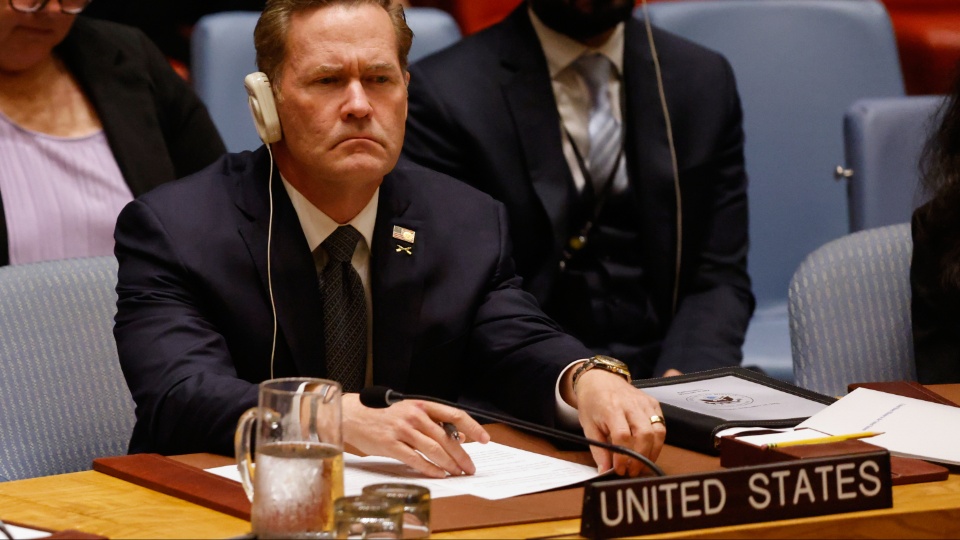
The anger the U.S. government has for Cuba daring to live without its influence spilled over onto the U.N. floor. U.S. Ambassador to the U.N. Mike Waltz told member nations that “your vote today is the only thing standing between the corrupt, kleptocratic communist regime and using this body and your vote for another propaganda victory at the expense of the Cuban people.”
After Waltz began his critique of Cuba, Rodriguez called him a liar. Waltz, being a cliché of a MAGA “patriot,” said, “You understand who you’re dealing with? This is America. Back up.” In a social media post, Rodriguez said, “With his crude lies at the U.N. General Assembly, the U.S. government has launched another desperate attempt to justify its economic aggression against Cuba and its criminal energy blockade.”
The United Nations, associated with diplomatic decorum, has lost that title after allowing people associated with Donald Trump’s second term to attend.
The U.S. blockade against Cuba, first imposed in 1960, has led to massive economic troubles for the country and its people. More recently, the Trump administration has pushed the country to the edge of a cliff by threatening to impose tariffs on any country that sells or provides oil to Cuba. As a result, Cuba is experiencing an oil shortage crisis that is affecting every aspect of life for the Cuban people.
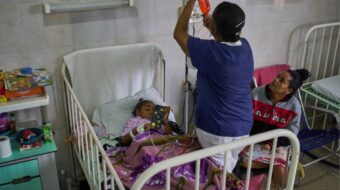
Without oil imports, power outages are rampant and are impacting basic services like water supply and internet access. Most concerning are the impacts on medical facilities. The U.N. Office for the Coordination of Humanitarian Affairs and the World Health Organization warn that around five million people with chronic illnesses are facing interrupted treatments.
Cubans relying on radiation therapy, chemotherapy, dialysis, and neonatal care are in danger of not receiving treatment, while over 100,000 people have had surgeries postponed. For emergency surgeries, doctors are relying on cellphone lights.
While the U.S. continues to export suffering and misery to the Cuban people, Cuba continues its tradition of exporting doctors. For decades, Cuba has sent doctors around the Caribbean to support healthcare systems. Since September 2025, the Trump administration has conducted at least 80 lethal strikes in the Caribbean Sea and the Eastern Pacific.
In 2024, every Caribbean country voted in support of the resolution to end the U.S. blockade on Cuba. This year, one country voted against it, while four abstained, and three were absent. What changed?
In January 2026, the Trump administration placed visa restrictions on Antigua and Barbuda. Ahead of the U.N. General Assembly vote, the president warned the country that supporting the resolution could jeopardize ongoing negotiations to lift the visa restrictions.
Prime Minister Gaston Browne had this to say: “I’ll make this public. We had decided to support Cuba on a resolution recently and changed our position because we had a call from the [U.S.] State Department advising us that they’re making progress in the negotiations and if we support Cuba, that it would undermine the negotiations, so we changed our position.” Antigua and Barbuda ended up not recording a vote.
This January, a slew of new Democrats will take office, and they will have a chance to make a difference. They can vote to change the U.S. laws that enable and sustain the blockade on Cuba; they can show support for the Cuban people’s right to self-determination.
Stand in solidarity with all working people, no matter where they live. End the American Empire.
As with all op-eds and news-analysis articles published by People’s World, the views expressed here are those of the author.
No paywalls at People’s World
At People’s World, we believe news and information should be free and accessible to all, but we need your help. Our journalism is free of corporate influence and paywalls because we are totally reader-supported. Only you, our readers and supporters, make this possible. If you enjoy reading People’s World and the stories we bring you, please support our work by donating or becoming a monthly sustainer today. Thank you!
CONTRIBUTOR