HUNTINGTON, W.Va.—Appalachian coal country was making strides towards becoming a new industrial hub for long-term economic, climate, and social resilience. That is, until Trump crippled the Inflation Reduction Act (IRA) and gutted the Environmental Protection Agency.
Even though it might have failed to deliver on all the promises of a Green New Deal, the IRA—President Joe Biden’s landmark climate and infrastructure legislation—was designed to help revitalize and strengthen former coal communities over the long haul, earmarking billions of dollars to help initiate a much-needed regional transition from extractive industries like coal and timber to renewable energy.
But on his first day in office, Donald Trump scrapped Biden’s clean energy and environmental programs, promising to bring forth an “American Golden Age” based on fossil fuel exports and U.S. energy “dominance.”
Rural communities in Appalachia, particularly in West Virginia and Virginia, were on the verge of breaking ground on green transition projects when the grants funding them were paused or terminated by the so-called “Department of Government Efficiency,” or DOGE, led by the billionaire Trump donor Elon Musk.
The pursuit of other Trump priorities, like undoing any effort at advancing racial, gender, and economic equality, however modest, resulted in destruction of the $3 billion Environmental and Climate Justice Program created in the IRA to tackle the climate crisis and environmental harms at a local level.
Trump killed a huge investment in Appalachia
The IRA was the largest investment in Appalachia since the 1960s. Activists and community organizers have long stressed the need for improvement through workforce training, job creation, and revitalization of abandoned buildings and mines. The people helped the most by the IRA were sometimes among those who believed his false promises and voted to re-elect Trump. They never expected he would kill programs they were already taking for granted, programs that were going to improve their lives.

Coalfield Development, a non-profit organization headquartered in Huntington, W. Va., has focused on this work. It has trained more than 4,000 people over the past 15 years in everything from solar installation to drywalling and first aid, many times working with community members who were formerly incarcerated and/or in addiction recovery.
When the IRA passed, Coalfield Development spearheaded a coalition of universities, unions, non-profits, businesses, and local governments to create collective infrastructure and capacity, enabling rural communities affected by the decline of coal to benefit from the historic IRA investment.
Every single grant Coalfield Development was helping coordinate has been affected in some way by Trump’s cuts. What’s more, because so many staff at federal agencies were forced out by DOGE, the few grants that have been reinstated are subject to long delays. Many remain the subject of litigation.
Located on the Ohio river, Huntington—the second largest city in West Virginia, with 45,000 residents—was once a major transportation hub for the region’s coalfields, but it suffered major economic and social decline as the surrounding mines shut down. It then became an epicenter of the opioid epidemic, which today we see leveraged as justification for the administration’s enormous military build-up in the Caribbean and the bombing of sailors in small boats.
Meanwhile, under the radar, the Trump administration cut all six EPA grants for Reuse Corridor, a new social enterprise to salvage and repurpose mattresses, electronics, and other materials frequently dumped in the Ohio River, effectively killing with it countless job opportunities for the communities that Trump and his War Secretary Pete Hegseth claim to protect.
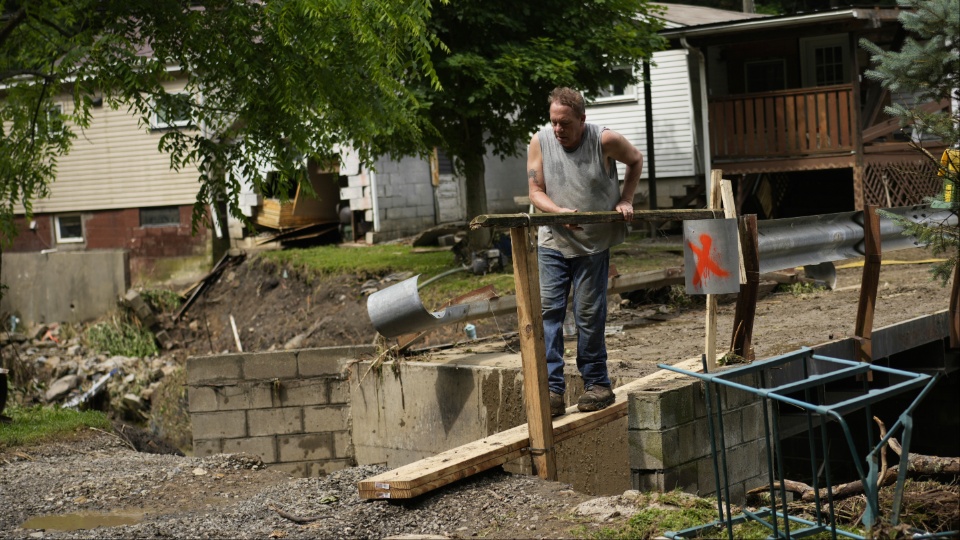
In 2023, Appalachian Voices (AV), a non-profit working with local communities—and in Washington—on securing a just energy transition, was awarded a $500,000 EPA grant to help five former coal communities in Virginia increasingly being hit by severe floods caused by the environmental legacy of mining and the current global climate crisis. DOGE terminated the grant.
Some 350 groups, tribes, and local governments filed a class-action lawsuit, claiming the wholesale termination of the Environmental and Climate Justice Program is unconstitutional.
Won big with his lies
Trump has won big in West Virginia in the past three general elections, securing every county in 2024 with an average of 70% of the vote—the highest percentage any party has won in the state’s history.
Democrats have regained ground in several recent state elections, however, including in Appalachia. In one of the most closely-watched elections in the country this year, Democrat Abigail Spanberger earned a surprise victory over Republican opponent Winsome Earle-Sears in the Virginia governor’s race, earning 56.6% of the vote compared to Earle-Sears’ 43.6%.
The unpopularity of the longest government shutdown in U.S. history and the Trump administration’s announcement that millions of Americans would not receive food stamps led to a poor result for MAGA at the ballot box, highlighting the opportunity for the anti-MAGA coalition. But more is needed to create a sustainable base centered on the working class and the affordability crisis.
Across Appalachia, working people will be decimated by the Trump administration’s cuts to Medicaid, veterans’ affairs, food aid, and education, among other public services. Simultaneously, the region is scrambling to save projects that would improve resilience and bring jobs.
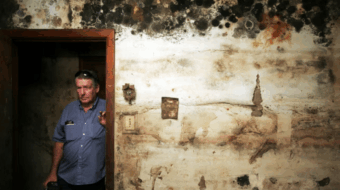
In Lee County, Va., where 85% of people voted for Trump and almost half rely on food stamps, AV had designated $40,000 for an asbestos survey in Pennington Gap thanks to a stack of grants secured by the community for a life-sustaining revitalization and climate adaptability project. The project sought to demolish a derelict supermarket ridden with asbestos and subject to frequent floods and create a green space that would mitigate against future flooding.

“People in Appalachia are used to being let down by the government, but this time we had the money. It was still taken away, and people feel betrayed,” said Emma Kelly, AV’s New Economy program manager.
Extracted from, expended
Dante, Va., now a sparsely-populated mining community suffering from power outages, was once the second-largest town in Russell County. Its residents seek to use EPA funding to transform the old railway depot, once the hub of mining operations and the whole town, into a “resilience hub” with solar panels and battery storage, making it into a place for residents to charge their phones and keep medication refrigerated during the next blackout.
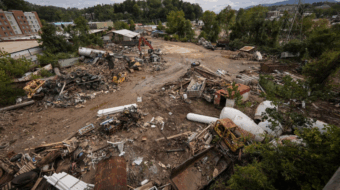
In July, during a major flood, the community experienced a four-day blackout. It went through a nine-day blackout after Hurricane Helene in August 2024.
Dante’s post office has been closed since July due to flood damage. The only place still open for business in town is the volunteer-run mining museum. Dante is also currently without a fire station, after nearly $400,000 appropriated by Congress to replace the one demolished due to subsidence was rescinded by the Trump administration. This neglect after decades of extraction for profit is characteristic of the “sacrifice zones” of industrial capitalism.
Trump won 83% of the vote in Russell County in 2024 while Earle-Sears, the Republican candidate for governor, secured 81% last month.
Taylor Rogers, a White House spokeswoman, said: “President Trump cares about our miners more than any other president in modern history—which is why he has implemented his energy dominance agenda to protect their jobs and revive the mining industry…. We can maintain the safety of miners while simultaneously rolling back Joe Biden’s Green New Scam regulations that were killing their jobs.”
These false promises cling to an outdated and dangerous extractive industry that is both bad for the health of the workers and the environment. A return to coal cannot be the future of the region.
Reinstating the lost grants that were taken away by the Trump administration would be a step in the right direction of delivering the social and environmental justice badly needed by Appalachians. A more comprehensive just transition must empower workers and communities to make durable commitments to a more inclusive, equitable, and sustainable future that can withstand capital’s counterattacks and changing conditions.
CONTRIBUTOR