In December 2025, the U.S. Department of Health and Human Services (HHS), led by Health Secretary Robert F. Kennedy Jr., announced a research project involving the hepatitis B vaccine to be conducted in Guinea-Bissau. This caricature of scientific inquiry would have assessed the timing of vaccine administration. The research plan accepted the reality that one set of the Guinea-Bissau infants enrolled in the project would be left with a shortened life span. The project reflected the Health Secretary’s twisted priorities.
The new Guinea-Bissau government, in power following a coup in November 2025, canceled the project in mid-January. The outraged pediatric infectious disease expert Paul Offit, MD, had previously likened the anticipated study to “The Tuskegee Study of Untreated Syphilis in the Negro Male.” In that instance, he recalls, the U.S. Public Health Service and the CDC, between 1932 and 1972, “knowingly withheld life-saving antibiotics from 600 African American sharecroppers in Alabama … so that investigators could observe the neurological outcomes of untreated syphilis.” In this “dark stain on American history … Most [of the men] died from syphilis.”
Existing U.S. standards had forced the planners to carry out the proposed project in Guinea-Bissau. Resource shortages there have impelled local health officials to administer the hepatitis B vaccine at six weeks of age, despite the fact that the World Health Organization recommends babies be vaccinated at birth. Doing so protects them against infection carried by mothers and family members. U.S. healthcare providers have followed that practice since 1991. Since then, U.S. children have gained almost universal protection against hepatitis B infection.
In a recent switch, however, the CDC now recommends “individual-based decision-making for parents deciding … [on] hepatitis B vaccine.” For babies not vaccinated at birth, the CDC recommends administration “no earlier than two months of age.”
Because Guinea-Bissau infants have received the vaccine at six weeks of age, 11% of 18-month-old babies there are infected by the virus, according to Offit. He notes that 18% of adults are chronically infected. Offit explains that children infected with the virus have a 90% chance of incurring fatal liver disease later in their lives, either chronic cirrhosis or liver cancer.
According to the notice recently posted by HHS, the proposed research plan called for a five-year-long study of “early-life mortality, morbidity, and long-term developmental outcomes” in Guinea-Bissau infants, as determined by the timing of their anti-hepatitis vaccine. Outcomes of babies vaccinated at six weeks would be compared with those of infants vaccinated as newborns. Staff members of the research project itself would have been vaccinating Guinea-Bissau newborns, inasmuch as other babies there still receive the vaccine at six weeks.
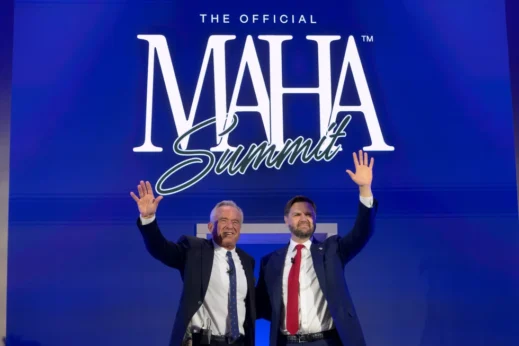
The Kennedy-led planners were presumably seeking evidence that the six-week babies would have been spared the adverse vaccine effects alleged to be appearing in babies immunized at birth. The study would have had to be started soon, because Guinea-Bissau officials recently determined that, from 2027 on, their infants were going to be immunized as newborns. Planners were concerned that babies immunized at six weeks and presumed to be free of adverse effects would soon be lacking.
The now-terminated project would have studied 14,000 babies, all born during the next twelve months or so. Half of them would have received the vaccine at birth, thereby gaining protection from the virus—and probably escaping fatal viral-caused disease.
The other half, as per current practice in Guinea-Bissau, would have waited for the six weeks. The virus would have infected many of them. The U.S.-sponsored researchers were, in effect, planning to deny those babies the means for prolonging their lives. The similarity with the Tuskegee endeavor is striking.
The Danish-based Bandim Health Project, long active in Guinea-Bissau, would have carried out the study. Health Secretary R.F. Kennedy Jr. praised its leader, Peter Aaby, “as a very famous researcher whose work showed the DTP vaccine was deadly.”
HHS would have allocated $1.6 million over five years for the study. Other contributors would have been Pershing Square Philanthropies and the Bluebird Foundation. The CEO and “Portfolio Manager” of Pershing Square is Bill Ackman, a hedge fund investor whose “net worth soar[ed] to $9.2 billion in 2025, up from $4.3 billion in 2024.” Ackman’s father, the late Lawrence D. Ackman, appears on the organization’s webpage as a trustee who “won the Real Estate Board’s Most Ingenious Finance Deal of the Year Award three times.” The Bluebell Foundation, based in North Palm Beach, Florida, has assets amounting to $3,931,315.
Implications of this now defunct health research effort are as alarming, or more so, than the vaccine skepticism now contaminating U.S. public health under R.F. Kennedy Jr.’s leadership.
First, U.S government planners were, in effect, saying “Let them die,” or “They are expendable,” in regard to a group of African children coming under their purview. The deadly intent coming to light results from U.S. racism, U.S. imperial arrogance, U.S. easy tolerance of inequalities, and widespread U.S. assumptions of people as usable objects and of certain classes of people as being of no account. These are tendencies that flourish within the capitalist set-up of acquisitiveness and division.
Secondly, the U.S. government displays its inner capitalist nature in the ample funds on tap for exerting influence abroad or gratifying the rich and powerful, rather than for rescuing the afflicted or ensuring the well-being of the many.
Lastly, that government’s legendary system of checks and balances does not work. No pushback showed up against the misbegotten scheme reported here. No bureaucratic device or congressional aide was available, it seems, for flagging this absurdity generated by the executive branch. Maybe a leadership class dedicated to capitalism craves such a dysfunctional system. Maybe they adore the lack of a vigorous, articulate, well-organized, people-friendly political opposition.
As with all news-analysis and op-ed articles published by People’s World, the views reflected here are those of the author.
We hope you appreciated this article. At People’s World, we believe news and information should be free and accessible to all, but we need your help. Our journalism is free of corporate influence and paywalls because we are totally reader-supported. Only you, our readers and supporters, make this possible. If you enjoy reading People’s World and the stories we bring you, please support our work by donating or becoming a monthly sustainer today. Thank you!
CONTRIBUTOR