

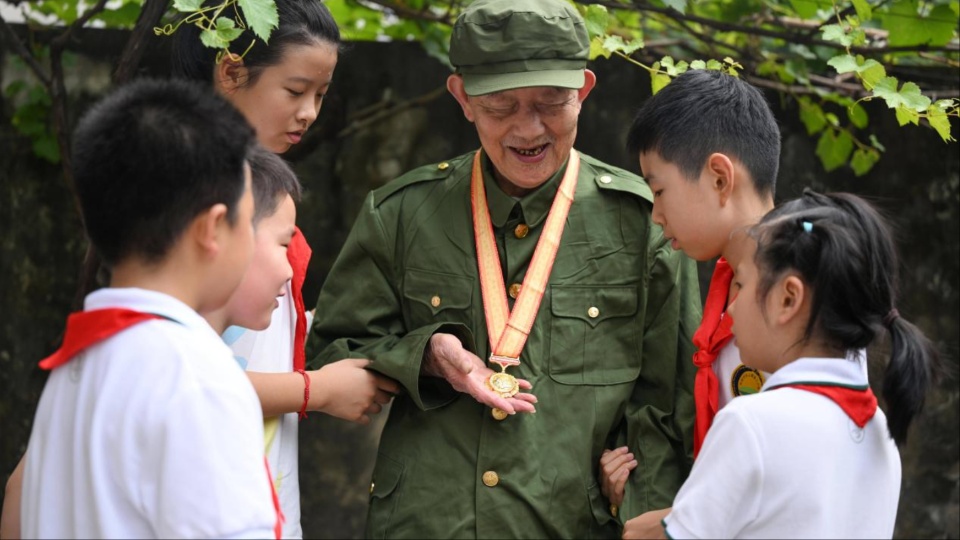
As China marks the 80th anniversary of its victory in World War II on Sept. 3, the gathering in Tiananmen Square is not about swagger, but a moment of reflection on the challenges facing the world today.
The occasion is meant to commemorate the immense human cost of a conflict that left over 100 million dead or wounded worldwide. China, in particular, bore a disproportionately heavy toll: Over the 14 years of the War of Resistance Against Japanese Aggression, it suffered over 35 million casualties and vast swaths of scorched earth.
The country has every reason to observe this milestone. In a battle between justice and evil, light and darkness, and the progressive and the reactionary, the Chinese people fought relentlessly—not only for survival but also for fairness itself.
Their fight—the largest against foreign aggression in modern Chinese history, and one that involved the greatest sacrifice, secured the Chinese people their first complete victory in national liberation and propelled the nation from the depths of crisis onto a path of rejuvenation.
This resistance—the earliest to begin and the longest to endure in the global fight against fascism—belies the Western-centric narrative of a passive China. From 1931 to 1945, China tied down the bulk of Japanese forces and eliminated more than 1.5 million enemy troops, making a historic contribution to the Allied victory over fascism.

Yet Western collective memory has long fixated on the battles of Midway and Normandy, the Holocaust and the Nuremberg Trials. China’s grinding campaigns and sacrifices, which underpinned Allied victory in the East, have often faded into obscurity.
The day of commemoration is a timely prompt to set the record straight: Some continue to shun their wartime atrocities; others erase decisive actors from the narrative; still others blur the very divides of the conflict, through reckless amnesia or sly wordplay.
To forget is to betray, and to deny is to tempt repetition. Eighty years on, it is imperative to confront the past in its entirety, unclouded by ideological bias or geopolitical calculation. Victory counts more if it prevents the need to fight for another one.
China’s remembrance is more than a look back; it is a reminder of what happens when unilateralism and power politics run amok. The most significant decision made by the world at the end of WWII was the creation of the United Nations.
Founded on postwar consensus, including sovereign equality and the peaceful settlement of disputes, the UN remains the most representative and authoritative intergovernmental organization on the planet.
The UN-centered international system has kept major-power hot wars largely at bay while underwriting decades of global prosperity. Yet, today, the organization’s role in global peace and security has been challenged.
The world cannot afford a return to the darker days when the powerful were allowed to prey upon the weak. In fact, calls for an equal, orderly, and multipolar world—and for economic globalization that is inclusive and universally beneficial—are growing louder.
Upholding the postwar framework is not an exercise in nostalgia; it is an investment in multilateralism and predictability, which are essential for global stability, growth, and security.
This year’s commemoration also harkens back to the solidarity of 80 years ago, when many countries set aside divisions and ideological differences to unite against fascism.
Such an ethos is very much needed today. The world faces a confluence of challenges: regional conflicts that defy easy resolution, a sluggish and uneven global economy, and the relentless march of climate change, to name just a few.
In this interconnected reality, no country can tackle these challenges alone. Nor can anyone expect to thrive by exploiting others’ hardship. Unity and cooperation remain the only viable way forward.
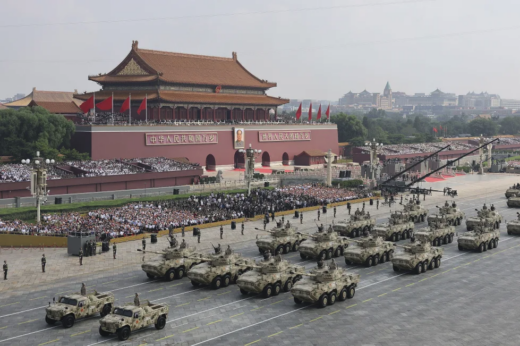
China’s advocacy for a community with a shared future for humanity, along with its global initiatives regarding development, security, and civilization, helps recalibrate global governance along the lines of fairness and justice.
For China, Wednesday’s commemoration carries particular significance. During the crucible of the Japanese invasion, few expected that a poor agrarian country could prevail over a mechanized invader, and fewer still foresaw the rise of the Communist Party of China (CPC) from a state of siege and adversity.
To underestimate China’s resilience today would be equally unwise. The country, under CPC leadership, is well-positioned to overcome challenges on its journey toward rejuvenation, whether they come in the form of trade barriers or technological containment.
Going forward, China will remain strategically steadfast, focus on its core priorities, and advance high-standard opening-up. Much like its wartime contribution, China’s rise today continues to shape the world for the better.
The world’s second-largest economy has driven over 30% of global growth for years. It has signed Belt and Road cooperation documents with over 150 countries and more than 30 international organizations, laying the path toward deeper connectivity and expanded opportunities.
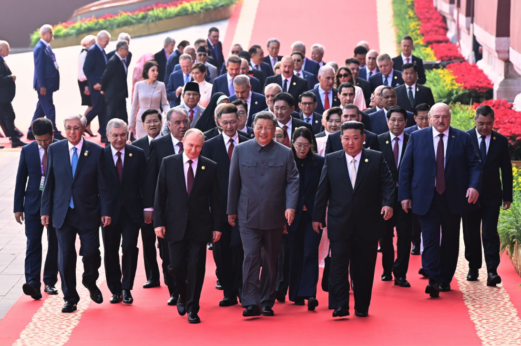
China’s breakthroughs in fields from artificial intelligence and robotics to pharmaceuticals are drawing global attention. What was once the preserve of a few Western powers is shifting toward a more multipolar, shared model of global innovation.
These developments have added certainty to an unsettled world, tightening economic interdependence and nudging nations toward greater openness and friendly cooperation.
China’s millennia-old instinct for harmony, coupled with a long-standing military philosophy that emphasizes prudence in the use of force, informs its strategic outlook. Its armed forces, shaped by the CPC’s commitment to the people and tempered by wartime experience, are disciplined, measured, and purposeful. They are increasingly a counterweight to adventurism.
A country that rose from the ashes of war has become an anchor in a world of drastic change. Few tributes could better honor the hard-won victory over fascism 80 years ago.
Xinhua
We hope you appreciated this article. At People’s World, we believe news and information should be free and accessible to all, but we need your help. Our journalism is free of corporate influence and paywalls because we are totally reader-supported. Only you, our readers and supporters, make this possible. If you enjoy reading People’s World and the stories we bring you, please support our work by donating or becoming a monthly sustainer today. Thank you!
CONTRIBUTOR



MOST POPULAR TODAY

Israeli military attempts to kill war correspondent Steve Sweeney

Europe refuses war script: Spain’s rebuke exposes limits of U.S.–Israeli escalation in Iran
Praising Trump’s war, monarchist forces hijack Iranian diaspora

Strategic retreat or strategic pivot? The state of the Target boycott

Trump’s Postmaster General says USPS may shut down in a year