TUCSON—Tuesday’s resounding victory by Adelita Grijalva in Arizona’s Democratic primary in the 7th Congressional District is yet another example of the growing radicalization of the mass movement against extreme right-wing GOP President Donald Trump. Grijalva won 62% of the vote and trounced her nearest rival by a three-to-one ratio.
The Tucson-based U.S. House seat became vacant upon the death of Grijalva’s father, Rep. Raul Grijalva, who passed away in March. He had easily held the seat since the majority Mexican-American district was created in 2002. Most of its voters live in Tucson, but it also includes four Native American nations, some working-class suburbs of Phoenix, and almost the entire area along the state’s Mexican border.
The Arizona race is also important nationally, as Adelita Grijalva is heavily favored to hold the seat in the November general election and cut into the slender GOP House majority. It’s now 219-212, with three Democratic-held vacancies, including the Arizona seat, and one GOP vacancy. The Democrats are heavily favored in all three of the seats they held.
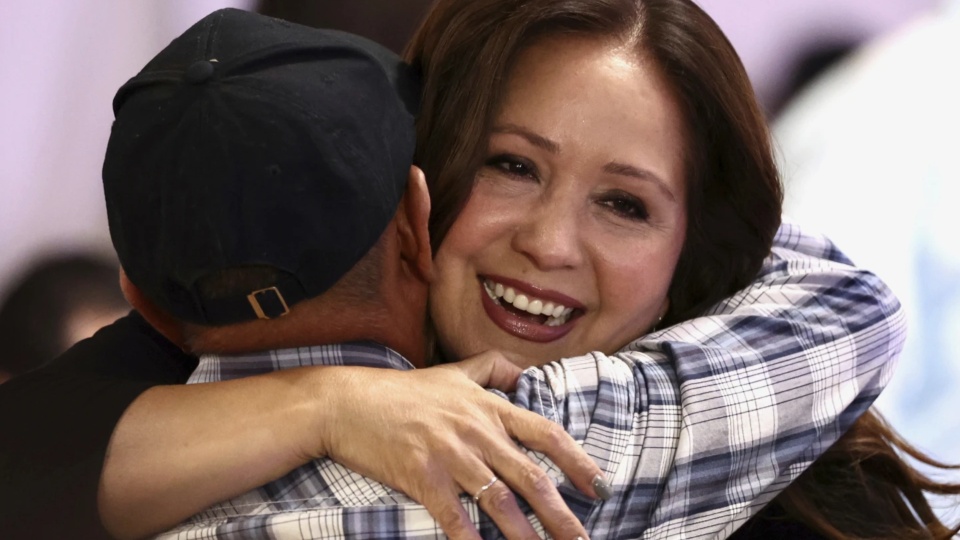
Adelita Grijalva credits her parents for teaching her how to serve her community with humility and integrity. She was named after the Adalitas, the women who fought and participated in the Mexican Revolution. She emphasized she would be the fighter Southern Arizona needs in Congress right now.
When still in her 20s, Adelita Grijalva was elected to the school board of Tucson’s largest district, where she served five terms, and later to the Pima County Board of Supervisors. On the school board she supported the teachers and students and fought against the attacks on ethnic studies.
Adelita has been part of a small group of progressive, mostly Mexican-American, candidates who share office space and canvassing. It included Raul, Adelita, and three of four other school board candidates, a county supervisor and a state legislative candidate. All were progressives. Some accuse it of being a “machine,” but Adalita calls it a movement.
Raul Grijalva first to back Sanders
That movement was symbolized by the fact Raul Grijalva was the first member of Congress to endorse the presidential run by Sen. Bernie Sanders, Ind-Vt., in the 2016 Democratic primaries. Sanders ran against the “establishment” candidate, Hillary Clinton, and drew massive crowds full of enthusiasm. He lost because, among other reasons, party insiders put their thumbs on the scale for Clinton. His movement, however, lives on in Democratic Party politics.
So when Adelita announced her candidacy, the movement was already in place and the mobilization began. Her 1500 volunteers knocked on 39,000 doors, made thousands of phone calls, stuffed envelopes, and put up signs. Hundreds of young people braved the over 100-degree heat to canvass for their first time, and seasoned campaigners were there also.
The campaign was unabashedly about resistance and working class demands. Grijalva’s TV ads played up her support from Sanders and from Rep. Alexandria Ocasio-Cortez, D-N.Y., the most prominent member of “The Squad” of young and progressive Democratic lawmakers. Grijalva made it clear that when in Congress she will support single payer government-run healthcare, DEI (diversity, equity and inclusion), immigrants, working people and their unions.
And like her great environmentalist father, who chaired the House Natural Resources Committee when Democrats controlled Congress, Grijalva will be a fierce defender of Mother Earth. Her strong progressive campaign netted her 62% of the vote and the Democratic nomination for the September 15 special general election to fill out the rest of her father’s term, which expires Jan. 3, 2027. She is expected to carry the overwhelmingly Democratic district, and become Arizona’s first Chicana in Congress. But supporters are wary.
Grijalva’s two main primary opponents tried different tactics. Daniel Hernandez, a former state legislator, raised over $1 million, mostly from mining companies who salivate at the chance of digging in areas close to communities of indigenous people or in places sacred to them. Tucson voters are very sensitive to environmental issues.
Hernandez, who also has two sisters in the state legislature, also gained money from people who like his strong pro-Israel position. He picked up a little steam at first with ads claiming he was an anti-Trump progressive but his campaign fractured as people learned more. He was the right-wing candidate and ended up with a mere 14%.
Grijalva’s main foe was Deja Foxx, a 25-year-old influencer who used social media and digital technology to mount a campaign that was noticed. Foxx claimed to be the anti-establishment candidate running against the Grijalvas and Hernandezes. Foxx kept claimi she was for “the younger generation whose time has come” and similar themes.
Foxx had campaigned for Vice President Kamala Harris in the 2024 general election and campaigned this time on a mainstream Democratic platform. She got only 20%, probably because she was the actual establishment candidate. Grijalva and Hernandez each raised more than $1 million, with Grijalva’s money mostly in small contributions. Foxx raised $650,000 and spent it on social media. All three spent far more than Raul Grijalva ever had to shell out.
Grijalva drew strong support from labor, both financial and in feet on the ground. That was highlighted by backing from the Arizona Education Association, the state’s big teachers union, which united with parents in the “Red for Ed” campaign against the then-GOP-run state legislature’s education cuts several years ago.
Grijalva was also endorsed by both Arizona senators, Democrats Ruben Gallego, and Mark Kelly, as well as by most local and statewide elected Democrats, some merely because they know she will win. Her supporters also include an endless list of community, women’s, indigenous, civil rights and other organizations.
CONTRIBUTOR