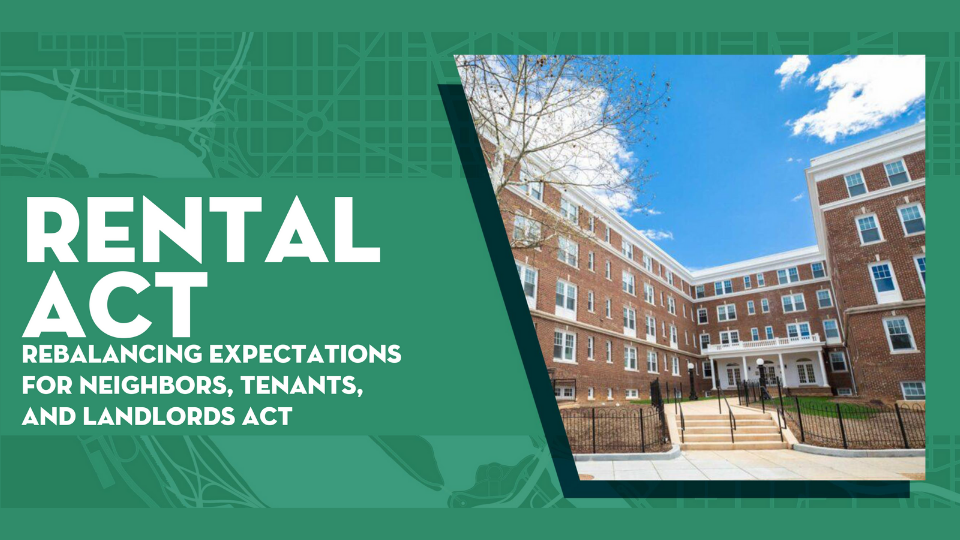
WASHINGTON—Mayor Muriel Bowser’s campaign to seemingly sell the District of Columbia continues. The next item on her chopping block is the RENTAL (Rebalancing Expectations for Neighbors, Tenants, and Landlords) Act.
The RENTAL Act is supposed to protect the District’s existing affordable housing and strengthen the local housing ecosystem. It’s intended to help Washington continue creating new affordable housing and also preserve existing affordable stock.
Mayor Bowser, however, apparently has other plans in mind: tipping the scales of the housing market overwhelmingly in favor of landlords over tenants.
The proposal Bowser is backing, according to her, is intended to “restructure, modernize, and rebalance” the housing market. It will, however, cause more harm than good.
Bowser said on X that, “Now by gutting the RENTAL Act, Council member Robert White has sided with residents who are taking advantage of the system, including those who commit crimes in their units, and in the process sinking our affordable housing market.” It will end up stripping renter’s rights away, making it easier for landlords to evict people from their homes, and setting up legal disputes to be more advantageous to landlords.
Amanda Korber, supervising attorney at Legal Aid DC, says, “D.C. has long been a leader in eviction prevention, with over 40 years of laws ensuring tenants are evicted only for cause and after a chance to rectify alleged issues.” But, she warns, “the Council is now contemplating weakening these crucial protections in the name of efficiency. … The true outcome will be increased evictions and greater displacement.”
The way they would attempt to strip renter rights would be the use of the one-strike law or crime-free housing ordinances (CHOs). A one-strike law allows landlords to evict tenants if they have been arrested for a crime, violence, or a dangerous crime. This means even under the presumption of innocence, a tenant can still be evicted without any final court findings on the charges.
The ripple effect of this reform would cause the destabilization of the community putting more people at risk with the rise of crime and homelessness resulting from increased displacement of residents.
Alters tenant protection
It then alters the protection tenants get when issued an eviction notice by landlords. The landlords wouldn’t have to give tenants proper notification when they are issued a notice. This would then force tenants to scramble to look for legal representation while landlords already have lawyers ready to move against them.
Next, protective orders would work more in favor of the landlords. Protective orders come into play when a landlord sues a tenant for non-payment of rent and the tenant is required to pay their rent to the courts while the case is pending.
They also protect tenants from sanctions, possibly losing their cases and being evicted. They give tenants the ability to dispute the amount of rent or claim why it should be lowered.
Instead, what will happen now is that the courts will issue the order to the amount the landlord sets, then push back hearing dates for tenants to then challenge the order, and finally limit what they can bring up in the hearings to only issues of housing conditions, excluding other possible factors.
When a tenant is sued for eviction, they must prepare before an initial hearing or they will lose their case by default with no opportunity to defend themselves. DC has a law that requires that the tenant is notified 30 days before the date. With the amendments, it will shorten that window to 14 days, often not enough time for people to prepare to miss work or plan for possible child care.
Not even TOPA (Tenant Opportunity to Purchase Act) protections are safe from the reforms. TOPA gives tenants the chance to buy their own building when it is put up for sale. TOPA empowers tenants to identify a buyer they prefer, often one who will hear their needs and make repairs.
It also gives tenants a seat at the table and leverage to negotiate with an interested buyer about needed improvements, keeping rent affordable, or other issues that are important to the families who already live in a building facing an ownership transition. With the “reforms” it would create loopholes for investors to get around TOPA, where landlords can bypass TOPA any time a new investor makes a “capital contribution” to the property — without explaining what the term means.
Muriel Bowser’s campaign to make amendments to the RENTAL Act will put Black, brown, and immigrant communities at greater risk. This is particularly true where minor criminal offenses can separate a family and when ICE works with local law enforcement to target particular individuals.
Among lawmakers opposing Bowser on this are Councilman Robert White. “We are not here to pass policy without scrutiny,” he said in a statement on X. “The Mayor’s bill raises serious due process concerns, threatens the integrity of the Tenant Opportunity to Purchase Act, and lacks economic data justifying significant changes to the housing ecosystem. Our Committee stepped in to fill in the gaps, restore balance, and protect the housing ecosystem that tenants rely on.”
Councilmember Brianne K. Nadeau introduced common-sense reforms to streamline and modernize TOPA. “TOPA remains as important today as it was when it was created 45 years ago,” she said. “But it’s often used as a scapegoat in conversations about housing production. The fact is that we can balance the needs of housing investors and tenants with updates to the law that meet the current moment.”
Nadeau’s legislation, the Common Sense TOPA Reform Amendment Act of 2025, would expedite transaction timelines, create consequences for bad actors who slow down the process or mislead tenants, and give tenants earlier access to information about their rights and options and connect them to tenant support organizations.
As White says, it’s up to us to protect our housing ecosystem and push back against Muriel Bowser’s Act. This isn’t a deal that should be done behind closed doors without input from the public, who it’s meant to serve. How can a city truly thrive, grow, or even heal when it’s being run by a mayor who sees profit before the people?
We hope you appreciated this article. At People’s World, we believe news and information should be free and accessible to all, but we need your help. Our journalism is free of corporate influence and paywalls because we are totally reader-supported. Only you, our readers and supporters, make this possible. If you enjoy reading People’s World and the stories we bring you, please support our work by donating or becoming a monthly sustainer today. Thank you!
CONTRIBUTOR