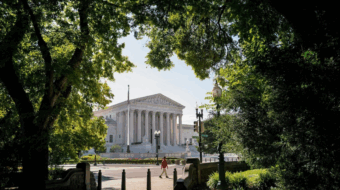
WASHINGTON—The Supreme Court delivered a major decision that affirms the separation of powers outlined in the U.S. Constitution, which many argue is routinely violated by President Donald Trump.
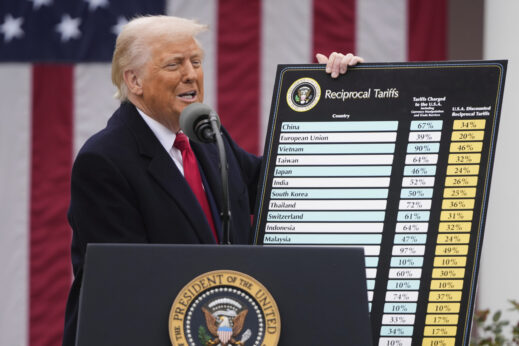
The justices ruled on February 20 that he violated the Constitution when he put in place tariffs against countries all over the world, justifying the sweeping measures by invoking a law that can only be used in a national emergency.
President Donald Trump, according to the ruling, exceeded his authority when imposing sweeping tariffs using a law reserved for a national emergency.
The 6-3 ruling held that the Constitution does not allow a president to impose tariffs on goods coming into the U.S. from overseas under the 1977 law called the International Emergency Powers Act (IEEPA).
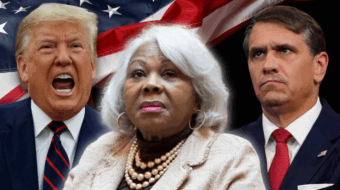
A worried Trump has defiantly said, even before the ruling came out, that he will find other means to keep the tariffs in place and will not rescind them even if the Supreme Court rules against him. Whether this deepens the constitutional crisis we are already in remains to be seen.
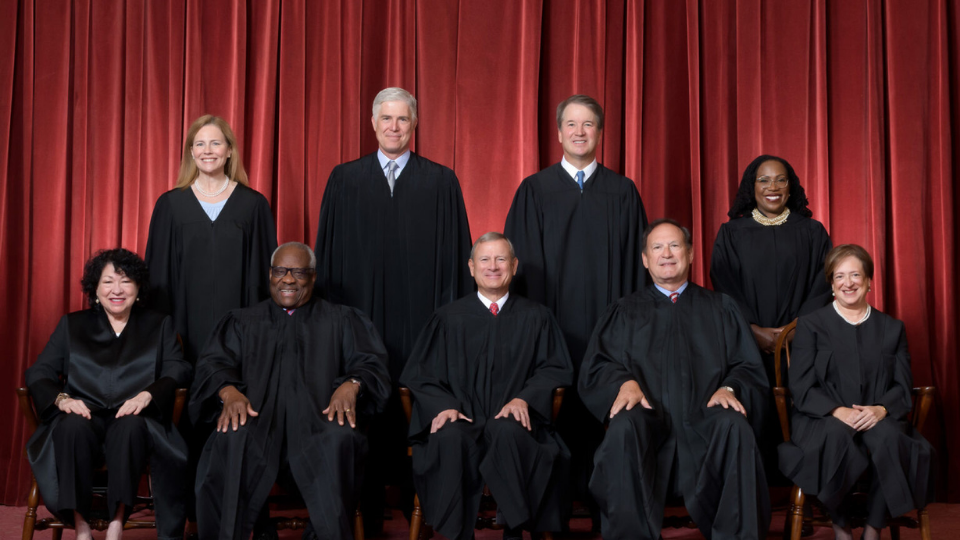
The first Supreme Court decision by the majority-conservative Court against Trump was written by Chief Justice John Roberts and backed by the three liberal justices and two conservatives, Justices Neil Gorsuch and Amy Coney Barrett.
”The president asserts the extraordinary power to unilaterally impose tariffs of unlimited amounts, duration, and scope,” Roberts said. “But the administration points to no statute in which Congress has previously said that the language in IEEPA could apply to tariffs. As such, we hold that IEEPA does not authorize the president to impose tariffs.”
Justices Clarence Thomas, Brett Kavanaugh, and Samuel Alito dissented.
Neil Katyal, former Acting Solicitor General, led the legal team making the arguments before the Supreme Court for a coalition of states led by Oregon and companies that filed the suit to nullify the tariffs. More than just for the specifics of the case, he described the decision as “a major victory for the rule of law. Only Congress can impose taxes on the working people of America,” he said, “and the Supreme Court ruling was correct because tariffs imposed by Trump are taxes on the people.
Katyal also noted that the ruling was significant because the Court ruled to protect the separation of powers rather than to protect any political expediency of the moment. “This case has always been about the presidency, not any one president. It has always been about separation of powers.”
Although the ruling does not kill all of Trump’s tariffs, leaving in place ones on aluminum and steel, it kills most other tariffs he imposed.
It kills his tariffs against entire nations, including his tit-for-tat and so-called reciprocal tariffs. The 34% tariffs on China and the 10% tariffs on almost every country in the rest of the world are struck down. The tariffs he imposed on Canada, China, and Mexico for their alleged failure to curb the flow of drugs have also been killed.
Companies and states that paid tariffs already are believed eligible to sue for reimbursement, but nothing in the ruling talks about how that might happen. The hope of consumer groups and millions of Americans is that rolling back Trump tariffs may help curb price increases on everyday goods.
Conservative justices in the minority said they were concerned about the possible negative effect of the ruling on the Treasury Department, but said nothing about the negative effect of Trump policies on the people of the United States.
We hope you appreciated this article. At People’s World, we believe news and information should be free and accessible to all, but we need your help. Our journalism is free of corporate influence and paywalls because we are totally reader-supported. Only you, our readers and supporters, make this possible. If you enjoy reading People’s World and the stories we bring you, please support our work by donating or becoming a monthly sustainer today. Thank you!
CONTRIBUTOR