DETROIT—On West Grand Boulevard, two hospitals sit side by side, both owned by the Henry Ford Health system. The newly constructed facility, nearing a price tag of $3 billion, towers over the old. It’s a picture Henry Ford Health would like to use as a symbol of progress and a future of high-tech, high-profit medicine.
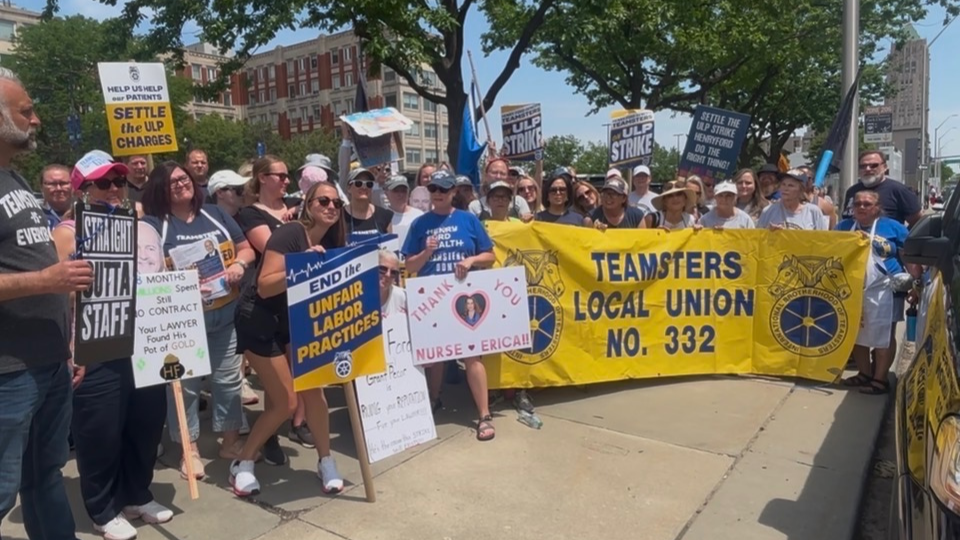
But the informational pickets held by the nurses of Teamsters Local 332 tell a different story.
For over eight months, these nurses have been on an Unfair Labor Practice (ULP) strike—one of the longest in Michigan history. Since Labor Day, more than 700 nurses and caseworkers have been on strike, demanding safe staffing ratios, fair wages, and an end to what they call the hospital system’s union-busting tactics.
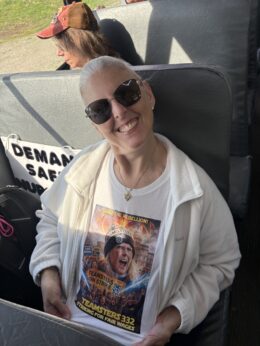
After taking their message all the way to Mackinac Island in northern Michigan, Local 332 and their allies have set up informational pickets elsewhere, including right here in front of Henry Ford’s main Detroit hospital. But despite the strike’s length, many in the community—and across the state—remain misinformed. Local 332 and its allies are determined to change that.
On May 26, Local 332 released a direct letter to Mr. Rob Riney, President and CEO of Henry Ford Health Systems.
“We are proud of the care we have given and the reputation we helped build. This is why this strike has been so heartbreaking,” they wrote.
Beyond a long list of ULP charges—the most recent filed as recently as May 13—the nurses say the environment leading up to the strike was stacked with grievances stemming from poor management.
“We feel that leadership, particularly nursing leadership, has become disconnected from the bedside nurses.”
The letter even revealed that, “Many nurses did not even know who the Chief Nursing Officer was until we went on strike.” It ends with a good-faith plea: “Help us build a better healthcare system together.”
The context for that plea is stark. In the two years since taking over the hospital, Henry Ford Health has raked in over $1 billion in net revenue while simultaneously pleading “broke” at the bargaining table. As the Teamsters have documented, the system’s leadership has spent vast sums hiring scab replacement nurses for over $100 an hour while refusing to offer their own workers a fair contract.

On May 27, Local 332—along with other Teamster locals and community allies—was met with heightened security from both police and hospital security. This was their fourth informational picket, yet despite the letter and their ongoing presence, Henry Ford would not allow vital information to even enter the building.
Rank-and-file nurses and this reporter witnessed a man enter the hospital premises carrying a flyer. Once inside, he was stopped by security. Despite the bystander’s attempts to compromise, he was turned back. He exited and informed the nurses that the flyer could not enter the building. He returned the flyer to them, showed it to the security guard, and was only then allowed to walk back in.
The truth of this strike is there for any worker and community member to see. All they have to do is walk up and ask. The nurses shared stories that illustrate the union difference—and why labor education is vital.
“They just need to know we are not here to be their enemy,” Kelly Schuster, a nurse who has worked at the hospital for 21 years, told People’s World. “We just want to have a fair deal.”
The flyers from the informational picket reflected the nurses’ reality. As Schuster reiterated, they are out there because of unsafe patient-to-nurse ratios. She wants her job back—but on terms that are “reasonable.”
“It is not possible to care for 8 or 10…12 patients in certain cases.”
The union provides an avenue with “objection to assignment,” but Schuster noted that nurses always take the assignment, no matter the consequences. “We get blamed for everything,” she said.
Tanya Lalko, another rank-and-file nurse who has been an RN for 20 years, described the union difference to People’s World: “With a union, we have representation…we can always ask for a union steward to be there with us.”
Like Schuster, Lalko was burdened by impossible patient loads. “I was personally 10 and one,” she said.
She then explained the avalanche of daily tasks: “I had seven people with blood sugars. I had somebody in restraints. I had to call the nurse manager three times. I had security down there three or four times. You know, blood sugars, meds, IVs. It’s just not safe. It’s not manageable.”
Both Lalko and Schuster always took the assignment, determined to do their best for their patients and their coworkers.
“It was me and one other RN on that unit,” Lalko said. “I can’t leave her with 20 patients.”
We hope you appreciated this article. At People’s World, we believe news and information should be free and accessible to all, but we need your help. Our journalism is free of corporate influence and paywalls because we are totally reader-supported. Only you, our readers and supporters, make this possible. If you enjoy reading People’s World and the stories we bring you, please support our work by donating or becoming a monthly sustainer today. Thank you!
CONTRIBUTOR