Facing looming threats of a fertilizer shortage in the United States, the Trump administration issued a declaration on June 29 ordering a temporary suspension of tariffs on phosphate imports from Morocco. Prompted by the closure of the Strait of Hormuz, the Department of Agriculture (USDA) claims the move will reduce fertilizer prices by roughly 20%.
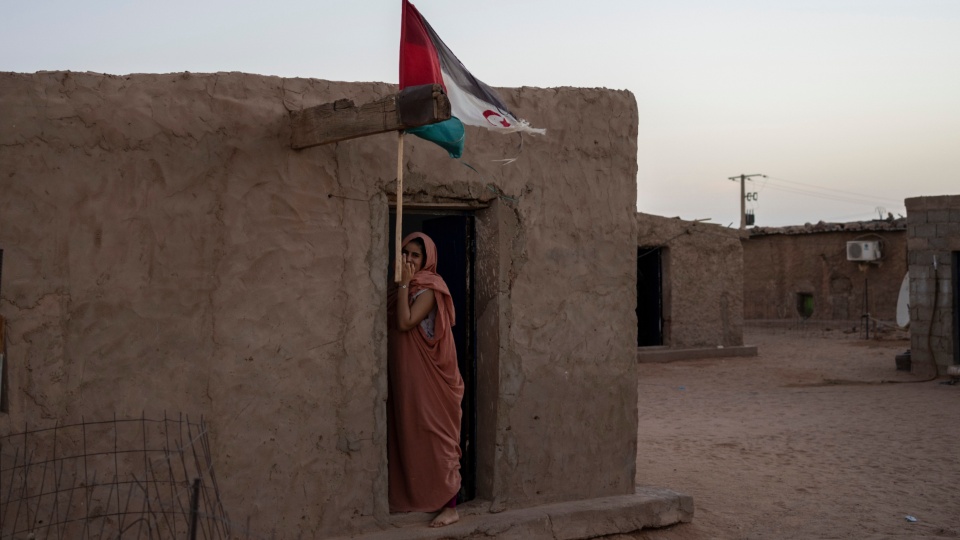
A substantial portion of the imported phosphate is mined illegally from territories in Western Sahara, which is under occupation by the Moroccan government. A raw power move by U.S. imperialism to gain access to cheaper resources, the decision also represents a stepped-up attack on Sahrawi sovereignty by the Trump administration.
Along with nitrogen and potassium, phosphorus is one of three essential components of agricultural fertilizer. The slow course of the natural phosphorus cycle makes it a common limiting factor for plant growth. Accordingly, phosphate mining is crucial for the profitability of private agriculture and for general agricultural output around the world.
Prior to the Trump administration’s instigation of war with Iran, the Strait of Hormuz accounted for one-third of global maritime phosphate exports. The start of the war coincided with the spring planting season in the northern hemisphere, prompting widespread fertilizer shortages and price spikes. The current blockade of the strait by the United States military threatens further disruptions to the supply chain, which the Trump administration seeks to ameliorate with stolen Sahrawi phosphate.
The cessation of tariffs comes as another advance in the rapidly intensifying campaign against the Sahrawi people. In March, three Republican senators introduced legislation to declare the Polisario Front—the government-in-exile and legal representative of Western Sahara—a terrorist organization. Meanwhile, the proposed FY2027 U.S. military budget includes a ten-year program with the Moroccan government to promote joint military activities and development of drone-warfare capabilities in Western Sahara.
“Africa’s last colony”
Northwest Africa accounts for two-thirds of the world’s phosphate mineral reserves, including in Sahrawi territories illegally occupied by Morocco. The Bou Craa mine, located in north-central Western Sahara, sits atop over two billion tons of phosphate mineral, and accounted for over $200 million in annual exports prior to the global phosphate shortage. The mine is operated by Moroccan state enterprise in violation of international law, with major investments from Western monopolies and the political backing of successive French, Spanish, and American governments.
Phosphate mining began in Bou Craa in the late 1960s under Spanish colonial occupation, as the fascist regime of Francisco Franco was beginning to unravel. Early iterations of the Sahrawi independence movement were violently suppressed by the fascist colonial police, prompting the formation of the Popular Front for the Liberation of Saguia El-Hamra and Río de Oro (Polisario Front) in 1973. The Polisario Front quickly emerged as the voice of the Sahrawi people—it recruited workers in the mines, students in the cities, and nomads alike. It would go on to receive support from anti-colonial movements and governments around the world, such as Algeria, Cuba, and Timor-Leste.
When Spain withdrew from Western Sahara in 1975, the governments of Morocco and Mauritania orchestrated a joint invasion with French support. While strong resistance from the Sahrawi People’s Liberation Army (the armed forces of Polisario) forced Mauritania out of Western Sahara by 1979, Morocco carried out a vast campaign of violence, ethnic cleansing, and military fortification. The Moroccan military used white phosphorus munitions against Sahrawi civilians and refugees in the first years of the war, and built “the Berm,” one of the world’s longest walls, in the early 1980s.
Hundreds of thousands of Sahrawis were expelled from their homes, while the Moroccan government incentivized its citizens to colonize the occupied territories. Fifty years later, most of the Sahrawi refugees and their descendants live in a complex of refugee camps in Tindouf, Algeria. The Sahrawis who remain in Morocco—now outnumbered by settlers—are deprived of political rights, with journalists and advocates for self-determination subject to censorship, arbitrary detention, torture, forced disappearance, and assassination.
Meanwhile, the Moroccan government re-established large-scale mining operations in Western Sahara in 1982, relying on the investments of Western monopolies to construct sprawling open-pit mines and the world’s longest conveyor belt through the occupied territory. Protected by the Berm, patrolling drones, and occupying military forces, mining at Bou Craa extracts 2.6 million tons of stolen phosphate rock annually. The United States accounts for a majority of the Moroccan arms supply used in the occupation.
Isolating the liberation struggles
In laying the groundwork for the diplomatic isolation of Palestine, the first Trump administration carried out a campaign of bilateral negotiations across the Arab League to normalize diplomatic relations with Israel. Via a delegation led by Jared Kushner, the administration brokered deals with governments across West Asia and North Africa to secure their support for Israel’s annexation of Palestinian land.
In Morocco, the agreement signed in December 2020 took the form of a settler-colonial exchange: Moroccan recognition of Israel’s illegal settlements in Palestine in exchange for American recognition of Morocco’s illegal claims to Western Sahara.
The 2020 agreement and ensuing investments from the U.S. and Israel have firmly aligned Morocco with the American imperialist pole internationally, and contributed significant support for Morocco’s proposal to annex Sahrawi territory within the United Nations. The UN Security Council adopted Resolution 2797 in October 2025, extending the mandate of the UN’s longstanding regional mission while shifting its orientation toward Morocco’s annexation plan. Eight months later, for the first time in its history, Morocco would join the United States, Israel, and several other far-right governments to oppose debate of the annual UN resolution condemning the U.S. blockade of Cuba.
With the Trump administration desperate to protect the profits of both agribusiness and arms-trade monopolies, and with the unfettered interests of war profiteers threatening agricultural supply chains, Republicans have increasingly turned to the occupation of Western Sahara as a vector to appease both constituencies. Against fascism and imperialism, the Sahrawi Arab Democratic Republic and its allies around the world continue to fight for the alternative: freedom, sovereignty, and self-determination for the Sahrawi people, with a just peace for both sides of the border.
We hope you appreciated this article. At People’s World, we believe news and information should be free and accessible to all, but we need your help. Our journalism is free of corporate influence and paywalls because we are totally reader-supported. Only you, our readers and supporters, make this possible. If you enjoy reading People’s World and the stories we bring you, please support our work by donating or becoming a monthly sustainer today. Thank you!
CONTRIBUTOR