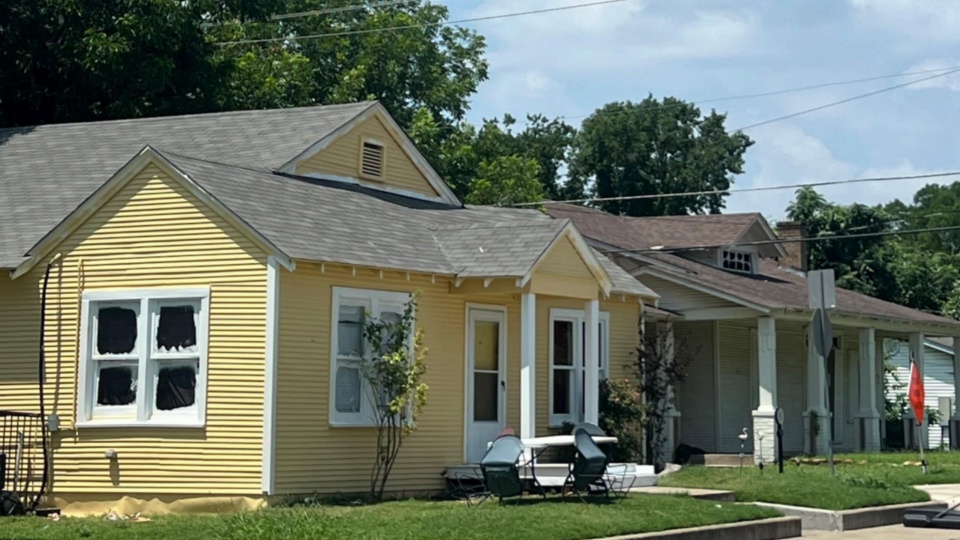
DALLAS—Founded in the decades following Emancipation in the southeastern edge of Dallas, Texas, lies the Tenth Street Freedmantown. Founded by former enslaved people in the 1880s, to this day, Tenth Street remains one of the largest and most intact Freedman’s towns in the United States.
One of the first transactions for this land was done in 1869, when white landowner William Boales sold an acre to Sam Eakins for the purpose of creating a cemetery. Founded near Oakcliff, the new town was just outside city limits to avoid the rampant racism and violence within the city but close enough in walking distance so that its new residents could access food and supplies.

Segregation wasn’t the only reason they avoided the city of Dallas. In 1867, William H. Horton, an agent from the Freedman’s Bureau, researched and compiled records of offenses by racist elements that often resulted in death or severe injury to Black people.
Horton found evidence of lynchings, beatings, shootings, and whippings, as well as a dragging of one victim through the Trinity River bottoms, between 1865 and 1867. For the spring grand jury session in 1867, he found mention of 13 murders of freedmen and Unionists.
With segregation kept firmly in place through such horrendous acts of violence, Black people were forced to create their own social and cultural institutions. By 1878, the city directory listed seven African American churches in or near Freedmantown.
Rev. Allen R. Griggs of New Hope Baptist Church established a grammar school in the 1870s, opening the way for other schools to eventually open. The residents, while limited in what professions they could legally take, were quite diverse in the areas within which they worked.
They were teamsters, laborers, draymen, carpenters, barbers, expressmen, preachers, servants, blacksmiths, farmers, woodsawyers, porters, brickmakers, plasterers, engineers, and laundresses. Some owned their own businesses.
By the turn of the century and for several decades after, Freedmantown was a thriving community, even for many who arrived there penniless.

So, what happened? Why did a booming and thriving city eventually find itself in deep trouble? It started with two distinct events. The success of the town was largely due to its proximity to two railroads—the north-south Houston and Texas Central (H&TC) and the east-west Texas and Pacific (T&P).
In the 1940s, the H&TC railroad tracks were removed for the construction of Highway 75. The east and west sides of Freedmantown were cut off from each other by a dangerous, virtually impassable barrier created by the railroads. A number of shops and homes were demolished to make way for the highway.
Then the final blow came two decades later in 1962, when the Woodall Rodgers Freeway demolished most of Cochran Street, forcing more homes, businesses, and families to relocate as they were effectively now shut out of downtown Dallas. City planners had planned the racist destruction of the town and used “convenience” as the excuse for uprooting many lives.
Dallas to this day remains one of the most economically segregated major cities in America. The intentional destruction of the once proud Freedmantown paved the way for the creation of Uptown in the 2020s. Chain stores, massive apartments, and a theater now sit on the land of people who were forced out after having built such an incredible community from nothing.
While advocacy and preservation groups are attempting to protect what is left of this once thriving town, it’s necessary to learn and preserve the history of Freedmantown and understand what has happened, and continues to happen, to Black communities across the United States.

Our society has a lot of work to do, a lot of wrongs that need to be righted, and we start by learning the history of where we live and how the very infrastructure of our cities was used to cause purposeful harm to Black communities. What happened to Freedmantown eventually hurt all working-class communities in and around Dallas, and the same story played out in other locations where similar things happened.
We cannot fully divest from racism without understanding how deeply rooted it is in the fabric of American society. In Dallas, for instance, we cannot even commute to work, drive home, or exist in our own cities without driving down the roads that were built to snuff out a thriving Black-owned community.
Eventually, the effect on all working-class people is devastating. The living and housing crisis that has swept across the nation and is hurting all working-class people is fueled in large part by what was done to the Black residents of Freedmantown.
We hope you appreciated this article. At People’s World, we believe news and information should be free and accessible to all, but we need your help. Our journalism is free of corporate influence and paywalls because we are totally reader-supported. Only you, our readers and supporters, make this possible. If you enjoy reading People’s World and the stories we bring you, please support our work by donating or becoming a monthly sustainer today. Thank you
CONTRIBUTOR