LANSING, Mich.—“Get the Flock out of Lansing!” The chant rang through Lansing City Hall the night of Aug. 24, as more than a hundred residents packed the chambers for a city council vote that turned out to be anything but routine.
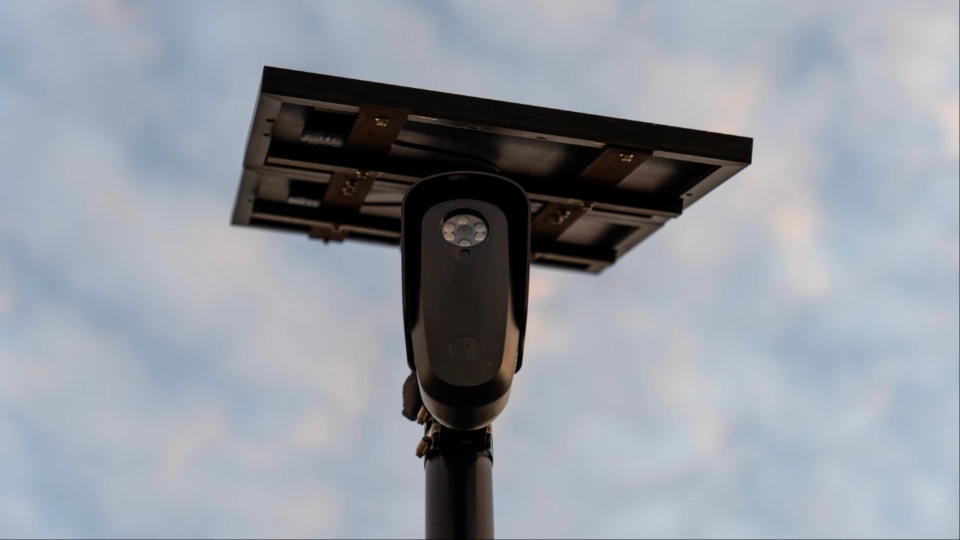
Councilmember Ryan Kost, who represents the First Ward, had introduced a resolution calling on the city administration and police department to terminate their contracts with Flock, the mass surveillance company whose 26 automated license plate readers, or ALPRs, are already installed around the city.
The cameras log every plate that passes into a nationwide, AI-powered database owned and run by Flock; the Lansing Police Department, like hundreds of others nationwide, simply pays for access.
The meeting ran more than three hours, most of that time consumed by public comment. Over 50 residents spoke against the cameras in person, and more than 30 others had emailed the council in the week beforehand. Only one speaker defended them, and he admitted he no longer even lived in Lansing. Will Lawrence, the Democratic nominee for Michigan’s 7th Congressional District, which includes Lansing, also urged the council to act.

Most of the crowd had been organized by DeFlock Lansing, a grassroots group working to rid the capital city of ALPRs. Its members wore black, held up mock Flock cameras aimed back at the dais, and closed their remarks with the refrain that gave the group its name.
Speaker after speaker raised the same fears: Officers using ALPR data to stalk former partners (one case reported elsewhere in the country involved more than 150 searches on a single person), cameras that are notoriously easy to hack, and thin evidence that the technology solves crimes at all.
Many linked the cameras to the country’s broader drift toward what they called “techno-fascism” under President Donald Trump, pressing council members—many of whom posture as anti-Trump progressives—on how they had let the cameras go up in the first place.
Public comment was capped at three minutes per speaker. LPD Chief Robert Backus faced no such limit. His lengthy remarks amounted to a string of anecdotes about cases the cameras had supposedly helped solve, paired with a contradictory claim: that Flock cameras are no different from the license plate readers Lansing has used for two decades, yet somehow far more useful than those older ones ever were.
He also insisted the cameras “do not track people” and do not feed a national database—both false, and both, if true, would undercut the very benefits he was describing. His appearance wasn’t on the published agenda; even Kost said he hadn’t known the chief would be there.

Council questions told a very different story than Backus’s opening remarks. Kost noted that the chief had repeatedly claimed “no one is accessing our data,” then produced a 2025 FOIA response from the Pittsboro, N.C., police department stating that “Lansing, Michigan PD has a ‘relationship of access, search enabled.’”
Backus responded that Lansing had “opted out” of data sharing in 2024. Kost pressed further: A search of his own license plate through public-records requests filed around the country had turned up a hit from Johnson County, Kansas—in 2025, a full year after the supposed opt-out. Backus repeated that sharing had ended in 2024 and suggested Flock itself might be to blame; Kost said he found it hard to believe Flock wasn’t “taking a peek” at data it manages on the city’s behalf.
Backus, in turn, said he found it hard to believe a company would lie about what it had accessed, pointing to Flock’s own assurance to Kost that his plate wasn’t in its system. Trusting a non-binding denial from a surveillance company over documentary evidence apparently presented little problem for the chief.
Kost closed by saying his real concern wasn’t Lansing PD’s current policies, but rather the certainty that any policy eventually gets violated and that the risk is too serious to take that chance.
Council Vice President Trini Pehlivanoglu then asked Backus to specify exactly when data sharing had ended; he said it happened in “stages” and was “all turned off,” without saying what the stages were or naming a date. Asked whether any loophole could still let data be shared against the city’s wishes, Backus said there was none.
Councilmember Deyanira Nevarez Martinez raised the cameras’ placement, noting they sit “disproportionately in our communities of color,” and asked whether Backus thought they also disproportionately criminalized the people who live there. His answer: Cameras go where traffic is heaviest, not where any particular community lives.
“So, I want to note in those locations the primary reason they’re there is because of the size of the thoroughfare, the traffic that’s involved there, and the idea that it’s—I mean, one of these cameras in a neighborhood is not gonna provide nearly the amount, if any, benefit to us,” he said.
“It has to be on a busy roadway. That’s the number one thing.” It would appear from this answer that Backus thinks Black and brown residents live only on busy roads.
Councilmember Adam Hussain later asked him to describe the correct way to use the technology; Backus explained that an officer can “hit search one time” and see everywhere a plate has been caught on camera—which is difficult to square with his earlier claim that the system doesn’t track people.
Asked for data on how often ALPRs had actually helped the department, Backus admitted, “I’ve done a bad job in actually documenting the times we’ve used it.”
Hours after the meeting began, the council finally voted 7–1 to approve the resolution, with only Council President Peter Spadafore opposed. The chamber erupted in cheers.
The resolution is non-binding—it’s now up to Mayor Andy Schor to actually cancel the contracts—and DeFlock Lansing says it won’t stop organizing until the council passes an outright ban on ALPRs. But the size of the turnout and the lopsided vote have energized organizers, who see the win as a foundation for the fights ahead. Readers who share DeFlock Lansing’s concerns are encouraged to join the campaign.
We hope you appreciated this article. At People’s World, we believe news and information should be free and accessible to all, but we need your help. Our journalism is free of corporate influence and paywalls because we are totally reader-supported. Only you, our readers and supporters, make this possible. If you enjoy reading People’s World and the stories we bring you, please support our work by donating or becoming a monthly sustainer today. Thank you!
CONTRIBUTOR