WASHINGTON—If you’re a student of color, an LGBTQ student, or a college athlete—especially a Black athlete—September 28 was a bad day for your rights, and a great day for wealthy white people who benefit from oppressing you.
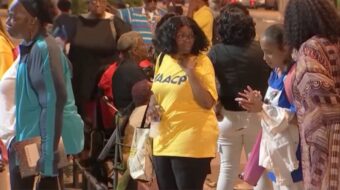
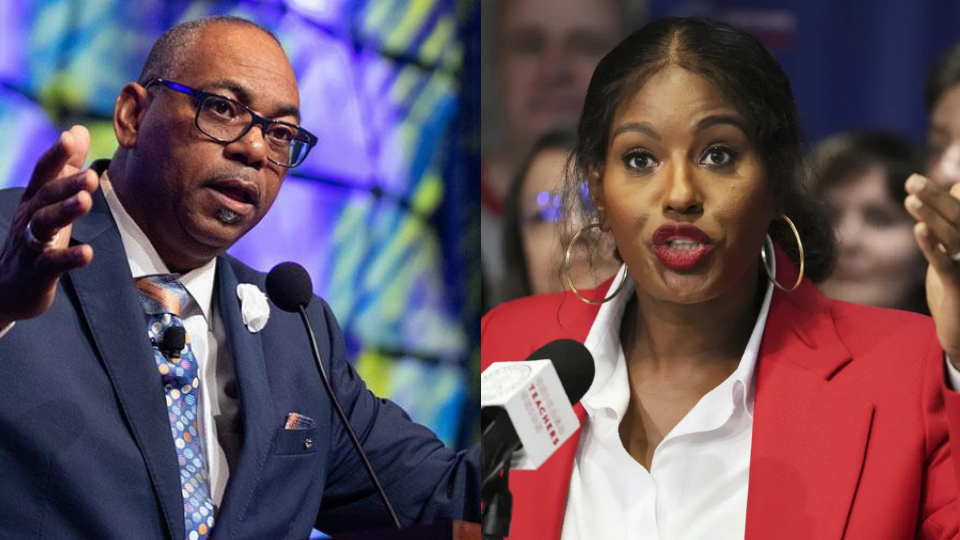
The extensive taking away of rights on Sept. 28 pushed many groups into action: Among them are the Chicago Teachers Union, the NAACP, the National Women’s Law Center, the AFL-CIO, and their supporters in the U.S. Senate.
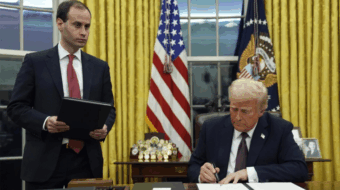
The first blow came early in the day, when Donald Trump’s Education Secretary, Linda McMahon, finalized new rules governing women and minorities covered by Title IX of federal civil rights law.
In essence, the department’s new rules are Trump’s old rules, which he instituted during his first term in the Oval Office, 2017-21, and which his successor, Democrat Joe Biden, overrode with wider protections under Title IX, covering sexual orientation and gender identity. That law says any institution taking federal funds, and that includes colleges, may not discriminate by race or sex.
But the old Trump rules, now the new Trump rules, allow discrimination against LGBTQ people in schools and on K-12 athletic fields, too.
Transgender people got their rights taken away by the federal Education Department. So do K-12 students of color, says Stacy Davis Gates, the Chicago Teachers Union president and a social studies teacher in the fourth-largest public school district in the continental U.S. The district’s 306,000 students are 46.4% Latino and 34.3% African-American. Gates said the union will use its contract with the Chicago school district to protect the Black, Latino, and LGBTQ students.
“Last week, the Justice Department announced it had ended more than 50 school desegregation cases. Today, it formally removed federal Title IX protections from LGBTQ students and their families,” said Gates.
“These are different actions, but coupled together they send the same message to our educational communities who have had to fight for equal treatment: The federal government is stepping back from protecting them and stepping up its attacks on their rights.
“Black families know what happens when we are told discrimination is a thing of the past simply because a case is old. LGBTQ students know the harm of being told their safety and dignity are up for debate. A school cannot promise opportunity to every child while weakening the tools that hold it accountable to that promise.
“As a mother, an educator and a labor leader, I refuse to accept the retreat and reversal. Our students deserve schools where they are safe, where they belong and where their rights are defended. When the federal government is weaponized against our students, our unions’ contracts will be used as a shield to protect them.”
Then, that evening, the GOP-run U.S. Senate took away college athletes’ right to organize, limited their rights—which they had won at the U.S. Supreme Court, 9-0—to profit from the billions of dollars colleges make by selling the rights to their names, images, and likenesses.
And the senators, including a slew of Democrats, in a bipartisan 77-22 vote awarded a big antitrust exemption to the NCAA, the cabal of predominantly white administrators and coaches who run athletic programs, through the so-called Protect College Sports Act.
Those programs garner $13 billion-$15 billion a year for the colleges and universities and the NCAA, exploiting the talents of the athletes who are mostly athletes of color, too. Especially in the two big collegiate revenue sports, football—66% Black–and men’s basketball.
The AFL-CIO campaigned hard against the college sports takeaway, which was pushed largely by right-wing Senate Commerce Committee Chairman Ted Cruz, R-Texas, but aided by the panel’s top Democrat, Maria Cantwell of Washington state. Sen. Chris Murphy, D-Conn., led the opposition and especially tried to preserve the college athletes’ right to organize.
“The Protect College Sports Act would disempower athletes, snuff their compensation and bust their union-organizing efforts,” the AFL-CIO and its sports council said online, urging people to call their senators and demand a “no” vote.
The college sports bill would “allow the NCAA to set the terms and conditions of work from one employer to the next and be shielded from antitrust liability for doing so,” the federation said. “Cap athlete compensation and create new restrictions on how athletes can earn money from their own name, image, and likeness.”
And the college sports bill “would lay down new obstacles to athletes’ efforts to form a union” and “halt progress on gender equity in sports and take away the most effective tool we have to continue to build women’s sports: Collective bargaining.”
Murphy said “the colleges and the conferences and the boosters flooded this place” with lobbying. Most of the college administrators, the conference presidents, the NCAA, and the boosters are rich and white.
“Young athletes who perform a service that would be worth billions in the free market are finally getting what they lawfully deserve,” Murphy told senators. “A system of exploitation, an illegal system of exploitation, in which the colleges and their industry allies colluded to keep as much of the $13 billion the college sports industry generates for themselves, started to crumble because courts as high as the Supreme Court came to the inevitable conclusion that that system of exploitation was illegal.
“We could have done what happens in most industries, which is just say to the NCAA and to the colleges, tough luck. Congress isn’t going to come in here and micromanage your relationship with the athletes. If you want to work something out, sit down and talk to the athletes about it. If you want rules that apply across the industry, then do what every other industry does, which is have a dialog with the workers.”
In plain English, collective bargaining.
“Black athletes have helped build some of the most profitable college athletic programs in America, generating hundreds of millions of dollars in annual revenue, even as Southern state governments are moving to limit, reduce, weaken, or erase Black voting representation by creating new, unconstitutional voting districts,” said NAACP CEO Derrick Johnson, thus linking voter suppression to athletic suppression.
“This is about more than sports. This is a matter of both economic and political power. We’re challenging the institutions that profit from Black athletes to also stand up for the Black communities that make their success possible.” The College Sports Act, Johnson declared, “is a modern version of Jim Crow.”
There’s still a chance the college sports giveaway could die. The Senate changed it enough so the measure must return to the U.S. House, and Minority Leader Hakeem Jeffries, D-N.Y., predicts it won’t come up until after the November 3 election—and faces foes both on the left and the right.
The Republican right wants to add its voter repression Save Act to the college sports bill and will vote “no” if that doesn’t happen, analysts say. The left opposes the NCAA’s power grab at the athletes’ expense.
No paywalls at People’s World
We hope you appreciated this article. At People’s World, we believe news and information should be free and accessible to all, but we need your help. Our journalism is free of corporate influence and paywalls because we are totally reader-supported. Only you, our readers and supporters, make this possible. If you enjoy reading People’s World and the stories we bring you, please support our work by donating or becoming a monthly sustainer today. Thank you!
CONTRIBUTOR