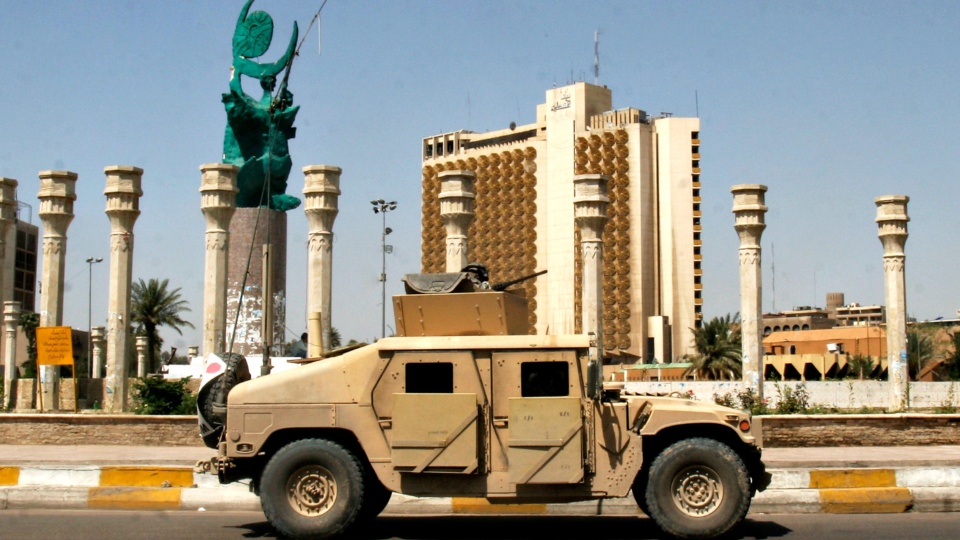
Quietly on Sept. 30, with little fanfare, the last U.S. troops left Iraq—and this time, the withdrawal is supposed to be permanent. After 23 years of war, civil war, occupation, and chaos, Iraq celebrated the end of an era.
In Erbil, in the country’s Kurdish north, where the last American soldiers had been stationed, a handover ceremony was held. There, Iraqi Prime Minister Ali al-Zaidi hailed the start of a new chapter, one defined by Iraq’s sovereignty.
Yet the United States still holds Iraq’s fate in its hands—not through its military, but through its control over the country’s oil revenue. Money from Iraq’s oil sales does not flow directly into Iraq. It is paid into banks in New York and must pass through three separate steps and transactions before it reaches recipients in Iraq.
At each of those steps, the U.S. Treasury Department can delay or block the payments, citing “administrative reasons.” Currently, around $2 billion of Iraq’s oil revenue is under direct U.S. administration and control.
The situation has improved over time, as only part of Iraq’s foreign reserves is still held in the United States. But that is enough for Washington to continue dictating Iraqi policy. The best example is the selection of Prime Minister al-Zaidi himself.
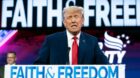
The original candidate for the post was former Prime Minister Nouri al-Maliki. He had the backing of the largest bloc in Iraq’s parliament, the predominantly Shiite Coordination Framework. Although he was once regarded as Washington’s man, al-Maliki had moved closer to Iran. That drew fierce opposition to his candidacy from President Donald Trump.
If al-Maliki were chosen, Trump warned on his Truth Social platform, Iraq would have “ZERO chance of success, prosperity, or freedom.” Al-Maliki rejected Trump’s threats in a post on X, denouncing what he called “blatant U.S. interference in Iraq’s affairs.” It was no use.
Trump did not stop at threats. For months, the U.S. withheld Iraq’s funds, and the outcome was predictable: Al-Maliki was not elected prime minister.
In his place came al-Zaidi, a millionaire with no prior political profile. He is seen as Trump’s pick, and the two share a line of business: Al-Zaidi made part of his fortune in real estate. And, as if to make the connection unmistakable, the U.S. released Iraq’s funds just in time for al-Zaidi’s visit to Washington.
Iraq’s newly-won limited sovereignty also runs up against hard limits in its relations with Iran. Iran is a major trading partner, with two-way trade totaling $10 billion a year. Perhaps even more important are the religious pilgrimages between the two countries.
Even so, the Iraqi government initially complied with U.S. sanctions on Iran, banning flights to and from the country. That sparked fierce protests and demonstrations, and the government then asked the U.S. Treasury Department for an exemption. Under a waiver initially limited to one month, airlines—with the exception of Iran’s Mahan Air—may now operate flights between Iran and Najaf, a major Shiite pilgrimage site.
Muqtada al-Sadr, the influential cleric, politician, and former militia leader who withdrew from politics years ago, has now welcomed what he called Iraq’s new “independence.” He is calling on his fellow Iraqis to demand compensation from the U.S. military for everything it has done to their country over the past 23 years.
Unsere Zeit
No paywalls at People’s World
We hope you appreciated this article. At People’s World, we believe news and information should be free and accessible to all, but we need your help. Our journalism is free of corporate influence and paywalls because we are totally reader-supported. Only you, our readers and supporters, make this possible. If you enjoy reading People’s World and the stories we bring you, please support our work by donating or becoming a monthly sustainer today. Thank you!
CONTRIBUTOR