Despite aggressive voter suppression—including racialized gerrymandering, widespread misinformation, and the Supreme Court’s multi-step gutting of the Voting Rights Act—Black voters turned out in what are likely record numbers. Not only that, to a large extent, it was this key demographic that powered Democratic victories nationwide, particularly across the South.
Massive Black turnout can’t be viewed in isolation; it is part of an ongoing movement against voter suppression and for the reversal of the worst policies pursued by the Trump administration.
In the days after the historic election, it’s time to grapple with what to do with this power and the expansion of anti-MAGA forces, and to listen to the Black voices that will shape the political terrain going forward.
The Black tsunami
On election night, many celebrated the blue wave sweeping the country, as voters rejected Trump and the MAGA movement by electing Democrats in places long dominated by the GOP. Yet, as activist and educator Brittany Packnett Cunningham pointed out, the “blue wave” was really a “Black tsunami,” with Black voters and organizers at the center of many of the historic wins.
“This country owes a debt to the thousands of local and national Black organizers, students, leaders, institutions, creators, journalists, and neighbors who have helped (and continue to help) bring democracy back from the brink and slow the threat of autocracy,” Packnett Cunningham wrote.
And this assertion is hard to deny, as national data shows 91% of Black voters supported Democratic candidates—a nine-point shift back to Democrats from the 2024 presidential election. Black women, as in many past cycles, were the most Democratic-voting demographic. And their votes made a difference, especially in places where mere hundreds of votes decided the winner.
The surge in Black voter turnout helped Democrats flip Senate seats in North Carolina, South Carolina, and Texas. In Alabama, despite a legislature-drawn map meant to dilute minority voting power, Black voters safely re-elected Democrat Shomari Figures by an eight-point margin in his newly shaped district.
Georgia made history by electing Keisha Lance Bottoms, who will become the first Black woman governor in U.S. history. In Texas, Black voters backed new Governor-elect Gina Hinojosa at higher rates (87% of Black men and 90% of Black women) than any other demographic in the state.
And Black women didn’t just vote—their names appeared on the ballot in a big way, as 72 Black women ran nationwide for U.S. Senate, U.S. House, governorships, and other major statewide executive offices. In Georgia, Black women won bids for attorney general, secretary of state, agriculture commissioner, insurance commissioner, labor commissioner, and school superintendent.
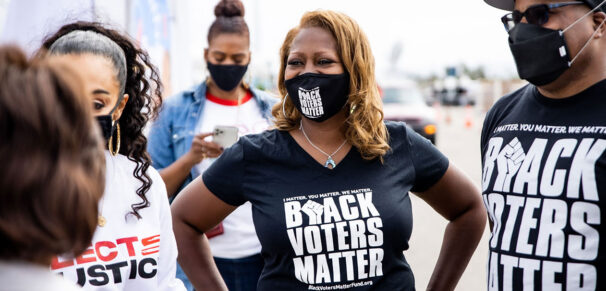
Black organizers’ focus on long-dismissed places made the difference.
The progress won through struggle cannot be ignored, as this week marks 58 years since Shirley Chisholm became the first Black woman elected to Congress. Now, decades later, through the strategic resistance of organizers, Black women and men are still making history. Come 2027, 28 Black women will serve in the House of Representatives. And, as When We All Vote pointed out, three Black women will serve in the Senate at the same time for the first time in history.
As former Vice President Kamala Harris—who spent months campaigning for candidates in the South—told the press the day after the election, “I’ve long believed that we have failed to put the resources into Southern states” because of a “misdirected perception of who the people in those states are and what they want.”
Stacey Abrams, who previously ran for governor in Georgia, said that where Democrats fell short, such as in Florida, Louisiana, and Tennessee, it came down to investment and the fight for a voice in places long marked by repression and voter suppression.
“You weren’t talking about massive margins [with the losses]. When we underinvest, especially in states with significant populations of color, we throttle our own ability to expand the map,” she told the Associated Press.
Destruction of the Voting Rights Act
The fight for voting rights has been long, fought by those excluded from the democratic process. Stretching back to the earliest days of the colonies and the young United States, those who were not wealthy white male landowners saw their voices silenced, and, in the case of Black Americans, their bodies chained.
Poll taxes, one of the earliest forms of voter suppression, forced people to pay to vote and specifically targeted Black people and low-income white people. They weren’t abolished in federal elections until 1964, and it took another two years to abolish them in state and local elections. In 1965, the historic Voting Rights Act (VRA) passed at the peak of the Black-led Civil Rights movement. It was designed to enforce the voting rights guaranteed by the Constitution’s Fourteenth and Fifteenth Amendments.
Fast forward to 2013, when the Supreme Court struck the first blow, effectively gutting the VRA by ruling that states and localities with a history of voter suppression no longer needed federal review before changing their election laws. An onslaught of voter ID requirements followed in states such as Mississippi, Virginia, Texas, and Alabama.
In April of this year, the Supreme Court issued another ruling, in Louisiana v. Callais, that essentially struck down Section 2 of the VRA, which allowed (and sometimes required) the creation of majority-minority districts—a key way Black and Latino representatives have been elected to Congress and other political offices. The ruling makes these districts extremely difficult to create, and many argue it will have repercussions throughout our political system for Black and other marginalized representation in government.
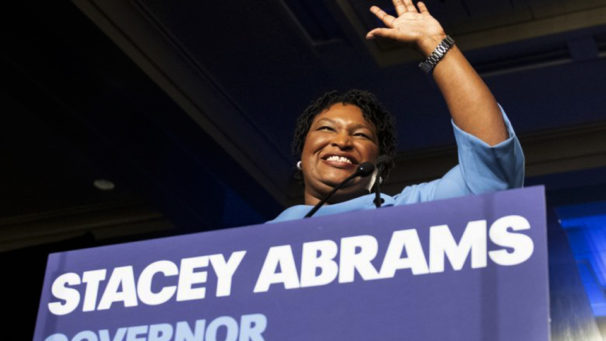
Several states then put forward electoral maps designed to dilute the collective power of the Black vote. The Congressional Black Caucus called the Republican-led redistricting efforts “coordinated efforts to silence Black voices at the ballot box.”
This racial gerrymandering has been coupled with strict voter ID laws, reductions in early and mail-in voting, voting center closures in predominantly Black neighborhoods, and often flawed voter roll purges. With federal protections against racial vote dilution weaponized and gutted, communities of color have faced systemic barriers reminiscent of Jim Crow and the betrayal of Radical Reconstruction.
This was the political terrain Black voters faced heading into this year’s midterms.
The fightback
In the face of these tactics, key figures and grassroots organizations pushed back against efforts to silence Black and other marginalized voters. Black-led grassroots organizations and political figures have anchored a resilient counter-movement that culminated in historic electoral mobilization.
Black Voters Matter, an organization co-founded by LaTosha Brown, invested over $50 million in more than 25 states to build local capacity. The group focuses heavily on rural Black communities in the South and has driven massive turnouts by framing voting rights as a direct tool for local resource allocation.
The NAACP Legal Defense and Educational Fund (LDF) has consistently challenged discriminatory redistricting maps and state laws. It has also defended nonpartisan voter registration drives aimed at millions of eligible Black young people against steep fines and hostile state oversight.
The Voter Justice Project directly combats felony disenfranchisement, which disproportionately affects Black voters. The initiative has restored voting rights to more than 286,000 people, bringing systematically marginalized voices back into the democratic process.
Fair Fight Action focuses on nationwide voter education, fighting aggressive voter roll purges, and mounting legal challenges to restrictive measures. Stacey Abrams, the voting rights advocate who founded the group, faced voter suppression in her 2018 bid for Georgia governor, which shone a spotlight on inequality in electoral politics.
Through the coalition she built, Abrams helped the nation see voter suppression not as an invisible hurdle but as an organized, structural strategy. Her work laid the groundwork for historic electoral shifts across the South.
In May, the All Roads Lead to the South coalition formed, bringing together national and local Black-led organizations focused on collective freedom. The multiracial, interfaith civil rights alliance formed to combat the dismantling of voting rights and Republican-led gerrymandering.
This coordinated resistance produced record Black turnout this cycle, showing its power particularly in Southern states—places often dismissed as “lost causes” due to heavy Republican and right-wing influence.
Economic hardship fueled by racism and “culture” wars
The fight for a voice in the electoral process was also fueled by the very real discrimination and economic hardship that those in power have inflicted on Black people and other marginalized groups.
The Trump administration and the MAGA movement behind it have resumed their “culture wars” since retaking office in 2025, pushing a narrative that white men are under attack and losing jobs to Diversity, Equity, and Inclusion (DEI) programs. In reality, working-class people, and Black workers in particular, were hit hardest as health care and SNAP benefits disappeared and wages lagged behind the cost of living.
As the National Women’s Law Center reports, women in the labor force continue to bear the harshest economic harms. Black women’s unemployment rate rose from 5.6% in August to 6.8% in September, and Black unemployment overall has stayed elevated compared to other groups. Over the same period, for instance, the rate for white men fell from 3.7% to 3.5%.
“September’s jobs numbers show a continuation of concerning trends and conditions for women in the labor force,” said Jasmine Tucker, vice president of research at NWLC. “Nine months into the year, we’re in a much worse place than we were at the start of 2026—451,000 fewer women in the labor force is alarming. We remain concerned about policies pushing women, particularly Black women, out of the workforce.”
Since taking office, the administration has worked strategically to define patriotism and American history, often by erasing Black struggle and elevating white supremacy.
As LaTosha Brown told the press the week of the midterms, this push of white supremacy also motivated Black people to show up at the polls: “We [Black people] can smell racism,” Brown said, “We can see it…we can feel it, and we know how to respond to it. Our survival has been based on our ability to resist it and respond and navigate around it.”
The road ahead
“The 2026 elections were a complete repudiation of the racist, anti-woman, anti-LGBTQ, Islamophobic, and war-like MAGA Republican agenda,” Eric Brooks, a prominent Black leader of the Communist Party USA, told People’s World after the vote.
“The people, substantially led by African American women and organized labor, broke new ground, including the election of Keisha Lance Bottoms, governor-elect of Georgia. Black women, led by Stacey Abrams, have played a long-term strategy, building up national infrastructure for struggle, and that collective work yielded results, including the election of Juliana Stratton to the Senate.”
Those sentiments have been repeated by other Black political leaders.
“Once again, Black voters have proven that we are not bystanders in this country; we are its builders,” said Derrick Johnson, president and CEO of the NAACP. “The Trump administration tried every trick in the book to block voters from the polls, but we showed up and showed out, and we voted.
“This election’s outcomes are not the finish line. They’re a reminder that we the people have the power. And keeping that power requires us to vote, hold elected officials accountable, and fight for our freedom.”
The question now is how to celebrate the decisive role Black voters played while also heeding the demands behind their mobilization.
Dee Miles, a Black woman on the CPUSA’s national leadership, celebrated the victories and turnout while raising the matter of how to sustain and expand this engagement.
“African American-organized mobilization, especially in the South, was deep-rooted, effective, and successful. Even the close losses, like Justin Pearson in Tennessee and Angie Nixon in Florida, were wins,” Miles pointed out.
“But we still need to answer: What was the turnout, and what can we do to grow engagement even more? We are fighting for our fundamental rights as citizens and our human dignity as African Americans. We join with organized labor and all the other communities in rising up against MAGA fascism.”
The 2026 midterms showed that no progress can be made without acknowledging the weight of the Black vote and the plight of Black working people, whose struggle is deeply intertwined with that of working people as a whole. And while the matter of what is to be done next is sorted out, it is clear the Black vote cannot be dismissed or underestimated.
Despite what Trump’s White House stubbornly put out on the social media platform X after the elections, stating “FYI: DEI is still dead.” Midterm outcomes say otherwise. As the NAACP noted, “Across the country, one thing is clear: when Black communities organize, we win.”
Finding the road forward requires listening to Black voters and Black working people long after the post-election praise fades. Wearing a “Vote Like Black Women” shirt, Senator-elect Juliana Stratton said recently on social media, “We [Black women] understand the stakes, and we have the solutions, too.”
That sentiment—about the leadership of Black people and Black women—follows in Chisholm’s legacy. As the trailblazer famously said, “If they don’t give you a seat at the table, bring a folding chair.”
Black voters brought their proverbial chairs to the polls en masse this midterm season. Now it’s time for their voices to be heard loud and clear at the coalition meeting table.
No paywalls at People’s World
We hope you appreciated this article. At People’s World, we believe news and information should be free and accessible to all, but we need your help. Our journalism is free of corporate influence and paywalls because we are totally reader-supported. Only you, our readers and supporters, make this possible. If you enjoy reading People’s World and the stories we bring you, please support our work by donating or becoming a monthly sustainer today. Thank you!
CONTRIBUTOR