
VIENTIANE, Laos—The small Southeast Asian nation of Laos is celebrating a major milestone on Nov. 24, moving into the ranks of the globe’s middle-income countries.
In its 1971 session, the Committee for Development Planning of the United Nations identified Laos as one “of the least developed among developing countries” in the world.
At that time, Laos was a conflict-ridden semi-colony, still heaving under the legacy of French colonialism and actively undergoing one of the most intense indiscriminate bombing campaigns in world history at the hands of the United States.
Only a third of the country was then held by the internationally-recognized Royal Lao Government, which enjoyed clandestine funding from the U.S., as well as a steady stream of support from foreign mercenaries and CIA-trained guerillas.
Following repeated failures to form a functional democratic government, however, the other third of the country, known as the “liberated zone,” became host to the Pathet Lao (lit. “Lao Nation”), which began receiving aid from neighboring China and Vietnam, as well as the Soviet Union.

It was situated around the revolutionary base in Viengxay, a network of over 400 caves, forming a subterranean megacity that peaked at over 20,000 inhabitants. The U.S. was bombing the area at the rate of, on average, one planeload every eight minutes.
This secret war had begun with the defeat of French colonial forces in the 1950s, and continued, illegally, until at least 1975. Official death tolls stretch into the tens of thousands, and millions of unexploded American bombs continue to litter rural areas throughout the country.
In total, the U.S.-backed civil war in Laos led to the deaths of some 200,000 Lao people, the injury of up to 400,000 more, and the forced displacement of some 300,000 out of a total pre-war population of only around two million. The U.S. was thus responsible for directly harming no less than 30% of all Lao people, while simultaneously claiming to officially recognize Laos’ rights to self-determination and peaceful development.
The land between
Following the peaceful establishment of the Lao People’s Democratic Republic on Dec. 2, 1975, the young nation quickly found itself grappling to find its footing.
According to the UN and ongoing historical research, Laos’ literacy rate in 1950 was only around 18%, annual per capita GDP was around $318 USD, and the average person had a life expectancy of less than 40 years. This was before the U.S. war on Laos, during which no thorough studies could be conducted.
However, even as the country was fighting to save its very existence, the People’s Revolutionary Party was simultaneously already at work building a new future. Revolutionaries like current President Thongloun Sisoulith spent years organizing, teaching, and fighting for a better future. During the years of the cave-city at Viengxay, he was a teacher.

When the war ended, however, Laos was left largely on its own to pick up the pieces. Neighboring Vietnam, whom Laos has maintained a special fraternal bond with since the days of French colonialism, provided assistance but also undergoing its own post-war reconstruction.
Soviet and Chinese aid, while unceasing, was complicated by political tensions between the two socialist powers. Alongside the continued insurgency of U.S.-backed guerilla forces, golden triangle narcotics traffickers, and dissident anti-communist terrorists crossing over from liberated southern Vietnam, as well as the incursion of Thai forces in their own brief border conflict in the latter days of the 1980s, this young socialist nation’s future appeared hopeless to many. A further 10-15% of Laos’ population—some 360,000 people over the next 20 years—fled, with many becoming refugees in neighboring Thailand.
Decades later, some aspects of national reconstruction, such as dealing with the remaining U.S. bombs and the generational consequences of chemical weapons like Agent Orange, are still ongoing throughout the region.
A socialist miracle
Fifty-five years later, the Lao People’s Democratic Republic is officially graduating from LDC status and takeing its place among the middle income countries of the developing world.
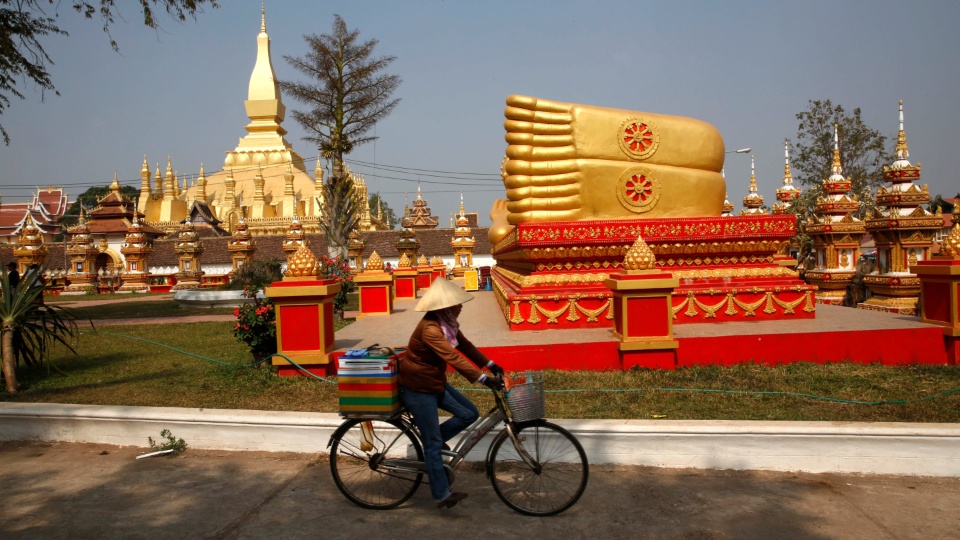
Nov. 24, the official date for Laos’ graduation, is an especially auspicious date. It has been intentionally chosen to coincide with the That Luang Festival, one of the most important holidays in the country, marking 460 years since the original construction of Laos’ iconic national shrine, a symbol of the nation’s centuries-long pursuit of independence, development, and peace.
The bustling streets of Vientiane hosted an estimated 2.2 million total visitors in 2025, and the country welcomed over four million international tourist visits in total. As uniformed students and everyday citygoers zip up and down the modern streets on their motorbikes, one would do well to remember that the majority of modern Vientiane was, just a few short decades ago, little more than undeveloped rice fields.
Thanks to the unceasing push for socialist modernization, youth literacy today is over 90%, GDP per capita is reaching nearly $3,000 USD, and life expectancy for the average person is nearly 70 years.

In one single generation Laos has been transformed from “the land between,” desperately locked in a war of survival against the world’s most powerful empire, to one of Southeast Asia’s top destinations for pristine nature, friendly people, delicious food, and unparalleled cultural heritage.
Thanks to the hard work and undaunted commitment of so many revolutionary heroes, every child in Laos has access to education, healthcare, and the promise of a better future. A socialist miracle that would have seemed completely impossible 50 years ago is now a living reality for the more than seven million people who call this place home.
In 1981, then-Prime Minister and General Secretary Kaysone Phomvihane concluded his memoir, Revolution in Laos, by writing: “The work of the people of Laos in defending their country and building socialism will triumph!”
As Laos officially achieves middle-income status, despite all odds, those looking on from afar are reminded of the reality that everyday people, when united, are unstoppable.
No paywalls at People’s World
We hope you appreciated this article. At People’s World, we believe news and information should be free and accessible to all, but we need your help. Our journalism is free of corporate influence and paywalls because we are totally reader-supported. Only you, our readers and supporters, make this possible. If you enjoy reading People’s World and the stories we bring you, please support our work by donating or becoming a monthly sustainer today. Thank you!
CONTRIBUTOR