Bob Dylan sang “all night girls whispered escapades out on the D Train.” Billy Strayhorn told us to take the A Train and “Listen to those rails a-thrummin.”
Author Fred Naiden has his own story to tell about his life in the New York transit system. A porter, a motorman and always a rider, his new book, Railroaded: A Motorman’s Story of the New York City Subway, tells that story.
As if to provide more context, Naiden also narrates a colorful existence as a tenant on Manhattan’s Lower East Side. His life there was one that involved him and his wife working, wrestling with barely functioning plumbing and electricity, and tenant organizing. The characters he introduces are intriguing, unique, and probably familiar to anyone who lived (or lives) in New York City without the benefit of a lot of money and a driver.
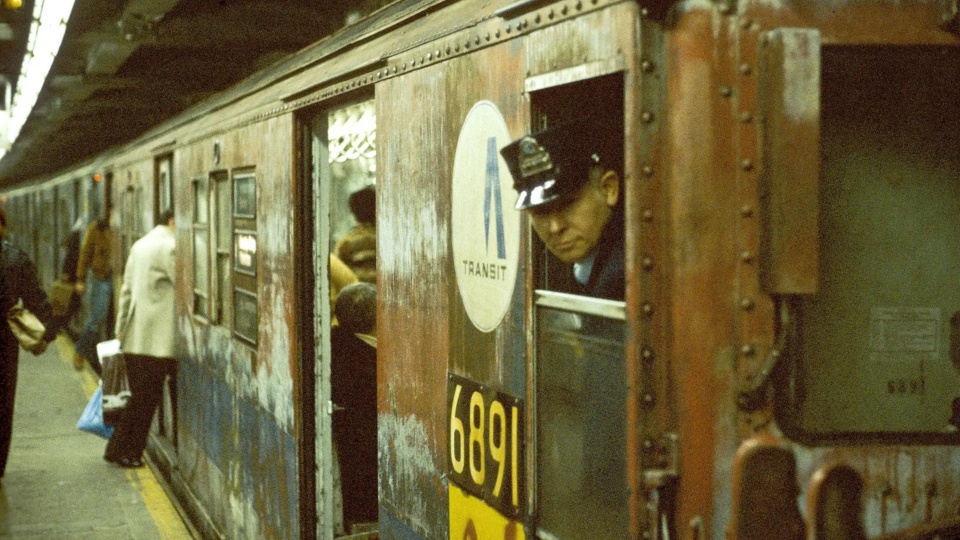
Railroaded describes a transit system in bad times and worse times, subject to the whims of capital and the unconcern of those with the funding (if not downright hatred) regarding the maintenance and expansion of public transit.
 In his telling, the author provides a history of the system’s mostly private beginnings and its constant battles with governments unwilling to fund it appropriately while supporting construction of infrastructure that assumes the transit system’s dependability and performance.
Naiden’s participation in one of the transit workers’ unions gives him the ability to discourse on the factions within the union and the disputes between the unions. Like most unions, these factions often broke down along lines of jobs: bus drivers and subway conductors, porters, and office workers, etc.
They also often reflected political leanings (Naiden is/was a communist) as well as racial animosities in the workforce and the city itself. Of course, the workers and their union were in constant battle with management, various politicians, and bureaucrats, all of them determined to keep the union in the place they thought it belonged.
Perhaps the most interesting sections of Naiden’s text are those describing the nature of a subway worker’s work.
He describes cleaning restrooms and trains, keeping an eye out for passengers misbehaving and guiding a train through the darkness. His narrative tells of a worker killed in large part because of poor maintenance due to management’s lack of response and the wildcat work stoppage that took place in the immediate wake of the man’s death.
There are specifics regarding how to guide a train into a station so it stops precisely where the riders are cued to wait for an open train door and details regarding the dangers of the tollbooth attendants when they sold tokens and made change.
After reading some of Naiden’s stories, readers might hesitate to go down the stairs to the platform again. Personally, I found that the details humanized the transit workers and those they serve even more.
This book is a great tale of the lives of working-class New Yorkers. The characters that move in and out of Naiden’s story are from many walks of life and even more places of origin. They each have a unique biography and perspectives formed by that past and by their circumstances. The search for work and the struggle to keep a job are elucidated, as are efforts to organize tenants and workers to defend their rights and gain power in their lives.
The struggles this daily life entails are told in an approachable vernacular, with humor and an understanding often present in the souls of those who live them. Throughout the narrative, his language is simultaneously proletarian and clever, lucid and clear, like a good subway map should be.
Railroaded: A Motorman’s Story of the New York City Subway
By Fred S. Naiden
Rutgers University Press, 2026, 274pp., $28.95
We hope you appreciated this article. At People’s World, we believe news and information should be free and accessible to all, but we need your help. Our journalism is free of corporate influence and paywalls because we are totally reader-supported. Only you, our readers and supporters, make this possible. If you enjoy reading People’s World and the stories we bring you, please support our work by donating or becoming a monthly sustainer today. Thank you!
CONTRIBUTOR