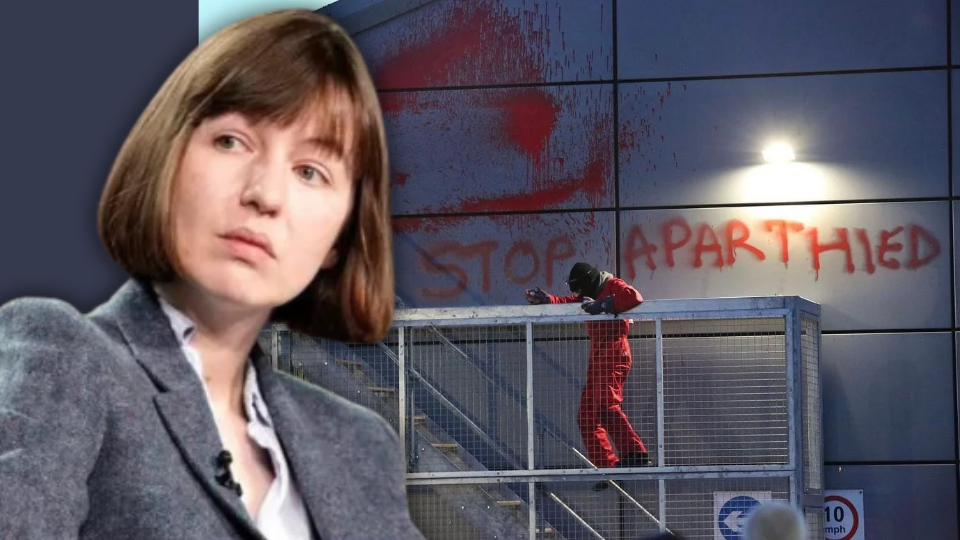
On 14 October 2026, Faber & Faber, the British publisher of Irish writer Sally Rooney, confirmed it will no longer offer her works in any format in the British market. The reason for this decision is Britain’s anti-terror legislation: Rooney publicly stated that she would use her book royalties to support “Palestine Action,” an organization Britain has designated a terrorist group. Were the publisher to continue passing on British sales proceeds to her, this could constitute a criminal offense.
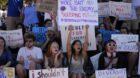
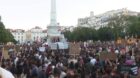
Palestine Action was founded in 2020 and carries out direct action against facilities belonging to the Israeli arms manufacturer Elbit Systems. Its protest actions include entering buildings, damaging equipment and spraying graffiti. In June 2025, activists entered Britain’s largest Royal Air Force base, RAF Brize Norton, and sprayed two aircraft with red paint, causing an estimated £7 million (9,380,175 U.S. dollars) in damage. In July 2025, the British government classified the organization as a terrorist group; supporting it can be punished with up to 14 years in prison. The case of the “Filton 4”—comparable to that of the “Ulm 5” in Germany—attracted considerable public attention in Britain. According to the protest organization Defend Our Juries, more than 3,700 people have been arrested for peaceful protests since the ban came into force, many of them solely for holding signs reading “I support Palestine Action.”
In February 2026, the High Court of England and Wales ruled the ban unlawful. The court reasoned that it constituted a “disproportionate” interference with Articles 10 (freedom of expression) and 11 (freedom of assembly and association) of the European Convention on Human Rights; moreover, the vast majority of the actions could be prosecuted under ordinary criminal law. The UN Special Rapporteur on terrorism and human rights, Ben Saul, welcomed the ruling and stated: “Organizations must never be classified as terrorist groups solely for exercising protected expression or legitimate human rights activities.” In June 2026, however, the Court of Appeal overturned the High Court’s decision by a majority and confirmed the lawfulness of the ban. The case is due to come before the British Supreme Court on 4 and 5 November 2026.
In August 2025, Rooney published an opinion piece in the Irish Times in which she reaffirmed her support for Palestine Action and stated that she intended to use her book royalties and income from BBC adaptations to support the organization. She wrote: “If this makes me a ‘supporter of terror’ under UK law, so be it.” At the same time, she pointed out that the organization is neither banned nor declared illegal in the Republic of Ireland.
Faber & Faber stated: “Current legislation in the UK has led to circumstances where Faber cannot pass on UK earnings to Sally Rooney for her work. To sell a writer’s work and not be able to pass on earnings is an unconscionable situation for a publisher. (…) We remain the proud publisher of her remarkable body of work, which we will continue to sell in other territories.” Rooney stated via her agency that the decision had been taken after “a process of consultation and deliberation, and with my full agreement.” She said: “I am wholly prepared to accept the consequences.” In September 2025, she had already canceled a trip to London to receive the Sky Arts Literary Award, out of concern that she would be arrested on entering Britain.
Back in 2021, Rooney had refused to sell the Hebrew rights for Beautiful World, Where Are You to the Israeli publisher Modan unless it publicly distanced itself from its links to Israeli military institutions. In 2026, Intermezzo appeared in Hebrew with the independent Israeli publisher November Books, which meets the exemption criteria of the BDS institutional boycott. Rooney stated at the time: “I was, of course, never boycotting the Hebrew language or any language.”
After major Israeli book selling chains stopped selling her novels in November 2021 in protest at Sally Rooney’s boycott stance, her works disappeared from Israeli bookshelves across the board. In Mahmoud Muna’s Palestinian bookshops in East Jerusalem, however, the English originals remained available—despite harassment and arrests. Israelis who can no longer obtain the books in their country now account for around 20 percent of his customers.
No paywalls at People’s World
We hope you appreciated this article. At People’s World, we believe news and information should be free and accessible to all, but we need your help. Our journalism is free of corporate influence and paywalls because we are totally reader-supported. Only you, our readers and supporters, make this possible. If you enjoy reading People’s World and the stories we bring you, please support our work by donating or becoming a monthly sustainer today. Thank you!
CONTRIBUTOR