

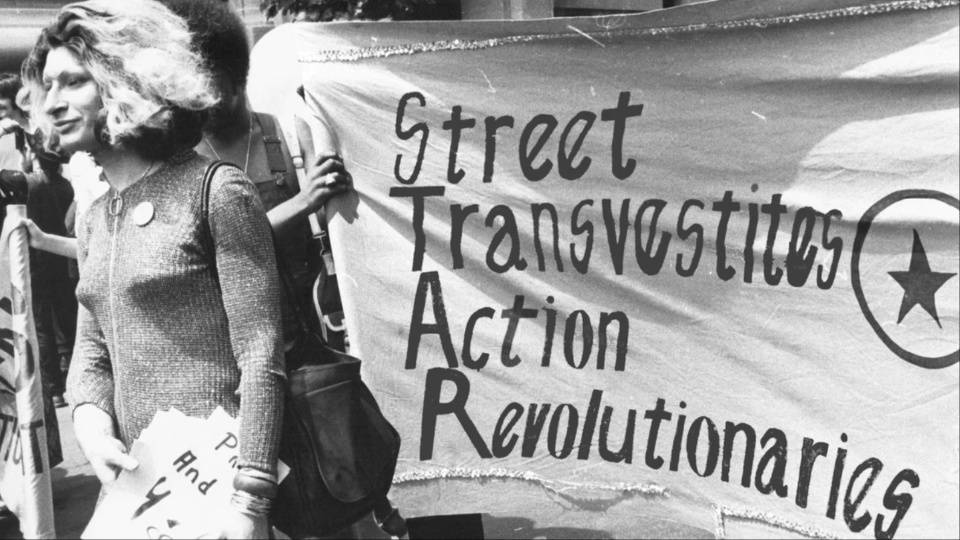
Sylvia Rivera was a tireless advocate for those silenced and disregarded by larger movements. Throughout her life, she fought against the exclusion of transgender people, especially transgender people of color, from the larger movement for gay rights.
Rivera was born in New York City in 1951 to a father from Puerto Rico and a mother from Venezuela. She was assigned male at birth. Rivera had an incredibly difficult childhood. Her father was absent, and her mother died by suicide when Rivera was 3 years old. Raised by her grandmother, Rivera began experimenting with clothing and makeup at a young age. She was beaten for doing so and, after being attacked on a school playground in sixth grade by another student, suspended from school for a week. Rivera ran away from home at age 11 and became a victim of sexual exploitation around 42nd Street.
In 1963, Rivera met Marsha P. Johnson and it changed her life. Johnson, an African American self-identified drag queen and activist, was also battling exclusion in a movement for gay rights that did not embrace her gender expression.

Throughout the 1970s, Rivera frequently tangled with gay rights leaders who were hesitant to include transgender people in their advocacy work. Rivera also fought against the exclusion of transgender people from the Sexual Orientation Non-Discrimination Act in New York. The final bill passed in 2002 and prevents discrimination “on the basis of actual or perceived sexual orientation in employment, housing, public accommodations, education, credit, and the exercise of civil rights.”
Along with Johnson, Rivera started the Street Transvestite Action Revolutionaries (STAR) around 1971. The group became a space to organize and discuss issues facing the transgender community in New York City, and they also had a building, STAR House, that provided lodgings for those who needed it.
Rivera explained in 1998 that she and Johnson “decided it was time to help each other and help our other kids. We fed people and clothed people. We kept the building going. We went out and hustled the streets. We paid the rent.” Although only 19, Rivera became a mother to many of the residents of STAR House. While shortlived, STAR House was an important space for those who needed it.
In a 1989 interview, Rivera said, “Before gay rights, before the Stonewall, I was involved in the Black Liberation movement, the peace movement…I felt I had the time and I knew that I had to do something. My revolutionary blood was going back then. I was involved with that.”
Rivera died of liver cancer in St. Vincent’s Manhattan Hospital in 2002 at the age of 50. The Sylvia Rivera Law Project continues her legacy, working to guarantee “all people are free to self-determine their gender identity and expression, regardless of income or race, and without facing harassment, discrimination, or violence.”
The intersection of Christopher and Hudson streets in New York’s Greenwich Village, two blocks from The Stonewall Inn, was renamed “Sylvia Rivera Way.” In 2015, a portrait of Rivera was added to the National Portrait Gallery in Washington, D.C., making her the first transgender activist to be included in the gallery. In 2021, New York City unveiled a monument to Rivera and Johnson, the world’s first monument dedicated to transgender individuals.
We hope you appreciated this article. At People’s World, we believe news and information should be free and accessible to all, but we need your help. Our journalism is free of corporate influence and paywalls because we are totally reader-supported. Only you, our readers and supporters, make this possible. If you enjoy reading People’s World and the stories we bring you, please support our work by donating or becoming a monthly sustainer today. Thank you!
CONTRIBUTOR




MOST POPULAR TODAY

Israeli military attempts to kill war correspondent Steve Sweeney

Praising Trump’s war, monarchist forces hijack Iranian diaspora

Trump’s Postmaster General says USPS may shut down in a year

Strategic retreat or strategic pivot? The state of the Target boycott

Why don’t the Haitian people rebel against their non-stop oppression?