The legacy of lynchings and racial terror in the American South continues in 2026 in a spate of suspicious deaths of young African Americans across the region. And in another echo of history, many feel that local authorities have perpetually under-investigated or even covered up parts of these cases.
The most prominent case drawing national attention is that of Nolan Wells, an 18-year-old Black man whose body was found on July 6 on Horn Island, off the Mississippi Gulf Coast, after a Fourth of July trip with three white friends.
The NAACP announced its formal involvement in the case on Aug. 17, joining the legal team representing Wells’ family alongside prominent civil rights attorney Ben Crump to “seek a comprehensive investigation and greater transparency from authorities.”
The family has raised questions about discrepancies in accounts of Wells’ final hours, including why his phone was found with one of the friends rather than with his body. An independent autopsy commissioned by the family found that his “manner of death remained undetermined.” The results were announced at the NAACP National Convention in Chicago, with Wells’ parents present and Crump addressing the gathered civil rights leaders.
The Wells family has faced public scrutiny and attacks in the face of their son’s death. In what was they see as a likely retaliatory act for speaking up about her son’s death, Wells’ mother, Christine Wonsley, faced anonymous attacks on her nursing license.

In a recent vigil commemorating Wells’ 19th birthday, Rev. Dr. Jamal Harrison Bryant said: “We have a moment to disrupt a cycle. Because the same blood that absorbed in Genesis 4 is now the same blood that is stained in Mississippi. To go from Medgar Evers, to Emmett Till, to Nolan Wells, the blood stops here. We came tonight to stop a blood cycle. We are tired of all of these innocent Black bodies being killed.”
In the notorious 1955 case of 14-year-old Emmett Till, two white men, Roy Bryant and J.W. Milam, were acquitted by an all-white jury after torturing and murdering Till for allegedly whistling at a white woman in a Mississippi grocery store.
While Till’s death is well-known for having galvanized the civil rights movement, thousands of other lynchings of African Americans have gone unreported or were never investigated by prosecutors. According to the Equal Justice Institute (EJI), 4,084 lynchings of African Americans occurred in 12 Southern states from 1877 to 1950, and not a single white person was convicted in relation to these murders during this period.
The Congressional Black Caucus has also thrown its weight behind the Wells’ family, sending a letter to U.S. Attorney General Todd Blanche and FBI Director Kash Patel urging the Department of Justice (DOJ) to launch an independent federal review of the case.
Their request faces the challenge of a hostile environment towards racial justice at the DOJ, however. Under the Trump administration’s attacks on Diversity, Equity, and Inclusion (DEI), the department has focused primarily on litigating employers for hiring underrepresented minorities.
Though Nolan Wells’ case has received considerable news coverage, the recent deaths of other young African Americans across the South remain under-reported and under-investigated. Crump, who has become the nation’s most recognized civil rights attorney, is simultaneously handling a portfolio of other cases involving the deaths of young Black men.
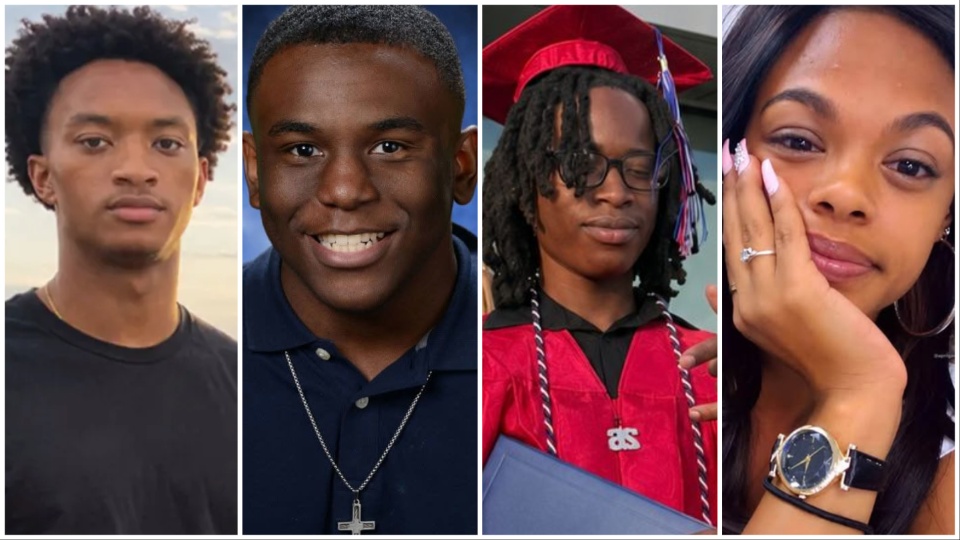
At the National Urban League Conference in Nashville, Crump appeared alongside the families of Wells, Daniel Erving, and Tyler Smith—all 18-year-old Black men who died within three months of each other—demanding answers and full transparency.
Daniel Erving of Sachse, Texas, died on April 14 at Lake Ray Hubbard after jumping from a railroad bridge with friends. His body was recovered four days later, and his death was ruled an accidental drowning—a finding his mother disputes.
“The autopsy report shows my son had an unobstructed airway, so my son did not drown,” Tameca Erving said. In July, two individuals were arrested and charged with tampering with physical evidence after allegedly discarding Erving’s clothing and cell phone.
Tyler Smith of Lexington, Ky., died on July 4 after what police described as an accidental self-inflicted gunshot wound. His family has strongly disputed that account. According to a Lexington Police Department citation, the firearm that officers recovered did not match the shell casing found at the scene.
A 20-year-old man has been charged with tampering with physical evidence in connection with the shooting. “For 17 days, my sons and I worked tirelessly investigating everything on our own. The police department gave us nothing, absolutely nothing,” Smith’s grandmother said.
Crump has framed all three cases as part of a troubling pattern requiring national attention.
Tasia Fortune, a 29-year-old Black woman and mother of four, was found hanging from a tree in the backyard of a vacant home in Jackson on Aug. 3. Her mother, Christy Spivey, has insisted that her daughter did not take her own life. “She did not do this to herself. I know my daughter, and she did not do this to herself,” Spivey said.
The county where Fortune’s body was found was the site of 11 known lynchings between 1895 and 1908, and nearby Hinds County saw 34 lynchings between 1835 and 1934. Unfortunately, this terror cannot be relegated to the history books, as Fortune’s case follows two other incidents of African Americans being found hanging from trees in Mississippi within a year.
In September 2025, Demartravion “Trey” Reed was found hanging from a tree at Delta State University in Cleveland, Miss. On the same day, Cory Zukatis was found hanging from a tree in Vicksburg, Miss.. Both deaths were ruled as suicides by local authorities.
As of this publication, Fortune’s case is still under investigation by local authorities, and the DOJ and FBI have remained silent about Nolan Wells’ case.
We hope you appreciated this article. At People’s World, we believe news and information should be free and accessible to all, but we need your help. Our journalism is free of corporate influence and paywalls because we are totally reader-supported. Only you, our readers and supporters, make this possible. If you enjoy reading People’s World and the stories we bring you, please support our work by donating or becoming a monthly sustainer today. Thank you!
CONTRIBUTOR