The 34th Pan African Film & Arts Festival (PAFF), America’s largest Black-themed film festival, took place February 16–22 in Los Angeles, California, at the Culver Theater and the Cinemark Crenshaw Baldwin Hills. During Black History Month, PAFF—which was co-founded by former Black Panther Ayuko Babu—annually screens Black-themed movies ranging from Hollywood studio productions and TV to indies, foreign films, documentaries, low-budget productions, shorts, and animation. Films span the spectrum from Oscar nominees to hard-to-find gems from Africa, the Caribbean, America, and beyond that viewers are unlikely to see at any other venue.
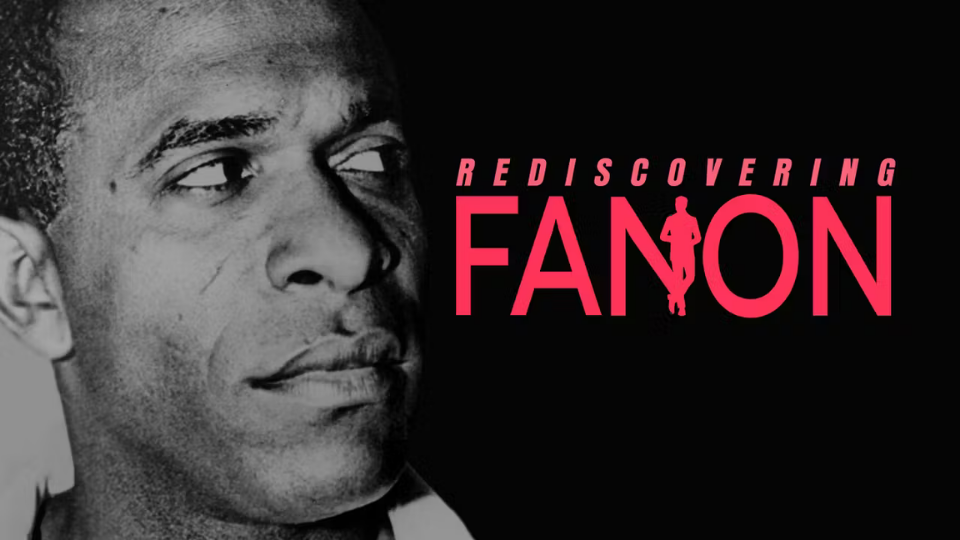
Rico Speight’s Rediscovering Fanon may be the first truly revolutionary film to throw down the gauntlet against the Trump regime. The African American director made the 84-minute documentary to commemorate the centennial of the birth of psychiatrist Frantz Fanon, who played an essential role in the bloody Algerian independence struggle against France. Fanon put colonialism and racism on the analyst’s couch in order to create what could be called a “liberation psychology” that aimed to usher in an authentic, decolonized self.
The award-winning Rediscovering Fanon places the current struggle between Black people and other people of color in the U.S. within the context of the militant anti-colonial politics of The Wretched of the Earth, which has been called “the Bible of the Third World.”
News clips and video shot by bystanders and body cams of George Floyd, Michael Brown, Trayvon Martin, the Black Lives Matter movement, et al, protests and police excessive use of force, including shootings and murders, are dynamically intercut with candid archival footage of French forces brutally suppressing and executing Algerians. The documentary incorporates music with a throbbing beat from Gillo Pontecorvo’s 1966 classic The Battle of Algiers, composed by Pontecorvo and Ennio Morricone.
More than a rallying cry, Rediscovering Fanon takes a deep dive into Frantz Fanon’s worldview that examines the role of violence against—and by—the oppressed and which sought to synthesize Marx and Freud in his seminal, groundbreaking books Black Skin, White Masks and The Wretched of the Earth.
To make his sweeping documentary, the globetrotting Rico Speight traveled to Fanon’s birthplace, Martinique, where he interviewed Frantz’s relatives; to Algeria; and to France to interview Fanon’s children, Olivier Fanon and Mireille Fanon Mendes-France, co-founder of the Frantz Fanon Foundation, which hosted the world premiere of this documentary in Paris. The original interviews with Fanon’s family members enhance this film with a personal touch that reminds us Fanon was a man, not just a myth.
At the U.S. premiere of Rediscovering Fanon at the Pan African Film Festival, director Speight said: “We have not had a good reception in the United States. But we have had a good reception in the global South.” As well as at PAFF, which, of course, embraced it and nominated Speight’s film in the Best Documentary Feature category.
Now American viewers can see Rediscovering Fanon for themselves because the Palestinian company Watermelon Pictures, which released Cherien Dabis’ All That’s Left of You and Palestine 36, is distributing the film.
Speight has performed an invaluable act in ensuring that Fanon, the apostle of liberation politics, remains unforgotten. Confronted by Trump-erialism at home and abroad, from Venezuela to Iran to Greenland to Gaza to Minneapolis, Fanon’s visionary clarion call, which closes The Wretched of the Earth are as important now as when it was written in 1961:
“Come, then, comrades, it would be as well to decide at once to change our ways. We must shake off the heavy darkness in which we were plunged, and leave it behind… For Europe, for ourselves and for humanity, comrades, we must turn over a new leaf, we must work out new concepts, and try to set afoot a new man.”
The must-see Rediscovering Fanon includes extensive interviews with African American philosopher Prof. Lewis Gordon and others. Yet this powerful film is never didactic and is quite cinematic, including poetic imagery of a brilliant sun rising in color superimposed over a black-and-white image of Fanon. Speight’s documentary puts into nonfiction form the radical politics depicted in One Battle After Another—and then some. Rediscovering Fanon was my favorite film of those I saw this year at PAFF—don’t miss it! The highest compliment I can give this production is that it is worthy of its subject. BRAVO!
We hope you appreciated this article. At People’s World, we believe news and information should be free and accessible to all, but we need your help. Our journalism is free of corporate influence and paywalls because we are totally reader-supported. Only you, our readers and supporters, make this possible. If you enjoy reading People’s World and the stories we bring you, please support our work by donating or becoming a monthly sustainer today. Thank you!
CONTRIBUTOR