As of June 2026, the National Oceanographic Association of America has warned that a “super El Niño” is forming in the Pacific. With wildfires and a statewide drought emergency threatening the most vulnerable in our communities, we are warned that a drier, warmer winter is on the way. The higher temperatures at the surface of the ocean are reaching anomalous levels, and it’s going to have a variety of negative impacts on our society.
This “super El Niño” is not the first, and it certainly won’t be the last. With rising global temperatures, we will be seeing a lot more warm water circulating in the oceans, leading to greater cycles of El Niño and La Niña.
In Spokane, Washington, in 2021, twenty people died from the heat wave, marking it as the deadliest weather event in Washington State history. While this was not caused by an El Niño, the possibility of another heat dome is exacerbated by El Niño in some areas. For the Pacific Northwest, the results could be devastating under the right conditions. If another heat dome is developing during the super El Niño, it could create conditions for the worst heat event in Washington history—again.
What is El Niño?
El Niño, or “little boy,” is a weather event in the eastern Pacific Ocean where the marine surface temperatures are anomalously higher than usual. The temperatures begin to rise as a result of complex underlying oceanographic processes, which cause a cascade of climate shifts for the following year. It’s the opposite of a La Niña, where the marine surface temperatures are lower than usual. Not all El Niño events are created equal. Some are of stronger magnitude, bringing stronger impacts to various regions across the world.
With El Niño, the higher marine surface temperatures heat up the air above it, which shifts the jet stream south. This means that the water cycle is disturbed and the resulting cloud formations are brought further south, bringing a wetter fall and winter for the southern United States. However, because the jet stream is moving south, the north is deprived of moisture, leading to more wildfire activities, more intense droughts, and major heat waves. According to NOAA’s webpage on El Niño impacts, “across the northern half of the country, the winter season tends to be warmer and drier than average, particularly in the Northwest, Northern Plains, and Ohio Valley.” For the Northern regions of the U.S., this brings a warm and dry winter, meaning a weak harvest by the agricultural sector due to a lack of runoff water.
Often, a question arises about why El Niño and La Niña occur. It’s part of a naturally occurring climate system called the El Niño-Southern Oscillation. It is a regularly occurring pattern of temperature changes within the Pacific Ocean. The trade winds, which are winds that typically blow westward at the equator—historically carrying commercial vessels, from Europe and Africa to the Americas, and the Americas to Asia—weaken, and the currents that typically carry warm water Westward “slosh” back towards the Americas. This means that the warm water concentrates in the Eastern Pacific.
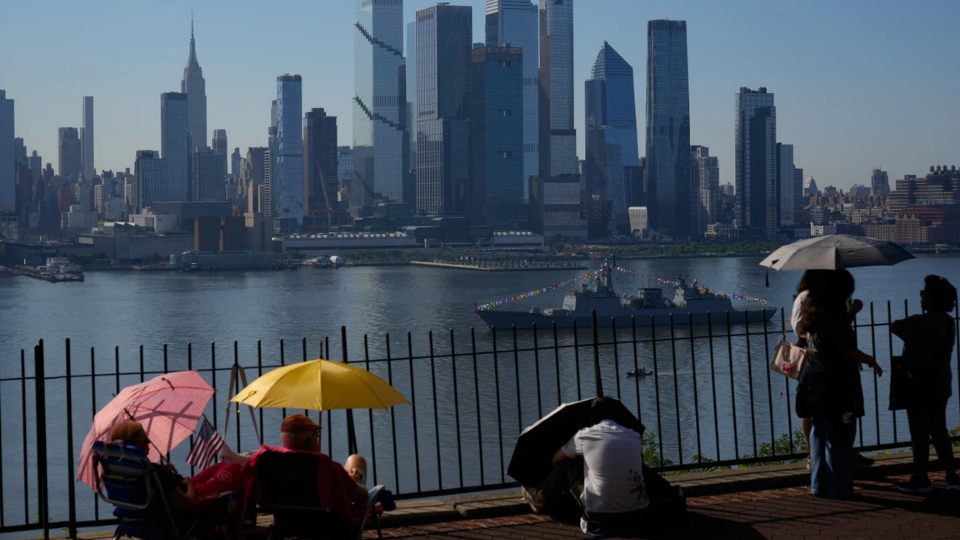
In 2024, we saw unusually warm waters from July 2023 until July 2024, which contributed to higher temperatures in the air via the natural water cycle. This warm air was carried by the jet stream, which had shifted farther south, thereby exacerbating urban heat and droughts in the South.
For example, in 2024, we saw heat waves in the South, such as in Mexico, and in the East, such as in Boston, which reached nearly 3-digit temperatures. While El Niño does not create heat waves, it can make heat waves worse by contributing warmer temperatures to the air, which is then carried by the jet stream and other moving systems in the upper atmosphere. It is also carried by the currents in the oceans and can contribute to rising temperatures globally.
El Niño also negatively affects marine life and agriculture. Normally, upwelling occurs under normal conditions, which brings cold water from the depths, carrying vital nutrients to the surface and coastal areas. El Niño means a weakening of this upwelling, thus starving phytoplankton along the coastal areas, and thus starving the fish that eat it. The results are a weaker fishing season and impacts on other marine and aquatic life that depend on the existence of a thriving fish population to survive.
In 2021, in the Pacific Northwest, we saw the impacts of the heat dome drive down crop yields due to higher temperatures and less runoff water. During a heat wave, contributed to by El Niño, farmers could see far less crop yield than normal. When temperatures are higher and relative humidity is lower, the plants close the pores they use to breathe (transpire) and, regardless of moisture in the soil, draw moisture from their fruits, reducing the quality overall. This leads to higher prices and greater product waste. From the farms to the grocery stores, restaurants, and food manufacturing facilities, prices will go up as a result.
Impact of the 2026 El Niño
The El Niño event this year could potentially become a “super El Niño,” which is different from a typical El Niño. The conditions currently, as of June 2026, are expected to strengthen into Winter 2026, which would substantially decrease meltwater and runoff during the spring due to the warmer-than-usual winter.
A “strong” El Niño means that the ocean temperatures are more than two degrees warmer than average. This means that the temperatures that are contributed to the air by the water cycle are much warmer than usual. In heat dome conditions, this could seriously exacerbate the heat wave along with the urban heat island effect. This will have devastating effects on the most vulnerable of our society and throughout the world.
In 1982-83, the strongest El Niño event occurred, which was considered one of the most devastating El Niños of the century. The trade winds not only collapsed but actually reversed, and it led to warm waters being pushed eastward. This led to climate disasters across Indonesia, Australia, Africa, and Europe.
The impacts are longer-term and broader, which is even more concerning. The agriculture sector is going to be impacted by drier and warmer winter conditions in the North, while wetter and cooler conditions in the South will bring flooding and colder winters. This means communities will be negatively impacted regardless of where they are. Under the right conditions, the North can expect a potentially deadly heat wave next summer, while the South can expect a greater frequency of storms. Thankfully, however, El Niños tend to be associated with fewer Atlantic hurricanes.
Many communities are not prepared for a “super” El Niño. Our for-profit hospital, housing, and transportation systems all reduce the likelihood of being able to withstand the negative impacts of El Niño. With the warming effects in the North, a warm high-pressure system that passes over the North could bring horrible heatwaves. Many communities lack up-to-date cooling systems, and many vulnerable groups are not equipped to handle such heat, including the disabled, the elderly, residents of underdeveloped apartment/housing areas, and the unhoused.
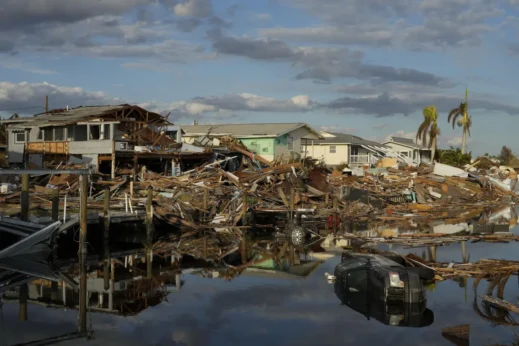
In the South, the flooding tends to follow insurance spikes, leading to working-class people being left with nothing. No home, no cars, no insurance to pay everything off. Oftentimes, the people of the South have no means of relocating, as we often see with hurricanes. With the impacts on our agriculture and marine industries, we will certainly see a rise in prices for produce, which is often used to manufacture low-income meals–such as microwave dinners, canned fruits and vegetables, etc. Low-income workers, typically people of color, will surely suffer economically from this, not just because of the loss of jobs due to flooded and ruined businesses, but also because of the predatory insurance companies, rising prices on agricultural products, and much, much more.
What can be done?
Generally, people-centered solutions are the same no matter where you are. The concrete details of actions may change, but generally, the organizational solutions for working people everywhere are similar. One major solution is to bring change to local governments. Many cities are not financially equipped to handle the consequences of the “super” El Niño, but building local coalitions to fight for more funding from higher levels of government is a necessary step.
Secondly, mutual aid must be organized in all cities and states. During heat waves, the urban heat island effect will make summer temperatures much hotter. Pushing for a right-to-cooling in all cities and states, along with reorganizing city and state budgets, will help prevent deaths. Mutual aid to provide cooling places, water, and on-the-street health and safety checkups for those most vulnerable is key to helping people survive these intense climate events.
Thirdly, it will be necessary to build local coalitions to stand up for, and represent, the farmworkers, as they toil day in and day out for lower crop yields while being exploited by big banks and national agricultural and industrial conglomerates. Pushing for farmworkers’ rights and improvements to their overall living and working conditions is a must. They will be adversely affected by the “super” El Niño, and we must organize among them, give them a voice, and protect them from policies that only protect the existing monopolies and oligopolies.
Unity of action in our communities is the greatest tool at our disposal. Working closely with trade unions and the marginalized are essential to building movements and parties (including the CPUSA) and electing candidates who can implement real change.
As with all op-eds published by People’s World, the views expressed here are those of the author.
We hope you appreciated this article. At People’s World, we believe news and information should be free and accessible to all, but we need your help. Our journalism is free of corporate influence and paywalls because we are totally reader-supported. Only you, our readers and supporters, make this possible. If you enjoy reading People’s World and the stories we bring you, please support our work by donating or becoming a monthly sustainer today. Thank you!
CONTRIBUTOR