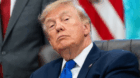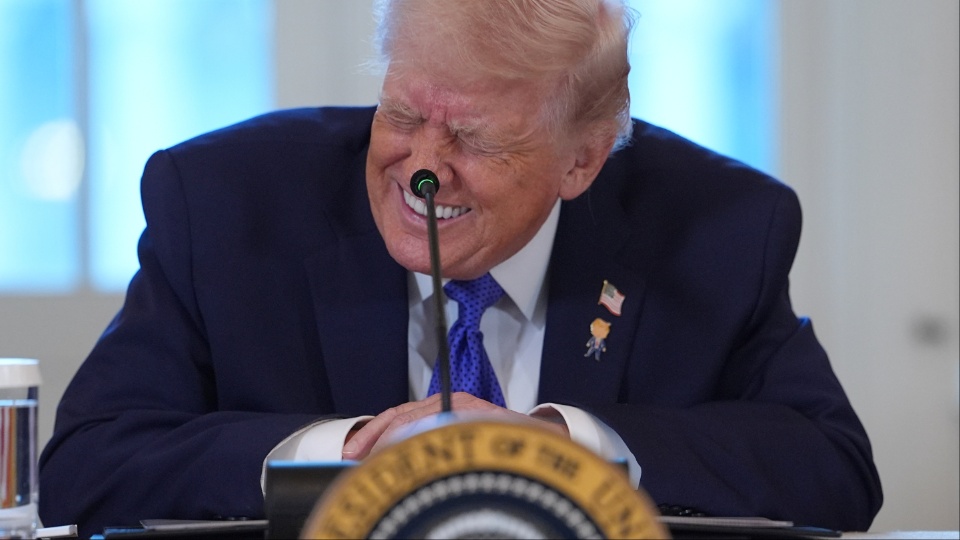
Donald Trump keeps saying he’s not worried about the midterms. He says it the way a card player says he’s not worried—when he’s already seen the other guy’s hand.
Asked about his flailing Iran war ceasefire negotiations and whether they affect voters’ opinion of him and the Republican Party on May 27, the president responded: “They thought they were going to outwait me, you know, ‘we’ll outwait him, he’s got the midterms.’ I don’t care about the midterms.”
While polls show Americans increasingly opposed to the war in Iran and upset over its economic impact, and while slipping support for Trump could dampen Republican turnout, Trump has publicly dismissed concern over November.
At a cabinet meeting earlier this year, he went further than not caring about the midterm election outcome, suggesting the vote shouldn’t even happen. He suggested that his first year back in office had gone so well that “when you think of it, we shouldn’t even have an election” in 2026. The White House, as it always does, said he was joking.
Anonymous White House aides have told reporters that Trump is acting like a man who does not believe it matters whether what he does hurts his party in the upcoming midterm elections. Politico has described him as operating in what it called “YOLO mode”—You Only Live Once.
Given Trump’s personality, some conclude he’s just reckless or unable to keep his own ego in check. But what if we’re witnessing something different? What if his nonchalance about the midterms is really rooted in confidence—the cold, calculated confidence of a man who believes the game is already rigged in his favor.
The historical pattern for midterm elections should not be very encouraging to Trump and his party. Historical trends show that the president’s party typically loses seats in the House during midterm elections, and recent polls have shown Democrats running for Congress with a modest advantage. The economy is a mess, with inflation again galloping out of control. Tariffs and other foreign policies have raised prices. Layoffs are spreading. Fears about AI’s impact on workers is soaring. The Iran war is unpopular.
By any normal political calculus, Republicans should be very, very worried. So, why isn’t Trump?
Because he’s not playing the normal game anymore. He’s playing a different one—one where the maps are drawn before the votes are cast, and where the rules are written by the people who stand to win.
The gerrymander offensive
As we’ve been hammering away in reporting for People’s World, Trump faces increasingly dire polls and is directing Republican-controlled states to give the GOP an unfair edge by gerrymandering their congressional maps. Texas, North Carolina, Missouri, Ohio, Florida, Tennessee, and Louisiana have already done so.
And after the Supreme Court’s ruling in Louisiana v. Callais, even more states may follow.
That ruling held that states have great freedom to draw district lines—and can even draw maps to intentionally advantage one political party over another. However, maps designed to maximize the electoral chances of non-white candidates violate the Constitution’s equal protection clause—a ruling that effectively handed Republicans a legal license to gerrymander while simultaneously stripping protections for Black and brown voters.
The consequences have become obvious almost immediately. The rapid elimination of Black-majority House districts across the South is the most visible move by Trump and his GOP allies to suppress the political influence of racial minorities. As USC sociology professor Manuel Pastor put it, “What we are seeing is a full-fledged push for minoritarian rule within these states.”
But though racial minority representation is the obvious and immediate target, these redistricting efforts affect working-class people of all races and backgrounds. When a progressive congressional seat disappears—whether the representative who held it was Black, Latino, white, or anything else—legislation dies with it.
In Texas, Republicans passed a new, aggressively gerrymandered congressional map, approved by the Supreme Court, that will make the state’s congressional delegation roughly 80% Republican and 20% Democratic—even though Trump carried Texas with only 56% of the vote in 2024. Republican State Sen. Phil King, defending the map, was honest about the goal when he helped draw it: The point was to protect Republican power.
Advocates are warning of a coordinated assault on voting rights, citing new federal proposals and state laws they say could disenfranchise millions of eligible voters. The campaign targets mail voting, ballot initiatives, and voter identification rules. In Kansas, lawmakers went after transgender residents’ IDs. In Indiana, a law banning student IDs as valid voter identification is in place.
This is the scaffolding behind Trump’s façade of confidence. The polls may be bad, and the economy may be spiraling for working people. But if the maps are drawn tightly enough, if enough voters are pushed off the rolls, if enough confusion is sown on Election Day about who can vote and how, then winning doesn’t require being popular.
Where is the fightback?
People are not standing still in the face of this assault, with moves being made in legislatures, courtrooms, and in the streets to fight back.
Led by the Congressional Black Caucus and national civil rights groups, Democrats in the House are battling Jim Crow 2.0 racial gerrymandering. Minority Leader Hakeem Jeffries has announced what he calls the “largest voter protection effort in modern American history,” with pending litigation in Virginia, Florida, Missouri, and Wisconsin, and Democratic-led states like New York, Maryland, Colorado, and Washington taking steps to respond to the Supreme Court’s rulings.
California voters themselves already adjusted their maps to combat what the GOP did in Texas. Virginia voters tried, too, passing a constitutional amendment to redraw congressional maps—a move that came directly in response to Trump’s push for Republican-led states to deliver additional GOP House seats. The Supreme Court, again acting on Trump’s behalf, threw out the new map.
Organizations like the NAACP, Common Cause, and the League of Women Voters have been mounting grassroots citizen reform movements and filing lawsuits against partisan gerrymandering in multiple states. The Brennan Center for Justice has been in court blocking discriminatory voter ID laws and challenging schemes that target minority and low-income voters.
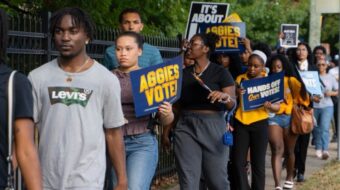
Grassroots organizers keep registering voters in communities long targeted for exclusion. Primary elections in state after state show, however, that citizens will still wait in long lines, believing participation matters—even when systems seem designed to exhaust their faith in voting.
The carefree image that the president keeps projecting to the media is meant to send a message: We’ve already won. But the truth is that they haven’t won yet, and even Trump knows it. They know that the majority of Americans are opposed to their pro-billionaire policies. Desperation is what’s really driving the GOP’s race to redistrict the country in their favor.
Trump is betting that cynicism wins—that enough people will look at a rigged map, a purged voter roll, a long line in a Black neighborhood, and decide their vote doesn’t matter. The answer to that message is organizing. Polling places have to be flooded so thoroughly that no gerrymander can hold back the people’s will. Lawsuits have to be filed—from now to Election Day and after. Voter registration must continue everywhere, sending the message that a collective march on the polls can still turn the tide.
Trump may claim he’s not worried about the midterms, but the rest of us should be—and we should channel that worry into action.
The 2026 midterms are Nov. 3, 2026. Voter registration deadlines vary by state—check your status now.
As with all op-eds published by People’s World, the views reflected here are those of the author.
We hope you appreciated this article. At People’s World, we believe news and information should be free and accessible to all, but we need your help. Our journalism is free of corporate influence and paywalls because we are totally reader-supported. Only you, our readers and supporters, make this possible. If you enjoy reading People’s World and the stories we bring you, please support our work by donating or becoming a monthly sustainer today. Thank you!
CONTRIBUTOR