Something has shifted in the way American corporations talk about firing people. Not long ago, a wave of mass layoffs was read as a bad omen—a company in trouble, cutting losses, circling the drain. Today, on Wall Street and in the business press, the calculus has been turned on its head. Announce that you’re slashing thousands of jobs to pour money into artificial intelligence, and your stock goes up. The market doesn’t just forgive the pink slips; it rewards them.
The Wall Street Journal recently asked whether the era of the mega-layoff has arrived, noting that at companies like Snap, Block, and Amazon, massive job cuts have become “the preferred playbook.” The numbers bear that out.
According to layoff tracker TrueUp, 2026 has already seen more than 93,000 tech workers lose their jobs in just the first quarter alone—nearly 900 people every single day. That pace outstrips even the already bad year that preceded it. In 2025, more than 245,000 tech workers were let go across 783 companies.
The corporate data tracking firm Challenger, Gray & Christmas found that in March alone, U.S. employers announced 60,620 planned job cuts, with artificial intelligence cited as the top reason, directly accounting for more than 15,000 of those positions.
So much blood spilled, but these are not companies on their last legs.
Jobs down, profits up
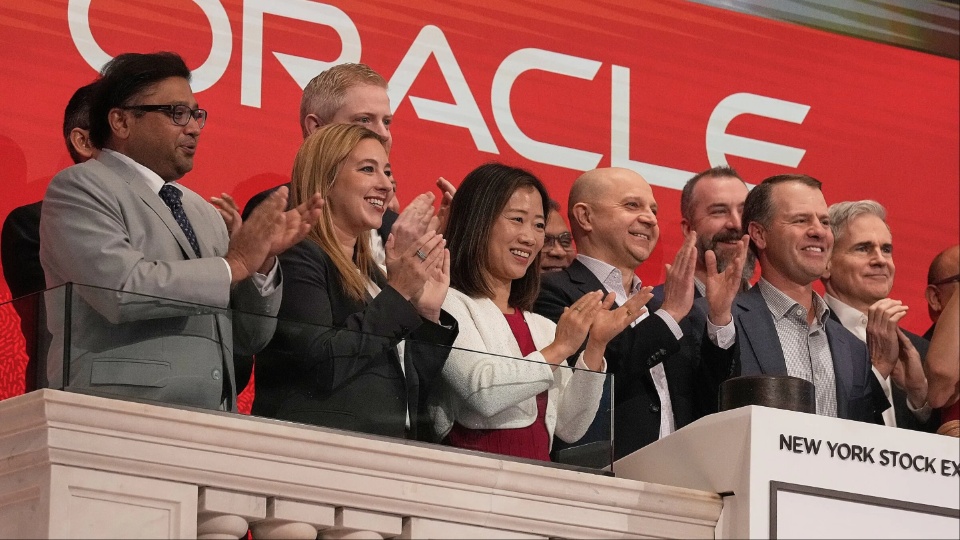
Amazon cut roughly 30,000 corporate positions in a matter of months while reporting record profits. Software company Oracle fired as many as 30,000 people via email in a single morning, despite corporate income soaring 95% in the prior quarter. Immediately after the mass layoffs, Oracle turned around and awarded new Chief Financial Officer Hilary Maxson a compensation package worth $26 million.
Block, the payments firm founded by Jack Dorsey, eliminated over 40% of its workforce—going from more than 10,000 employees to just under 6,000—not because it was failing, but because Dorsey decided AI tools could do what those workers did.
 Dorsey was surprisingly blunt in his public announcement to workers posted on X: “We’re not making this decision because we’re in trouble. Our business is strong. Gross profit continues to grow…but something has changed…. The intelligence tools we’re creating and using, paired with smaller and flatter teams, are enabling a new way of working….”
The Twitter founder explained that the decision was made to fire thousands of people all at once rather than have multiple waves of layoffs, which he said would be “destructive to morale…and to the trust that customers and shareholders place” in the company.
Meta—the company owned by Mark Zuckerberg, which encompasses Facebook, Instagram, WhatsApp, Messenger, and Threads—announced plans to spend up to $135 billion on AI infrastructure in 2026 and simultaneously began preparing sweeping layoffs to foot the bill. When the layoff news broke, Meta’s shares climbed nearly 3%.
Wall Street’s message, as an analyst at The Tech Buzz put it, was unambiguous: “Massive AI spending is acceptable—even encouraged—as long as it’s paired with aggressive cost management elsewhere.”
That “cost management,” of course, is a person’s livelihood. But the language of corporate restructuring is designed to obscure that reality.
The dead labor of AI
What’s happening is not primarily a story about robots directly replacing assembly-line workers or AI chatbots taking over jobs while tech employees pack up their desk. The mechanism is subtler and revealing of how capitalism actually operates. Companies are redirecting enormous sums of capital—money that previously paid salaries, funded teams, and sustained whole departments—toward AI infrastructure: data centers, graphics processing units, model training, specialist talent.
Andy Challenger, chief revenue officer at Challenger, Gray & Christmas, told Forbes this week that companies are “shifting budgets toward AI investments at the expense of jobs.” In many cases, the workers aren’t always being replaced by a machine doing their specific task at this stage; rather they’re being discarded to fund the machine.
Capitalism’s most astute observer saw this coming with extraordinary clarity nearly 160 years ago. In Capital, Karl Marx described the tendency of capitalists to substitute what he called “dead labor”—machinery, fixed capital, accumulated technology—for “living labor,” the actual human beings whose work creates value.
“The instrument of labor,” he said, “comes to the fore as a material power over labor.” In other words, the tools and machines that workers themselves already produced now come to dominate and even replace them. “Capital is dead labor,” Marx wrote, “which, vampire-like, lives only by sucking living labor, and lives the more, the more labor it sucks.” The AI investment wave is simply the latest and most dramatic iteration of this dynamic. The vampire has found a new vein.
Workers, i.e. human beings, are never an end in themselves in this framework but always a means—retained when profitable, discarded when not. Citing French economist Eugène Buret in 1844, Marx observed: “Industry…only lets workers live while it needs them, and as soon as it can get rid of them, it abandons them without the slightest scruple.”
Throwing away workers
What makes this moment distinct is how openly the logic is being celebrated. The so-called “AI layoff trade” has become, as one investment analysis described it, “a dominant investment thesis” among fund managers in 2026.
It’s a strategy by which investors bet on the companies most aggressively swapping human labor for automation on the theory that fewer employees means lower costs, wider profit margins, and fatter earnings per share.
A review of a Goldman Sachs report from December 2025 observed that firms are “choosing to shrink their workforces to protect profit margins and fund massive investments in AI infrastructure, rather than expanding their human headcount.” Salesforce CEO Marc Benioff described how his firm has done exactly that: “I’ve reduced it from 9,000 heads to about 5,000, because I need less heads.”
“Heads.” Not workers, not people, not colleagues. Heads—a unit of cost input, like square footage or kilowatt-hours.

None of this means AI is not a real technological development or that it will have no genuine effect on productivity. But the framing that these layoffs are a natural, even beneficial, consequence of innovation serves a specific ideological purpose: It places the decisions of corporate executives beyond political scrutiny, as if the march of technology were a force of nature rather than a set of choices made by people with interests.
Companies are not being compelled by AI to fire workers. They are choosing to use the AI moment to restructure their workforces in ways that transfer more value upward—to shareholders, to executives, to capital itself.
The workers showing up at unemployment offices don’t experience it as an abstraction. They experience it as a lost paycheck, cancelled health insurance coverage, a conversation they dread having with their family. Most of the tens of thousands of people who lost their jobs in the first quarter of 2026 were not let go because they performed poorly. They were fired because corporations found somewhere else to put their capital.
That is, ultimately, what this wave of layoffs reveals. It’s not the inevitable triumph of technology, but the old, grinding logic of a system that has always treated workers as a variable cost to be minimized rather than human beings whose security and dignity matter. The AI moment is new, but the capitalist logic driving it is not.
We hope you appreciated this article. At People’s World, we believe news and information should be free and accessible to all, but we need your help. Our journalism is free of corporate influence and paywalls because we are totally reader-supported. Only you, our readers and supporters, make this possible. If you enjoy reading People’s World and the stories we bring you, please support our work by donating or becoming a monthly sustainer today. Thank you!
CONTRIBUTOR